
 This lovely guy was flying around the room during chapel one day. We watched him grab onto the brick wall and climb straight up using his thumbs. After chapel he decided to hang out near the cafeteria. His body is about the size of a pigeon, and his wingspan is about two feet. Notice his claws hanging on to the bricks. Isn't God's creation amazing?
Wednesday, November 23, 2005
Going Batty
This lovely guy was flying around the room during chapel one day. We watched him grab onto the brick wall and climb straight up using his thumbs. After chapel he decided to hang out near the cafeteria. His body is about the size of a pigeon, and his wingspan is about two feet. Notice his claws hanging on to the bricks. Isn't God's creation amazing?


Sunday, November 20, 2005
Reflections on Our Week
To say we’ve had a tough week would be an understatement. In addition to the shock and grief of Kelly Hamby’s death, David has been sick. He started running a high fever on Wednesday night. He also had achy joints, headache, and a dry cough. Thursday he felt better, but the fever shot back up that night. All the Zambians said, “It’s malaria!” So Friday he went to the clinic and had a blood test. It showed no signs of malaria, so he just came home and went to bed. That afternoon we had a Skype (internet telephony) conversation with Dr. Richard Prather, the interim director of the mission, and I mentioned that David was sick. Less than fifteen minutes later we had a call from Dr. Sid Tate of Searcy, Arkansas. Dr. Tate worked here for three years before returning to the states last February. Dr. Prather had called him and told him about David. Dr. Tate listened to the symptoms and suggested that David start on doxycycline for malaria. He noted that the malaria test is not that reliable unless you are running fever when you have your blood drawn. David started on the medication, and within a few hours started to feel better. He’s now back to good health. We have both been taking a malaria preventative, but obviously it’s not 100% effective. The irony is that I’m the one who gets bitten by mosquitoes all the time!
There were some happier experiences this week as well. On Friday and again on Saturday I took a small group of George Benson Christian College students with me to do Children’s Bible School outreaches. We traveled with Ruhtt Mbomwae to Kitundu on Friday and Simikakata on Saturday. The college students did a great job of teaching, and the children were receptive and delighted to participate. I found the experience of going to the villages and teaching to be very healing for me. I looked out on that sea of children’s faces and thought about Kelly Hamby. He and Ellie are the ones who taught me how to teach the Bible to large groups of children when we worked with them for two years in Hillcrest’s Bible Hour. The curriculum that we use for the children’s program is based on the format that they taught me years ago. I thought, “This is part of Kelly’s legacy in Zambia, and it will live on.”
Today (Sunday) we took a different group of students with us as we traveled north to Siamakuli, a brand-new congregation that started as a result of the medical mission. One student translated for me in the children’s class while others led singing and presided at the communion service. There were two men who wanted to be baptized, so after the worship time was over, David loaded them and others from the congregation into the Land Rover for a three-mile drive to the nearest water hole. Later David reported what happened on the trip. There were six little boys already swimming in the water hole. When they heard the vehicle coming, they jumped out of the water and ran away as fast as they could. Some had been skinnydipping, so they just grabbed their clothes and took off to hide behind a giant anthill until the baptisms were over. David and the Zambians had a great laugh at this!
There were some happier experiences this week as well. On Friday and again on Saturday I took a small group of George Benson Christian College students with me to do Children’s Bible School outreaches. We traveled with Ruhtt Mbomwae to Kitundu on Friday and Simikakata on Saturday. The college students did a great job of teaching, and the children were receptive and delighted to participate. I found the experience of going to the villages and teaching to be very healing for me. I looked out on that sea of children’s faces and thought about Kelly Hamby. He and Ellie are the ones who taught me how to teach the Bible to large groups of children when we worked with them for two years in Hillcrest’s Bible Hour. The curriculum that we use for the children’s program is based on the format that they taught me years ago. I thought, “This is part of Kelly’s legacy in Zambia, and it will live on.”
Today (Sunday) we took a different group of students with us as we traveled north to Siamakuli, a brand-new congregation that started as a result of the medical mission. One student translated for me in the children’s class while others led singing and presided at the communion service. There were two men who wanted to be baptized, so after the worship time was over, David loaded them and others from the congregation into the Land Rover for a three-mile drive to the nearest water hole. Later David reported what happened on the trip. There were six little boys already swimming in the water hole. When they heard the vehicle coming, they jumped out of the water and ran away as fast as they could. Some had been skinnydipping, so they just grabbed their clothes and took off to hide behind a giant anthill until the baptisms were over. David and the Zambians had a great laugh at this!
Wednesday, November 16, 2005
Kelly's Funeral
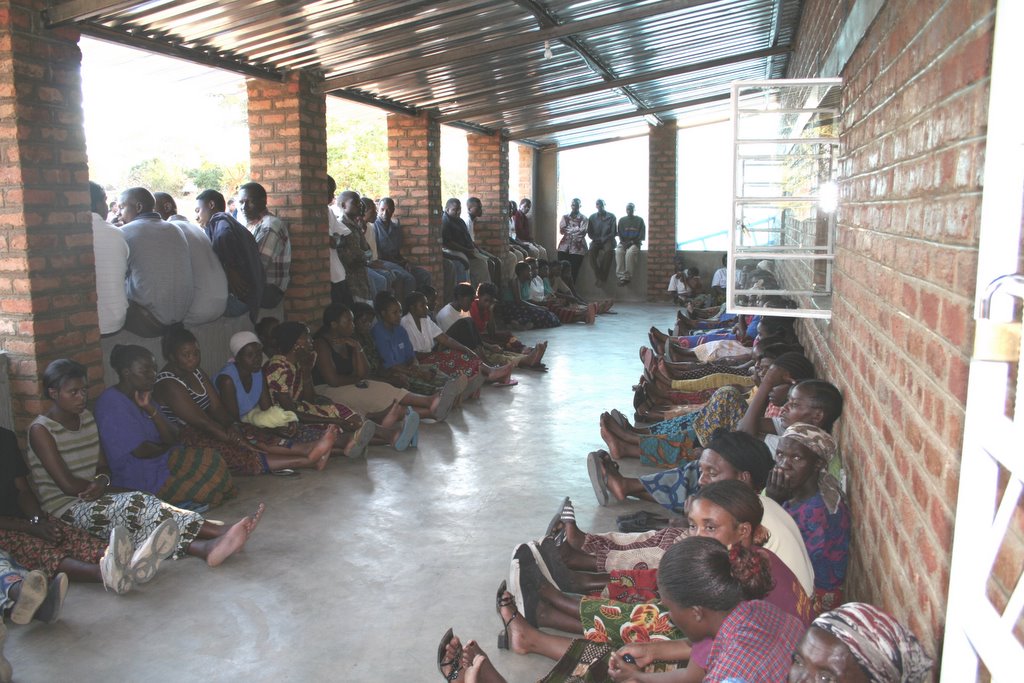 Kelly’s Funeral
We have moved through this week in a daze of unbelief, our minds not quite able to comprehend the loss of our mentor, friend, brother, and leader. We have wept with our Zambian friends, and we have wondered how we will move on without Kelly’s patient and competent leadership. In our grief we have found comfort in sharing our memories of his life, and we have rejoiced in the confidence that he is now in a much better place.
On Sunday evening the church that meets on campus hosted a time of sharing in honor of Kelly. Several groups presented songs, and individuals were invited to share memories of Kelly and tell of his impact on their lives. On Monday evening we heard a group of people singing as they walked down the road. We joined them as they went to the Hamby’s veranda for a two-hour session of song, prayer, and short speeches. This gathering ended at seven. Then at nine o’clock the traditional all-night vigil began. A huge fire was built in the back yard of the Hamby’s house, and a group of around 200 spent the night singing, praying, sharing testimonials, and encouraging each other. Leonard Sichimwa, the Hamby’s long-time employee and friend, came by our house the next morning to tell us about the vigil. He was at peace, he said. The vigil, in his words, had “smoothed” him.
Ellie had asked that we use our Skype (internet telephony) system to share the funeral service with the Zambians. We agreed and invited the entire mission to gather at our house to hear and participate in Kelly’s memorial via the Internet. Ray Ferguson had his laptop in the sound room at the Hillcrest church in Abilene, and we had ours set up in our hallway. We connected external speakers to our laptop to amplify the sound, and our wide hallway with its concrete walls and floor provided good acoustics. We opened up all our windows and doors so that those who could not fit inside the house could hear from the veranda and yard. Our other preparation for the service was to pray fervently that the electricity would not go off and that we could maintain a good Internet connection during the time of the funeral.
The Zambians began coming an hour and a half before the funeral was set to begin. The house and the veranda filled quickly. Others who came gathered just outside windows or sat on tarps we had spread out on the yard. I sighed with relief when the sound of K.B. Massingill’s voice boomed clearly through the speakers as the service began in Abilene. The Zambians listened intently to the loving testimonies of Kelly’s life. There were “amens” all around when one speaker stated that even though Kelly’s body was in America, his heart would always be in Zambia.
At Mrs. Hamby’s request, the Zambians sang a Chitonga song that was broadcast to the mourners gathered in the Hillcrest auditorium. Over 450 voices sang in tribute to the man who had meant so much to them. Ten thousand miles away other hearts heard their message of love and support. George Phiri, Zambian superintendent at Namwianga, led the closing prayer.
We feel so blessed that we were able to share in Kelly’s memorial service. The Zambians were thankful, too. As Robby Banda told me, “It meant so much to know that the things we said and felt about Dr. Hamby were the same things that the Americans said and felt.” On two continents both Zambians and Americans shared in celebrating and remembering a life well lived.
Sunday, November 13, 2005
Mourning
We received word at 9 p.m.our time on Saturday that Dr. Kelly Hamby, the stateside mission superintendent for Namwianga, had suffered a heart attack. We gathered Zambian leaders and friends in our living room to pray. Later that night Ray Ferguson and Cleddy Varner from Abilene notified us that Kelly had taken a turn for the worse and was on artificial life support until his children could arrive. We continued our prayer vigil late into the night.
Early this morning the Zambians began arriving again at our house as we waited for news. Just after 7:15 Ray Ferguson called to let us know that Kelly had passed away. All of us at Namwianga are in shock and deep grief. Kelly had been the leader of this mission in one capacity or another for 25 years. His influence is beyond description.
David and I feel a deep personal loss. We first met Kelly in 1977 when David was in one of Kelly’s classes at ACU. David would come home and tell me what an excellent teacher Dr. Hamby was, and that he wanted me to meet him. Then Kelly invited David to help him with a teacher training workshop. In a few months we were attending the Hillcrest church and became involved with Children’s Bible Hour under the leadership of Kelly and Ellie. For the next two years we spent time together in ministry learning from Kelly and being shaped by him. David considered Kelly to be his first mentor.
We moved to Grand Prairie in full-time ministry in 1979. The following summer Kelly and Ellie made their first summer trip to Zambia. While they were in Africa our infant son became very ill, and we spent our summer in and out of Parkland Children’s Hospital in Dallas. Kelly and Ellie arrived home from Africa on the Saturday our son died. They found out at church on Sunday about his death and immediately traveled from Abilene to Grand Prairie to be with us at the funeral. We will never forget how much that meant to us. It means even more now that we have had first-hand experience with jet lag.
Through the years we heard about their work in Zambia and saw the Hambys in Abilene occasionally. It was at their urging that we first participated in the 1999 Zambia Medical Mission. We brought our children on what we thought would be a once in a lifetime trip to Africa. But Zambia and Namwianga Mission captured our hearts, and we kept coming back. Then in 2002 Kelly told us that our skills could be used in full-time work here. He and Ellie had long talks with us that following year and helped us make the decision to follow God’s call to Zambia.
This summer we were privileged to spend most of June, July, and August with Kelly and Ellie in the work here. We admired again and again the patience, the leadership, and the servant attitude that characterized Kelly’s ministry to the Zambians. All of us here at Namwianga are wondering how we will go on without him. Yet we know that Kelly’s example of following Christ will be our model for the days ahead.
We covet your prayers for the Hamby family, for us, and for the work at Namwianga.
Early this morning the Zambians began arriving again at our house as we waited for news. Just after 7:15 Ray Ferguson called to let us know that Kelly had passed away. All of us at Namwianga are in shock and deep grief. Kelly had been the leader of this mission in one capacity or another for 25 years. His influence is beyond description.
David and I feel a deep personal loss. We first met Kelly in 1977 when David was in one of Kelly’s classes at ACU. David would come home and tell me what an excellent teacher Dr. Hamby was, and that he wanted me to meet him. Then Kelly invited David to help him with a teacher training workshop. In a few months we were attending the Hillcrest church and became involved with Children’s Bible Hour under the leadership of Kelly and Ellie. For the next two years we spent time together in ministry learning from Kelly and being shaped by him. David considered Kelly to be his first mentor.
We moved to Grand Prairie in full-time ministry in 1979. The following summer Kelly and Ellie made their first summer trip to Zambia. While they were in Africa our infant son became very ill, and we spent our summer in and out of Parkland Children’s Hospital in Dallas. Kelly and Ellie arrived home from Africa on the Saturday our son died. They found out at church on Sunday about his death and immediately traveled from Abilene to Grand Prairie to be with us at the funeral. We will never forget how much that meant to us. It means even more now that we have had first-hand experience with jet lag.
Through the years we heard about their work in Zambia and saw the Hambys in Abilene occasionally. It was at their urging that we first participated in the 1999 Zambia Medical Mission. We brought our children on what we thought would be a once in a lifetime trip to Africa. But Zambia and Namwianga Mission captured our hearts, and we kept coming back. Then in 2002 Kelly told us that our skills could be used in full-time work here. He and Ellie had long talks with us that following year and helped us make the decision to follow God’s call to Zambia.
This summer we were privileged to spend most of June, July, and August with Kelly and Ellie in the work here. We admired again and again the patience, the leadership, and the servant attitude that characterized Kelly’s ministry to the Zambians. All of us here at Namwianga are wondering how we will go on without him. Yet we know that Kelly’s example of following Christ will be our model for the days ahead.
We covet your prayers for the Hamby family, for us, and for the work at Namwianga.
Saturday, November 12, 2005
Prayer Request
We just received word this evening that Kelly Hamby, the stateside superintendent of Namwianga Mission, had a heart attack this morning in Abilene. He had a stent placed in his heart late this morning and is now in CCU for a few hours before going to his room. Please join us in praying for a speedy and complete recovery.
Friday, November 11, 2005
Bugged!

The rains came and brought the insects with them. We spent the day in Livingstone on Monday. When we arrived home that night at 7:00, the back veranda resembled a scene from a B-grade horror movie. There were swarms of flying termites as thick as clouds around our back window. David went bravely through them swinging his arms to get the windows closed. Many of the critters managed to get in the house before we could stop them and were crawling all over on the floor. The cat considers all insects to be dinner with wings and was having a field day pouncing and eating. We killed as many as we could but were fighting a losing battle. We figured out that they were attracted by light, so we gave up and went to bed.
The next morning we found a half-inch layer of separated bodies and wings on the veranda floor. Later that day a friend explained that after the first rains the termites engage in these mating flights. They swarm, they mate, and then they die.
Obrien, a young man who works for us, scooped up the bodies and fried them in a coffee can over an open fire. He was eating them like popcorn. David believes in trying things at least once, so he ate a handful, too, and announced that they tasted a lot like smoke-flavored Bacon Bits. He didn’t go back for seconds, however.
The Zambians compare this delicacy to manna, because on the morning after the rain the insects are all over on the ground and porches. This “manna” disappeared after the first day, though, and for that we are grateful!
Evening Surprise
David and I were sitting on the veranda the other night so that some of our friends could have a private conversation inside. We were enjoying the cool night air that came after the rains. We heard beautiful singing coming our way. In a few minutes, Oscar, a young graduate, came into view followed by a group of secondary students.
“Did you come to sing to us?” we asked hopefully.
“No,” Oscar replied, “we came to baptize.”
They sang as they walked around the house to our backyard tank. We watched as Oscar baptized a ninth grade girl. There were hugs and smiles all around, a closing prayer, and then more singing as they went on their way rejoicing.
“Did you come to sing to us?” we asked hopefully.
“No,” Oscar replied, “we came to baptize.”
They sang as they walked around the house to our backyard tank. We watched as Oscar baptized a ninth grade girl. There were hugs and smiles all around, a closing prayer, and then more singing as they went on their way rejoicing.
Sunday, November 06, 2005
RAIN!
Rain! At last! We had scanned the skies daily looking for signs that the seven months of the dry season might finally end. Friday we heard rolling thunder at 2 a.m. and ran to the window to see if the rain was coming. A few flashes of lightning, a sprinkle, and that was all. Then, on Saturday afternoon, the first drops fell, sounding like bullets as they hit our corrugated metal roof. We waited to make sure that this was the real thing and not just another tease. The drops fell harder and harder as the unmistakable smell of rain filled the air. The downpour continued and the noise grew louder with it. We sat out on the veranda to watch the dust become mud and rivulets begin to run through the yard. Two hours later the skies cleared. The air is crisper and cleaner, the heat is lessened, and our spirits are refreshed. We have experienced our first African rain.
Wednesday, November 02, 2005
Life Without Walmart
In Austin we lived a mile away from a Walmart Superstore. We were quite used to hopping in the car and driving to Walmart for everything from rotisserie chicken to gasoline.
As you can imagine, shopping in rural Zambia is a bit more challenging. A trip to Kalomo for weekly grocery shopping goes something like this. We start out in the Land Rover. Before we get off the mission property, we begin picking up passengers along the road. By the time we've gone a mile, the Land Rover is full. The four-mile trip into Kalomo is on a road that was last maintained during the Reagan presidency, so we bump and jolt along in the dust. We drop our riders off and make our first stop at the post office to pick up our mail. Then it's on to Standard Sales, the Kalomo equivalent of Sam's. That's where we buy our cooking oil, sugar, soap, and boxes of milk in bulk. The checkout process involves one clerk writing out each item and its price in a sales book complete with carbon paper. Then I take the slip to the other end of the counter and pay. The clerk there stamps the sales slip and I take it back down the counter to the first clerk and pick up my goods. Next stop is Choma Milling Company to buy mealie meal in a 50-pound bag. Sometimes there is another stop to find whatever Standard Sales was out of. Then we head to ChiChi hardware for things like nails, twine, and, yes, greeting cards! The produce stand is next, and there I select fresh vegetables, fruit, and eggs when they're available. There are two produce stands across the street from each other, so I usually visit both to get the best selection and price. Last stop is the filling station for the rest of the groceries we need. This store goes by various names, but we tend to call it the BP because it once was a BP station. It's the closest thing Kalomo has to a super market, and it is the size of a very small convenience store in the US. They carry frozen meats, some fresh produce, a few canned goods, and other basic groceries. The prices are outrageous, as one expects in a convenience store, but there is no other place to get most of the items, so I gulp and pay. I can also have them charge to my account. The account book is a school type notebook with Big Chief tablet paper in it. Our name is at the top of a page near the back of the book. The clerk will add up what I've bought and write the total amount of the purchase in the book. Every few weeks I make sure the account is paid up.
Groceries bought, we head for home. We pick up riders along the way and again end up with a full vehicle for the trip back to Namwianga. Sometimes we have their purchases loaded on top of the Land Rover to make room inside for the passengers. We drop off the riders at various spots and then unload our things at home. The process has taken at least two hours and involved stopping at four or five different stores, plus all the stops along the way to pick up and let off passengers. It's not much like Walmart, but it's a whole lot more interesting!
As you can imagine, shopping in rural Zambia is a bit more challenging. A trip to Kalomo for weekly grocery shopping goes something like this. We start out in the Land Rover. Before we get off the mission property, we begin picking up passengers along the road. By the time we've gone a mile, the Land Rover is full. The four-mile trip into Kalomo is on a road that was last maintained during the Reagan presidency, so we bump and jolt along in the dust. We drop our riders off and make our first stop at the post office to pick up our mail. Then it's on to Standard Sales, the Kalomo equivalent of Sam's. That's where we buy our cooking oil, sugar, soap, and boxes of milk in bulk. The checkout process involves one clerk writing out each item and its price in a sales book complete with carbon paper. Then I take the slip to the other end of the counter and pay. The clerk there stamps the sales slip and I take it back down the counter to the first clerk and pick up my goods. Next stop is Choma Milling Company to buy mealie meal in a 50-pound bag. Sometimes there is another stop to find whatever Standard Sales was out of. Then we head to ChiChi hardware for things like nails, twine, and, yes, greeting cards! The produce stand is next, and there I select fresh vegetables, fruit, and eggs when they're available. There are two produce stands across the street from each other, so I usually visit both to get the best selection and price. Last stop is the filling station for the rest of the groceries we need. This store goes by various names, but we tend to call it the BP because it once was a BP station. It's the closest thing Kalomo has to a super market, and it is the size of a very small convenience store in the US. They carry frozen meats, some fresh produce, a few canned goods, and other basic groceries. The prices are outrageous, as one expects in a convenience store, but there is no other place to get most of the items, so I gulp and pay. I can also have them charge to my account. The account book is a school type notebook with Big Chief tablet paper in it. Our name is at the top of a page near the back of the book. The clerk will add up what I've bought and write the total amount of the purchase in the book. Every few weeks I make sure the account is paid up.
Groceries bought, we head for home. We pick up riders along the way and again end up with a full vehicle for the trip back to Namwianga. Sometimes we have their purchases loaded on top of the Land Rover to make room inside for the passengers. We drop off the riders at various spots and then unload our things at home. The process has taken at least two hours and involved stopping at four or five different stores, plus all the stops along the way to pick up and let off passengers. It's not much like Walmart, but it's a whole lot more interesting!
Monday, October 31, 2005
Schlitterbahn, Zambian Style
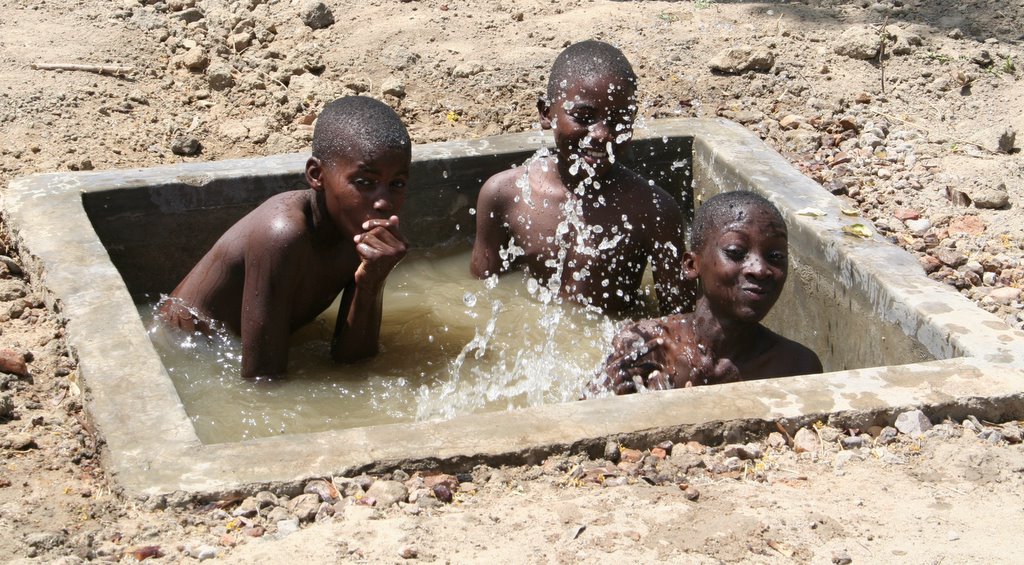
The afternoon was still and dry with no breeze to cool the stifling heat. I answered a knock on the door and found four little boys ranging from five years to thirteen.
"Please, madam, may we swim in your backyard?"
This was a new thought. The cistern has been used many times for baptisms. We have even brought in a metal stock tank and filled it with water as an additional baptistery. Our young friends saw the opportunity to cool off and have a good time. We agreed to let them swim.
For the next hour we listened to splashing and shrieking as the boys enjoyed the cistern and tank.
Friday, October 28, 2005
Kulenga Outreach
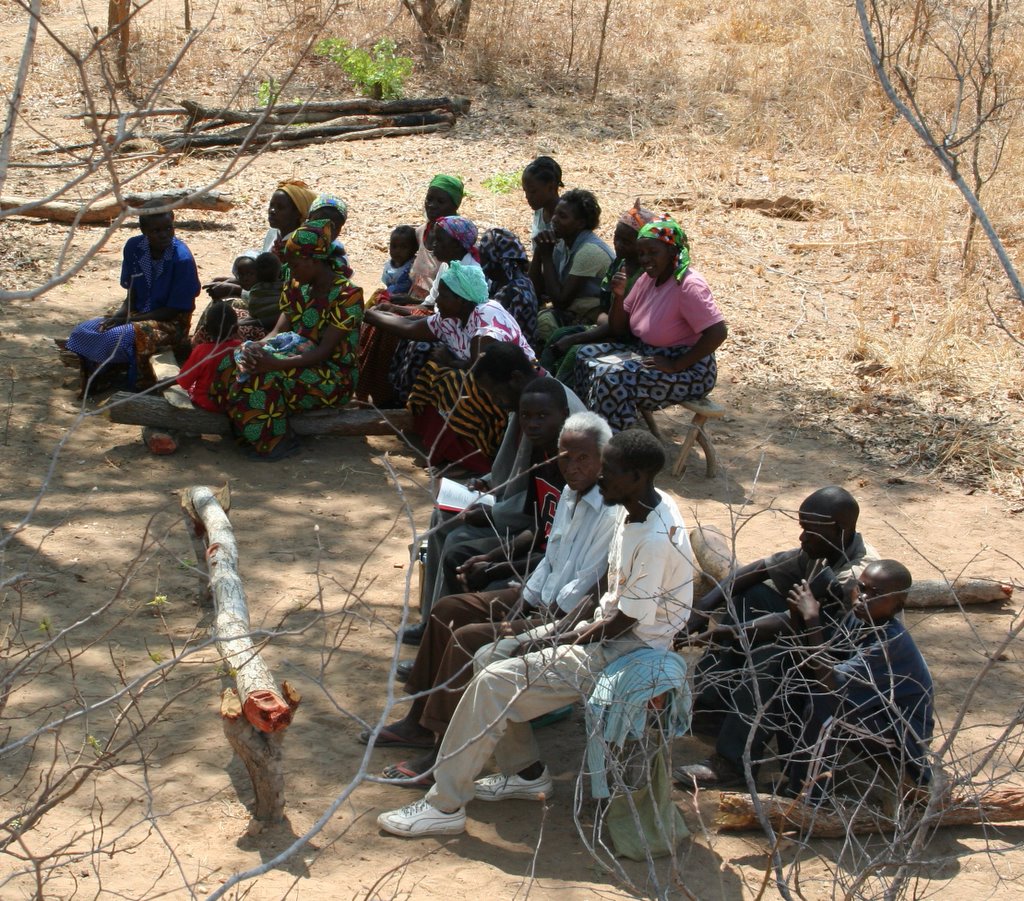
Kulenga is one of the new congregations planted as a result of this summer’s medical mission. During the clinic days at Singwamba, the Kulenga headman came for treatment. He needed hospitalization, so Dr. Hamby provided money and transportation for the headman to be taken to the hospital in Livingstone. Unfortunately, the headman later died, but the village was touched by the kindness shown to him and asked for someone to start a church at Kulenga. Daniel Mweemba, the tireless church leader at Singwamba, took on the challenge, and the Kulenga congregation has been meeting for six weeks now.
We visited this new group last Sunday. Peter Mufwafwa, a teacher at the secondary school, joined us as David’s translator, and Peter’s wife, Mary, also came with us. I asked Vera, one of the secondary pupils, to come along as my translator.
Vera is one of the 38 needy orphans who are able to attend Namwianga Christian Secondary School because a sponsor in the USA pays her tuition. She is the top student in grade 12 and the top math student in the entire school. As if that weren’t enough, her poise and beauty would make her a shoe-in for the Miss Zambia competition. Vera is an outstanding young woman, and I looked forward to getting to know her on this trip.
The jolting, dusty ride into the bush ended at a spot where the congregation was meeting in the shade of a huge tree. Makeshift seating was made of poles laid across v-shaped sticks. A gentle breeze kept the temperature pleasant for the forty or so worshipers.
Since it was a new congregation, we had brought the communion supplies with us. I fixed a cup of watered down wine, tore a chipate (Indian equivalent of a tortilla) into pieces, and communion was ready. Daniel led the meditation at the Lord’s Supper and another young man led the singing.
When David got ready to preach, Vera and I took the 14 children to the shade of another tree for our Bible lesson. As soon as we began, I knew we faced a challenge. Vera, I found out, is from the Lozi tribe, not Tonga, and speaks Nyange as her first language. She only learned Chitonga two years ago. Well, Nyange and Chitonga are similar, so with a little extra time and lots of pointing at the pictures I was using we were able to communicate with the little ones. The children who were school age could understand my English, so they helped the younger ones as well. The hour flew by, and we finished by giving the children a coloring sheet and crayons. This always produces some excitement, especially when I tell them that they can keep the three crayons in the zip lock bag they were given!
After the service and our customary meal of nshima and chicken, we went around one last time to shake hands and say our farewells. When I came to Daniel, I asked him, “How many congregations have you planted since the medical mission?”
He looked apologetic as he answered, “Only five.” This is a man who goes from village to village on his bicycle, who has no telephone, no copy machine, no secretary, no budget, and is paid no salary. Yet he is disappointed that he has only planted five congregations in two months! Praise God for the Daniel Mweembas in the kingdom, and may God raise up many more like him.
Tuesday, October 25, 2005
Old Man

The first time it happened, I couldn’t believe my ears. Yes, we are in our fifties (EARLY fifties!) and we’ve been married almost thirty years. And, yes, David does have that gray--almost white--hair and beard. But we don’t think of ourselves as being OLD. So I was caught by surprise when I answered the door one morning.
“I want to talk to the old man,” the guy at the door insisted.
My first thought was, “There isn’t an old man here.”
“Who?” I asked him.
“The old man. Your husband.”
My husband? The old man? I laughed out loud. “David, you’re not going to believe this,” I called down the hallway. “This guy wants to talk to the old man, and he means you.”
David took it in stride. It’s happened several times since then. The Zambians respect old age, so it’s actually a compliment to be called old. David’s white hair and beard place him in the aged category, I guess. The average life expectancy in Zambia is around 36, so 50-something is approaching elderly.
Let’s not even think about what will happen when someone comes to the door and asks for “the old woman.”
Sunday, October 23, 2005
Got Diesel
A friend sent us an e-mail suggesting that we have T-shirts printed up with "Got Diesel?" as the slogan. Well, we have got diesel! On Friday a shipment came in to Kalomo. We are filled up and hoping that this time the supply will last.
Even before we knew about the diesel, we had found a way for the college student to get his wife and baby home from Livingstone (see Diesel Blues). Bart Bruington, another missionary, and his family asked if they could borrow our vehicle for a trip to Livingstone on Friday. Bart had found an individual in town that had diesel for sale. So the student rode to Livingstone with them and brought home his wife, mother-in-law, and baby. I love happy endings!
Even before we knew about the diesel, we had found a way for the college student to get his wife and baby home from Livingstone (see Diesel Blues). Bart Bruington, another missionary, and his family asked if they could borrow our vehicle for a trip to Livingstone on Friday. Bart had found an individual in town that had diesel for sale. So the student rode to Livingstone with them and brought home his wife, mother-in-law, and baby. I love happy endings!
Saturday, October 22, 2005
Anonymous No More
We had only been in Zambia a few weeks when I realized something very startling: I cannot be anonymous over here. In America I had lived in major metropolitan areas my entire adult life, so I had become accustomed to being a nameless face when I drove around or shopped. I was one of a multitude, and my actions were scarcely noticed unless I was in familiar company.
Now, however, by virtue of my skin color I am noticed wherever I go. My vehicle has a Namwianga Mission logo on the side, so when I drive I am further identified. I am the White Lady From Namwianga Mission, and it is impossible for me to blend into the crowd. Someone is always watching my every move.
The scripture in Ephesians 5:15 that warns us to “Be very careful, then, how you live” has a whole new meaning now that I am anonymous no more.
Now, however, by virtue of my skin color I am noticed wherever I go. My vehicle has a Namwianga Mission logo on the side, so when I drive I am further identified. I am the White Lady From Namwianga Mission, and it is impossible for me to blend into the crowd. Someone is always watching my every move.
The scripture in Ephesians 5:15 that warns us to “Be very careful, then, how you live” has a whole new meaning now that I am anonymous no more.
FINALLY
We FINALLY have our own internet connection! The company was supposed to come from Lusaka two weeks ago, but they had no diesel for their truck and couldn't come. On Thursday two guys showed up at 8:30 and had the dish and everything installed by noon. We are thrilled to be back online!
That's the good news. The bad news is that the ONLY place suitable for the satellite dish is in front of the house. Yes, the satellite dish is our newest yard art. I did insist that they move it a little to the side of the house. David assures me that he will landscape around it and hide it from view. I whined for a while, but after getting to talk to our daughter Sara online that night, I decided that a satellite dish in the front yard was a small price to pay for the chance to communicate with my children!
Now we promise to post more regularly and get some pictures put on the blog.
That's the good news. The bad news is that the ONLY place suitable for the satellite dish is in front of the house. Yes, the satellite dish is our newest yard art. I did insist that they move it a little to the side of the house. David assures me that he will landscape around it and hide it from view. I whined for a while, but after getting to talk to our daughter Sara online that night, I decided that a satellite dish in the front yard was a small price to pay for the chance to communicate with my children!
Now we promise to post more regularly and get some pictures put on the blog.
Wednesday, October 19, 2005
Diesel Blues
There is still no diesel for sale to the general public in Zambia. Many stations are also out of gasoline as well. We were running out of cash, so we used one of our jerry cans of diesel yesterday to make a trip to Choma, the nearest town with an ATM. As we were getting ready to go, I told David, "I'm really looking forward to getting a COKE!" We also hoped that one of the stations in Choma might have some diesel for sale. Well, we did get cash at the ATM and made a visit to the bank. But no stations had diesel. AND, because no trucks have been able to get through, the entire town was out of COKE! I settled for an orange Fanta.
On a more serious note, one of the college students came to us today for help. His wife delivered twins on the 12th in Livingstone. One of the twins was stillborn. The husband came back by bus on Monday, and his wife is staying with friends. She wants to come home, but has no way of getting here. We can't help him because there is no diesel.
We'll keep you posted.
On a more serious note, one of the college students came to us today for help. His wife delivered twins on the 12th in Livingstone. One of the twins was stillborn. The husband came back by bus on Monday, and his wife is staying with friends. She wants to come home, but has no way of getting here. We can't help him because there is no diesel.
We'll keep you posted.
Unique Happenings
I spend time each evening washing dishes by hand. After years of being spoiled by an automatic dishwasher, I expected to find this drudgery. Instead, I discovered that washing dishes and looking out my window is a great time for reflecting on my day and on life in general. On Friday night as I washed the dishes I thought about the many unique things that happen here.
For instance, one of my students missed two days of school this week because she was recovering from the bite of a cobra. How many American teachers had that experience this week?
On Tuesday morning as I walked to class I noticed a steer tied to a tree near the boys’ dorm. At midday I saw a cluster of people under the trees near the cafeteria. That afternoon I looked out my classroom window onto that area and saw that the group was busy carving up a beef carcass. One of the college students paid for her tuition with the steer, and the meat will be used in the cafeteria.
Tuesday evening five male students came to our house to get David. They had found an insane man in a classroom and needed David to help them take him to the police station in Kalomo. They managed to coax and push the man into the back of the Land Rover and got him to the police station. The police refused to accept him, saying that he had been brought in from a village two weeks earlier. The villagers had been unable to control him, so they had chained him to a tree until they could manage to bring him into town. The police told David and the guys to take him to the hospital. There was no one at the hospital with the authority to admit the man, so they took him back to the police station. The police agreed to let the man spend the night and take him to the hospital in the morning. David and the guys bought some food to leave with him before they returned to the campus.
Last week as I taught my evening women’s class, a bat came flying into the classroom. He swooped over our heads for ten minutes or so and then flew back out into the night. The ladies hardly seemed to notice, but I’ll admit that I had to work to concentrate on my lesson.
Turning a water faucet or light switch on is always a bit suspenseful, because we never know if we’ll have water or electricity. We had outages of one or the other or both every day this week.
We invited a friend to dinner Friday night. As we visited over our after dinner tea, we heard a group of people walking past the window. It was Richwell, one of our college students, and his eighth grade Bible class. Four of the young men in the class had decided to be baptized in our backyard cistern. We grabbed flashlights and towels and joined the group to witness this happy event. If you’re keeping track, we’ve now had nine baptisms.
I guess as long as these unique happenings continue, I’ll have plenty to reflect on as I wash the dishes. Think of me when you load your dishwasher next time!
For instance, one of my students missed two days of school this week because she was recovering from the bite of a cobra. How many American teachers had that experience this week?
On Tuesday morning as I walked to class I noticed a steer tied to a tree near the boys’ dorm. At midday I saw a cluster of people under the trees near the cafeteria. That afternoon I looked out my classroom window onto that area and saw that the group was busy carving up a beef carcass. One of the college students paid for her tuition with the steer, and the meat will be used in the cafeteria.
Tuesday evening five male students came to our house to get David. They had found an insane man in a classroom and needed David to help them take him to the police station in Kalomo. They managed to coax and push the man into the back of the Land Rover and got him to the police station. The police refused to accept him, saying that he had been brought in from a village two weeks earlier. The villagers had been unable to control him, so they had chained him to a tree until they could manage to bring him into town. The police told David and the guys to take him to the hospital. There was no one at the hospital with the authority to admit the man, so they took him back to the police station. The police agreed to let the man spend the night and take him to the hospital in the morning. David and the guys bought some food to leave with him before they returned to the campus.
Last week as I taught my evening women’s class, a bat came flying into the classroom. He swooped over our heads for ten minutes or so and then flew back out into the night. The ladies hardly seemed to notice, but I’ll admit that I had to work to concentrate on my lesson.
Turning a water faucet or light switch on is always a bit suspenseful, because we never know if we’ll have water or electricity. We had outages of one or the other or both every day this week.
We invited a friend to dinner Friday night. As we visited over our after dinner tea, we heard a group of people walking past the window. It was Richwell, one of our college students, and his eighth grade Bible class. Four of the young men in the class had decided to be baptized in our backyard cistern. We grabbed flashlights and towels and joined the group to witness this happy event. If you’re keeping track, we’ve now had nine baptisms.
I guess as long as these unique happenings continue, I’ll have plenty to reflect on as I wash the dishes. Think of me when you load your dishwasher next time!
Monday, October 10, 2005
News and Notes - October 10
Still no diesel!!!! The secretary of energy for the country of Zambia was fired last week, we hear. The story on the street is that he planned a trip to Paris in the middle of this fuel crisis. That must have been the last straw, and now he’s out. The government has finally given permission for the fuel companies to import diesel from other countries. Estimates are that diesel will be flowing by the 15th. We shall see! In the meantime, we are staying home. There were no outreaches this weekend except to places that the students could get to on foot or by bicycle.
We have now had five baptisms in our backyard cistern. Two of them were students that David has been studying with. One of the young men was over six feet tall, and the cistern was barely big enough! We built the cistern to catch water for use in the garden, but it has turned out to be very useful as a baptistery.
Long-time residents tell us that October is the worst month to be in this part of Zambia. The temperatures are hot and everything is dry and dusty. It hasn’t rained here since April, and the rains won’t start until late October. The amazing thing is that many of the trees and plants are turning bright green! Somehow they are drawing on deep reserves of moisture. People tell us that by the time the rains come, the countryside will already be green. There’s got to be a sermon in that somewhere!
The jacarandas are another beautiful sight. These very tall trees are covered with bright purple blossoms. The road to Roy Merritt’s house (where we go to send e-mails) is lined with these trees. They form a purple archway, and as the blossoms drop, the dusty road begins to look like it is strewn with jewels.
We have now had five baptisms in our backyard cistern. Two of them were students that David has been studying with. One of the young men was over six feet tall, and the cistern was barely big enough! We built the cistern to catch water for use in the garden, but it has turned out to be very useful as a baptistery.
Long-time residents tell us that October is the worst month to be in this part of Zambia. The temperatures are hot and everything is dry and dusty. It hasn’t rained here since April, and the rains won’t start until late October. The amazing thing is that many of the trees and plants are turning bright green! Somehow they are drawing on deep reserves of moisture. People tell us that by the time the rains come, the countryside will already be green. There’s got to be a sermon in that somewhere!
The jacarandas are another beautiful sight. These very tall trees are covered with bright purple blossoms. The road to Roy Merritt’s house (where we go to send e-mails) is lined with these trees. They form a purple archway, and as the blossoms drop, the dusty road begins to look like it is strewn with jewels.
Wednesday, October 05, 2005
Eating Customs
Our visits to the villages have taught us the basics of Zambian eating customs. Here are some observations based on our experiences—we don’t claim to be experts yet!
Traditionally men and women do not eat together. Women cook the meal and serve it to the men. Then the women eat in another place. We have seen exceptions to this tradition when large groups are eating together or when I’ve been the only woman in the group of diners.
Dishes of food are placed on a mat or table. A pitcher of water and a bowl are provided for hand washing. The host pours water from the pitcher over the hands of each guest. If there is no specified host, one person pours water from the pitcher over another’s hands into the bowl. Then the pitcher and bowl are passed to the next person.
In our experience, all foods are finger foods. Food is eaten only with one hand—the other is kept clean for passing dishes or serving. Nshima is usually picked up first. Nshima, the staple of the Zambian diet, is made by boiling white cornmeal and water until the mixture very thick. It is eaten by scooping up a handful out of the communal dish and kneading it with fingers into a ball. The nshima then serves as a form of eating utensil as well as food: it can scoop up some foods and can soak up any liquids.
Any food that is not nshima is called “relish.” Common relishes are chicken, goat, beef, cabbage, greens, and kapenta fish (dried minnows similar to anchovies). Usually there is some sort of “soup,” the liquid that the meat was cooked in. Often this soup is a tomato onion mixture, although we have also had delicious soup of chicken broth flavored with curry.
The free-range chicken is usually very flavorful but tough. The common cooking method is to boil the pieces in water for a time to tenderize them and then to fry the chicken in sunflower oil for flavor. The cabbage is fried, usually with added onions. Kapenta fish are a favorite of the Zambians, but most Americans have to acquire a taste. The smell of cooking kapenta is enough to spoil the average person’s appetite, especially if the cooking is done inside. We found that we can eat kapenta (and like it) if it has been cooked outside (so we didn’t smell it) and if it has been cooked with tomato and curry. I think the taste is similar to sardines.
Zambians are a warm and gracious people. Although we are quite comfortable eating nshima with our hands, our hosts sometimes provide us with spoons. Another concession for western guests is to prepare rice instead of or in addition to the nshima, but rice is too expensive for most Zambians to eat on a regular basis.
After the meal, a pitcher of fresh water and a bowl are passed around for hand washing. Sometimes hot tea with milk and sugar is served to conclude the mealtime.
Traditionally men and women do not eat together. Women cook the meal and serve it to the men. Then the women eat in another place. We have seen exceptions to this tradition when large groups are eating together or when I’ve been the only woman in the group of diners.
Dishes of food are placed on a mat or table. A pitcher of water and a bowl are provided for hand washing. The host pours water from the pitcher over the hands of each guest. If there is no specified host, one person pours water from the pitcher over another’s hands into the bowl. Then the pitcher and bowl are passed to the next person.
In our experience, all foods are finger foods. Food is eaten only with one hand—the other is kept clean for passing dishes or serving. Nshima is usually picked up first. Nshima, the staple of the Zambian diet, is made by boiling white cornmeal and water until the mixture very thick. It is eaten by scooping up a handful out of the communal dish and kneading it with fingers into a ball. The nshima then serves as a form of eating utensil as well as food: it can scoop up some foods and can soak up any liquids.
Any food that is not nshima is called “relish.” Common relishes are chicken, goat, beef, cabbage, greens, and kapenta fish (dried minnows similar to anchovies). Usually there is some sort of “soup,” the liquid that the meat was cooked in. Often this soup is a tomato onion mixture, although we have also had delicious soup of chicken broth flavored with curry.
The free-range chicken is usually very flavorful but tough. The common cooking method is to boil the pieces in water for a time to tenderize them and then to fry the chicken in sunflower oil for flavor. The cabbage is fried, usually with added onions. Kapenta fish are a favorite of the Zambians, but most Americans have to acquire a taste. The smell of cooking kapenta is enough to spoil the average person’s appetite, especially if the cooking is done inside. We found that we can eat kapenta (and like it) if it has been cooked outside (so we didn’t smell it) and if it has been cooked with tomato and curry. I think the taste is similar to sardines.
Zambians are a warm and gracious people. Although we are quite comfortable eating nshima with our hands, our hosts sometimes provide us with spoons. Another concession for western guests is to prepare rice instead of or in addition to the nshima, but rice is too expensive for most Zambians to eat on a regular basis.
After the meal, a pitcher of fresh water and a bowl are passed around for hand washing. Sometimes hot tea with milk and sugar is served to conclude the mealtime.
Still No Diesel
Life without diesel seems to be our fate. We are down to our last reserves, and there is no word of hope from the refinery that there will be any diesel available soon. We were supposed to get our internet hookup this week, but the company e-mailed us that they are unable to go anywhere because they have no diesel for their vehicles. Now there is no gasoline available either. I guess we'll be staying close to home for a while!
Subscribe to:
Posts (Atom)