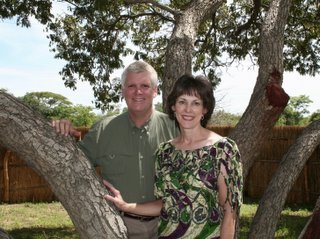

Thursday, June 16, 2011

Let the Adventures Begin

I landed in Livingstone and made it through Customs and Immigration without incident. My greeting committee of Ellie and Kel Hamby, Joseph Lawrence, and James Estes (all here preparing for Zambia Medical Mission) welcomed me, and we set out to do our errands in Livingstone. Then the adventures began.
The first ATM I tried would not work. I went down the block and found another one. Then we went into a fast food chicken place and got in line behind two other people. Fifteen minutes later it was finally our turn to order. I ordered first, and then Joseph ordered the same thing. Sorry, I had managed to get the last order of potatoes and Joseph had to order something else. Then the clerk did not have enough change to give me in return. Joseph had to chip in the equivalent of two dollars so that I could get my change. I’ll pay him back some day.
Next stop: cell phone shop. I bought a sim card and inserted it into my global phone. Immediately I started getting spam text messages – 2 different messages repeating every few seconds until my phone reached its limit of 168 messages! At that point, I couldn’t send any text messages because—surprise—there wasn’t enough memory!
I started trying to call the cell phone company. I followed the prompts: Press 1 for English. I listened to the menu, which surprisingly does not feature “How to handle 168 spam text messages,” It does say “Press 5 for all other business. “ I pressed the 5 and listened to another menu that again ends with “Press 5 for all other business.” I pressed 5 and got “We are disconnecting you now.” So far I’ve tried this about 25 times, and twice I have managed to get put on hold instead of being cut off. Those two times I got to listen to three minutes of music before being cut off. Meanwhile, as fast as I can delete the messages, they come in again. I hope you’re not trying to text me here in Africa. It may be a few days.
Back at Namwianga, things are much more functional! Harold had fixed his famous chicken spaghetti for our supper, along with his equally famous chocolate cake. The electricity went off just as we finished eating, making me feel right at home in Zambia. Security guards Webster and Justin let me join them around their brazier fire and get caught up on the news. Sadly, Webster reports that our cat Makua disappeared over a month ago. He says I should not worry, because the cat has done this before and always returns eventually.
The sky is brilliant under the blanket of stars, the crickets are chirping, and the air is cool and crisp. Africa has me in its grip again.
I’ll try to write more after I delete 168 text messages . . . and if the power stays on . . .

Wednesday, June 15, 2011

The Itch for Africa

Our first trip to Africa was in 1999. We thought it would be a once-in-a-lifetime experience, and we thought we were doing it mainly for our teenage kids. Near the end of our three-week stay, a co-worker who had grown up as a missionary's kid in Africa warned us that we would have to return. He said, "Africa is like poison ivy on the brain, and the only way to scratch it is to go back."

He was so right. Twelve years later I know that Africa has infected not only my brain, but my heart as well. There is always a part of me that is itching to return. There is always an empty place in my heart--an Africa-shaped hole that can only be filled with the people and places and craziness of Africa.

And tonight I'm starting to scratch my African itch. I'm overnighting in Johannesburg, South Africa, on my way to Namwianga. This trip is mainly to work with the sponsorship program--I haven't met the students who are new to the program in 2011. I need to meet with them and also check on how Rajiv is managing the overwhelming responsibilities I piled on him.

But George and Jason are part of the itch as well. I can't wait to have their little arms around my neck and hear them say, "I love you, Nana!" I'm sure Jason knows most of his alphabet by now, and he'll want to impress me with his new knowledge. George will have to show me his usual cute antics, and there will be other toddlers to love and hug on as well.

Meagan Hawley is at Haven III for the summer, so I'm looking forward to some long talks with her as we compare notes about our year of re-entry and get caught up on our lives in America. I brought along some Beginner's Bibles, so Rodgers Namuswa and I will head out into the bush somewhere to train Bible class teachers. Mrs. Moono and I will have tea and discuss our families and the chickens. I hope Webster will bring our temperamental cat around, although it's too much to hope that the cat might be glad to see me.

And who knows what else might be in store? The only thing that's certain on a trip to Africa is that there will be some unexpected, unplanned, and maybe slightly crazy adventures along the way.

There are few things in life that feel as good as a scratched itch. Africa, I'm back! And it feels so good.


Tuesday, June 07, 2011

Aunt Norma's Legacy

My Aunt Norma died on May 28 at the age of 83. I remember her as a vibrant, energetic woman who loved her family. She was very proud of her three sons, or as she called them, "the boys."

In 2006 Aunt Norma began sponsoring a student at George Benson Christian College. When her first student, a young widow with two children, graduated in 2007, I chose Rajiv Siamweela to be her next sponsored student. I knew that he was one she could take pride in, just as she had her sons.

Rajiv graduated in December and is now teaching high school math at Namwianga Christian High School. He also serves as my assistant in the sponsorship program. Through the years I reported to Aunt Norma about Rajiv's accomplishments and assured her that she was making a difference in his life.


When I told Rajiv about Aunt Norma's death, he sent the following tribute:

As I am writing, my heart ìs in deep sorrow. . . . At his own right time when I was in need, God helped me through his servant who probably helped me more than anyone could have done. I am grateful, and I appreciate so much the aid she gave me. I will always be thankful of her love for me. In me she planted a seed that is and will be fruitful. May Her Soul Rest in Eternal Peace.

Tuesday, May 31, 2011

The Tornado and Fredy's Dinosaur


On Saturday I joined a crew from our congregation and headed to Joplin to help in the relief efforts. David and I drove there in his pickup truck. I was glad we were alone when we found our way into the center of the area hit by the tornado. I thought I was prepared after seeing the photos and video on TV all week. But nothing prepared me for the actual sight of miles and miles of devastation. Miles and miles of houses reduced to rubble. Very few had even one wall still standing. Cars crushed like Coke cans and carelessly tossed like pieces of litter. Electric lines snaking and coiled on the ground by the roadsides. Naked trees stripped of leaves and bark. All I could do was cry and wonder how anyone escaped alive.

We drove to a house in an area that was one block away from the worst-hit area. That one block was the difference between matchstick rubble and houses that were still standing. A lady named Viviana and her preschooler waited out the storm in an inner closet. They emerged alive, their house damaged but structurally sound. A block away the stories were much more tragic.
Viviana had windows blown out on two sides of her house. The Mt. Vernon crew had put a tarp on her roof and cleared fallen trees out of her yard on Thursday. The job for six of us women on Saturday was to help her get the interior cleaned up and livable. Glass was everywhere, and rain had soaked the carpets and furniture. My brother had brought a generator, so we cleaned up the glass and vacuumed the carpets with a ShopVac. Mud splattered the living room walls, and we cleaned them off as best we could. The living room furniture was ruined and had to be carried out to the curb to be picked up by the trash crews.

Viviana's son Fredy uses a small enclosed porch as his playroom. The shattered window had scattered glass shards all over the floor, and most of the toys were drenched. We started taking the toys outside and sorting what was salvageable from what would have to be thrown away. Fredy had been gone for the first hour of our work, and when he came home he headed straight for his playroom. He eyed the bare spots silently as his mother explained that his toys would have to be washed and that we were going to help. Without a word he began gathering up armloads of small items that had been kept dry by a plastic bin and carefully carried them out to the porch and piled them up. He made trip after trip, adding to his little piles in silent determination.

Then tragedy struck. His favorite toy, a maroon stuffed dinosaur whose electronic innards made it roar and move, was found soaked and still. Viviana pronounced it a discard. Fredy's big brown eyes dropped to the ground. His chin trembled. He tried really hard not to cry in front of these strangers. But it was the last straw for Fredy. The tears fell, the silent sobs became uncontrolled weeping, and no one could console Fredy. His mother's promises to buy him a new dinosaur were useless. And we six other women stood around Fredy and Viviana and tried not to cry with him.

My sister-in-law Carol grabbed up the dinosaur with one hand and hugged Fredy with the other. "Fredy, I'm going to put it right out here in the sunlight and we'll just see if we can't get it dry and maybe it will work again." Fredy hid his face on his mother's shoulder, finally gaining control of himself and reluctantly releasing the dinosaur to Carol's kind hands.
I wonder how many scenes like this are happening every day in Joplin. How many Fredys did the tornado leave behind? Fredys who can't understand an EF5 storm and only know that their dinosaurs are wet and life will never be the same?

I just had to grab my broom and cleaning rags and keep moving.

Wednesday, May 25, 2011

HIZ Path at Namwianga

Harding University's speech pathology program has a group of students and faculty members at Namwianga now. This is their third year to come, and they are once again making a difference for the children at the orphanages. The students provide various kinds of therapy and language development experiences that the kids would not get any other way. The results are wonderful for both the kids at the Haven and the Harding students who fall in love with Africa and its people.

Dr. Dan Tullos has a blog about his experiences with the group, and his blog has links to several student blogs as well. Check it out if you're interested.

Natural Disasters

David and I live in southwest Missouri, an area that used to be famous because of Branson. Now Joplin is making headlines, and our entire region is consumed with helping Joplin recover from the devastation of last Sunday night's tornado.

Sunday night at 5:25 we were in the church auditorium hearing yet another of my husband's great sermons. My niece who lives in EL SALVADOR sent a text message to my brother that a tornado was on its way and we should take cover. Right after the services ended, my brother (who had then checked out the situation on his Iphone) announced that we should all head for the basement. About 25 church members and neighborhood residents spent the rest of the evening in the church basement. We followed the tornado news on laptops and Iphones, hardly able to believe the terrible reports. Of course, we soon found out that the initial reports couldn't begin to describe the incredible damage.

Our community of Mt. Vernon is 45 miles west of Joplin, and we were spared. David and my brother have been to Joplin and will be going again tomorrow to help with relief efforts. Everyone here is shocked by the horrible sights and reports of what happened in Joplin. The community and the nation are mobilizing all kinds of resources to respond and help those who lost everything in a few minutes of terror.

I've been reflecting on storms, disasters, and my experience of living in Africa. There are no earthquakes, hurricanes, or tornadoes in Zambia. About the only natural disaster is drought, and it is a slow, insidious danger--nothing like the apocalyptic destruction of a tornado. The other slow, insidious killer in Zambia is AIDS. As horrible as the Joplin tornado is, AIDS may be just as destructive--or more so. Every family we knew at Namwianga had been touched by the AIDS epidemic in one way or another. A slogan that is often repeated in AIDS awareness campaigns is "We are not all infected, but we are all affected." Parents die, leaving helpless orphans to be raised by relatives who are already overburdened with their own poverty and need. Orphans with no family to care for them end up at orphanages like the Havens--wonderful places for children who must be there, but nothing like the safety and security of a true home. Workers in their prime are cut down by the dreaded disease, robbing the country of needed talent and skills. Weakened immune systems cause employees to miss days and days of work, hampering the efficiency of a nation already struggling for economic survival.

I weep at the photos of Joplin's flattened neighborhoods and think of the many lives destroyed by the tornado. And I grieve for the lives destroyed by the quieter and equally powerful pandemic called AIDS. May God help us to be just as shocked, touched, and motivated to help those whose lives are destroyed in years of suffering as we are by those who lose everything in an instant. May God help us all.

Wednesday, May 18, 2011

How to Pray for Missionaries

To those of you who want to pray for missionaries, but don't know what to pray, here is a link to a weekly cycle of prayer topics. The article includes some excellent insights to help you become a prayer warrior for those who are serving in the mission field.


Saturday, May 14, 2011

Road Rage African Style

These photos are from Thursday, February 17, by someone from Centurion in Pilanesberg Game Reserve, South Africa.


Road rage affects us all!

Saturday, May 07, 2011

A Tribute to Mother

My mother has been gone for several years now, but her heritage of love and faith still inspires me every day. In honor of Mother's Day I am re-posting a tribute I wrote about her.

Mother's Quilts

The quilts tell her story. I finger the bright prints and smooth the muted solids. I trace the stitching on intricate designs or snap a simple nine-patch design over a bed. And when I do, each quilt whispers her story.

I asked my mother many times to tell me her story. Usually she refused to offer more than the briefest of details. “Not much in my life,” she would say, “is worth telling.” So I am left with the quilts—the bits and pieces of my mother’s story.

Like the quilter who stitched them, the quilts are sturdy. The stitching speaks of one who can endure repeated trials without coming apart. Mother’s trials were all too many. She was raised in a crowded household by a preoccupied and distant mother. The reality of the depression was a constant presence on the Iowa farm. Mother loved learning and longed for a good education, but there was no way to get into town for high school, so she was forced to quit school at age 13. She married at 21 and worked with my father on the farm from sunup to sundown. Farm life was a constant struggle against the capricious whims of drought and crop failure. There was never more than just enough money to get by. When she was a young mother, her brother committed suicide and her sister’s only son drowned. When Mother was in her fifties, my father was killed in a tractor accident, leaving her with a farm and a construction business to run by herself in addition to her job as a nurse’s aide. Just a few years later her infant grandson died of a rare illness. Through it all she remained strong and uncomplaining. Only sturdy women like my mother endure the bits and pieces of hardship and pain without bitterness.

The bright hodgepodge of prints in her quilts tells of one who was frugal. Mother used only scraps of fabric for her quilts. Others might plan and purchase colors and prints for a coordinated palette, but Mother was content to use what she had. “Make do or do without” was a proverb she lived by, first of necessity during the long years of the depression and the lean years on the farm, and then from sheer habit. So her quilts are pieced from leftover fabric, from fabric others gave her, from the good pieces saved from discarded garments. One of her most beautiful quilts was stitched on white blocks that were cut from my father’s white dress shirts after he died. In her later years, she promised that when she had sewn up all the scraps she had, she would go out and buy fabric like the modern quilters did. I knew that day would never come—and it didn’t. After her death my sisters and I found boxes of fabric scraps ready to be sewn into quilt tops.

Two of Mother’s quilts were made especially for my children. Sara’s is a beautifully pieced and embroidered “Sunbonnet Sue” pattern put together with strips of pink. John’s quilt pattern is called “Bow Tie” and is pieced with bright blue. Both quilts speak softly to me of Mother’s love for children. No one could name all the little ones who came in and out of her life. When the depression forced her to quit school, she became a hired girl for families in her Iowa community. She would go to their homes and help out when the mothers had their babies. Later she married and had four children of her own. A nephew needed a home, so he was added to our family. Still there was room for more, so she and my father became foster parents. Through the years 14 different foster children called her Mama. After my father died, she became a relief housemother at a children’s home and became “Grandma Clurg” to hundreds of other children who needed warm hugs, loving smiles, and gentle words of wisdom. Each child was precious to her—bits and pieces added to her heart.

I’m not sure how many quilts my mother made in her lifetime. Only a few were truly works of art. The rest were pretty to look at, but made for service. “My quilts aren’t beautiful,” Mother would say, “but they are meant to be used!” Such service is a part of Mother’s story as well, for she loved to help others. She prepared countless meals for family, guests, and church potluck dinners. At any family gathering, we expected to find Mother in the kitchen washing dishes or quietly finding a way to clean, straighten, or make someone else comfortable. Mother had no desire to stop serving as she aged. After she left her position at the children’s home, Mother became a private duty nurse. She finally retired for the last time when she was 70 and began her volunteer work at the community hospital, accumulating hundreds of hours of service. In her younger years she taught Sunday School classes, and in her later years she was a regular helper in Vacation Bible School. When her 80th summer approached, my sister and her husband invited Mother to go with them on a road trip through the northwestern states. Mother was disappointed that the trip caused her to miss helping with Vacation Bible School. Yes, like her quilts, Mother was created to serve.

Not all of mother’s quilting became bedding. She used some of her scraps to make potholders. Those potholders remind me that much of Mother’s life was spent in the kitchen. She was known in our family and our church for her cooking skills. She seemed to put a delicious meal on the table with no effort at all. Her cream cheese mints, hot rolls, and chocolate chip cookies were her trademarks. My daughter once asked her, “Grandma, why do your chocolate chip cookies taste so much better than anyone else’s?” Mother’s immediate reply was, “Because there’s a little love in every bite!” Even as a widow living alone in a small house, she kept her freezer stocked full of food ready for company. Her death came just 12 days before Christmas in 1998. We were not surprised to find that the Christmas dinner for the family was already there in the freezer: the turkey, the pies, the rolls, the vegetables, and, of course, the chocolate chip cookies, with bits and pieces of love in every bite.

Not all of the stories in Mother’s quilts are hers. Each family member has stories told by the quilts. We love to admire the quilt tops and take turns pointing out, “I had a shirt out of that!” or “That was my Easter dress!” We recall first days of school, dates, bedroom curtains, school trips, and 4-H projects. My niece is a young adult now, but she claims the quilts can transport her back to her childhood. She says, “It's always amazing to me that looking at a tiny scrap of fabric on a quilt can evoke such deep emotions. I can see a quilt piece and remember the exact outfit made from that fabric. Suddenly I feel like I'm 10 years old again, wearing that outfit and heading to church or going to school.” Mother’s quilts tell the bits and pieces of our lives, too.

Mother took the random bits and pieces of her circumstances and stitched them into a life that was loving, sturdy, frugal, and serving. God’s hand placed the final stitches. With timing as loving and kind as Mother’s sewing, He gave Mother’s life a gentle goodnight. Surrounded by family and at peace, she died as she had lived—quietly and lovingly.

There will be no more quilts made by my mother’s loving hands. But we will still discover more of her story and ours. The quilt of Mother’s life lives on, warming our hearts just as her handmade quilts warmed our bodies, and reminding us of the bits and pieces of a life well lived.

Copyright pending

Wednesday, April 27, 2011

Mother's Day Gift Suggestion

We would like to suggest a way to give a Mother’s Day gift that will give life to a mother and her baby in Zambia. A gift of $10 will purchase two Clean Delivery Kits (CDKs) for Zambia. We plan to give these CDKs out to expectant mothers during our Zambia Medical Mission and throughout the year at the Namwianga Rural Health Center. We will be targeting mothers who will not have access to a hospital or rural clinic for delivery.

Each year about 60 million women in developing countries give birth with only the help of an untrained attendant or family member or with no help at all. Many of these deliveries take place at home and often in a small hut in a remote village. The infection rate is high with some 1600 women per day dying from complications associated with pregnancy or childbirth, and infection is a leading cause. Around 950,000 newborns per year die from infection, according to the World Health Organization. Many of these infections can be avoided when Clean Delivery Kits (CDKs) are used. Our kit includes the following:

Bar of soap and wash cloth
Square yard of plastic sheet
Razor blade (single edge)
String for umbilical cord
Sealed bag for packaging
Baby blanket
Infant sleeper or onesie
Candle
Matches
Two pairs disposable gloves
Tylenol Extra Strength
Prenatal multi-vitamins for 2 months

Last year, we gave out 500 CDKs in three days, so this year our goal is 1,000 kits so that no mom-to-be will go back to her hut without having these essentials for her hut delivery.
We are making a special drive for Mother’s Day by encouraging family and friends to donate to Zambia Mission in honor of a mother, wife, sister, or friend. A personal note will be sent to individuals informing them of this gift. If you are interested in participating, please make checks to Zambia Mission Fund and send it to Zambia Mission, 658 E.N. 21st St., Abilene, TX 79601. Please include the name and address of the person you are honoring. If you have further questions, please contact Star Ferguson (star.ferguson@suddenlink.net or phone: 325-668-0687)

Tuesday, April 26, 2011

Kanyameza Student Outreach

Roy Merritt sends this report.
Students at George Benson Christian College are encouraged to be involved in outreaches. Two Northreach-sponsored students ride bicycles 23 kilometres to Kanyameza church most Sundays.
Open buildings like this are comfy in hot weather!

Builders often use large tin cans as forms to mould cylindrical bricks.

Kanyameza church has a strong interest in orphans, and organized an orphan day out here at Namwianga last year.
Over the past year attendance has increased from 28 to 54.

Thursday, April 21, 2011

Sadness

This afternoon we received some devastating news from Namwianga. Virginia Chuulu, a lovely young woman who served as my translator during Zambia Medical Mission, died in childbirth on Sunday. Her infant daughter survived, but Virginia succumbed after having an emergency C-section at the Zimba hospital (about 30 miles away from Namwianga).

In addition to the new baby, Virginia is survived by three other young daughters and her husband Barry who is a teacher at the secondary school. She will be greatly missed by all of us who were blessed by her vibrant personality and her loving spirit.

Please pray for Barry and the girls as they face the trying days ahead.


Sunday, April 17, 2011

Brittell Orphans

Several years ago I posted a story about the Brittell family and the orphans who were raised in their care. Today I received a notice from one of the orphans who would like to get in touch with the Brittell family. So if any of the Brittells read this and would like to communicate with him, you can click on the link above and look in the comments section of the original post to get his contact information.


Tuesday, April 12, 2011

Largest Meteorite in the World


Last Friday I subbed in a fifth grade science class. As we read the textbook section on meteorites, I saw found this sentence: "The largest meteorite ever found is located in the African country of Namibia." I was able to tell the kids that I have been there and seen it! We visited the Hoba Meteorite in 2009 when we traveled to Tsumeb, Namibia, to visit fellow missionaries John and Martie D'Alton. The fifth graders were impressed. As a matter of fact, we were too. It's a pretty incredible sight.


Gotta Have Shoes

Rajiv, my assistant at Namwianga, sent me this photo today. He has been busy buying new uniforms and shoes for the sponsored high school kids who show up with almost nothing. Students in Zambian high schools must wear uniforms, including black shoes. Many of our students come from families that simply cannot afford that expense. We keep a uniform fund to help them out, and Rajiv makes sure they have what they need.

Wednesday, March 30, 2011

Rasta's Beadwork

Here is a link to an interesting article about a Livingstone craftsman. Makes me wish I could do a little shopping African style!

Tuesday, March 29, 2011

Reunion with Oldenburgs

On Monday we spent some wonderful hours with our former coworkers Don and Laura Oldenburg. Don and Laura were with us at Namwianga from 2006 - 2009 and became dear friends as we shared many experiences of mission work together. The Oldenburgs moved to Michigan after their time at Namwianga, and we hadn't seen them since July, 2009. We managed to connect with them in Poplar Bluff, Missouri, where they met us while on a trip to visit relatives in Tennessee.

I realized as we talked about people and situations and memories of our time at Namwianga that no one but Don and Laura can relate to some of the things we did, and they can laugh with us at the absurdities of bush life. It's certainly true that in some cases, you really have to be there. What a joy it was to reconnect with them and to share that special bond in the Lord.


Monday, March 21, 2011

Sponsored Student


I'm still very involved in the US Sponsorship Program at Namwianga. This week I've been writing up bios of the new grade 10 sponsored students. I haven't met many of them, but I do know a few from interviews I conducted last October. Gift Kabali is one that I remember well because he was so impressive.

I interviewed Gift Kabali at Sinde Basic School last October. I knew immediately he was the kind of person that the sponsorship program is designed to help. Both of his parents died in 2006, and since then he has lived with his grandmother at Sinde. She is also raising his brother and sister and some other orphans.

Gift had one of the highest qualifying scores I've ever seen -- he scored more than 100 points above the minimum cutoff point on the high school entrance exam. He is also a leader and last year was the Headboy at his school, the highest leadership position available.

Helping students like Gift is what the sponsorship program is all about. I'm glad I can be a part of it.


Sunday, March 13, 2011

Grandmommy Longlegs

This is a guest blog from Roy Merritt at Namwianga (with my comments at the end).

As our rainy season drips to its end, insects are preparing for the long dry.

We have had our wettest season in years. After the last storm, our dam’s main spillway flooded and water flowed over our emergency spillway for the first time. Even that wasn’t enough relief, and water eventually lapped over the top of the main dam wall. It’s an earth dam, so we are grateful it wasn’t damaged.

These two ladies are hatching little ones who will protect us from assorted bugs till rains come back.

Gibson (one of the boys at Eric's House) found this one for me, a granny wearing black with yellow polka dots. I have shown her life-size here, her abdomen about the size of an egg yolk.
I’ve never seen one like this before. If anyone out there knows what kind this is, please tell me.


This is a female grandaddy longlegs hauling an egg basket, busy hatching scrawny little newcomers.

Linda here: Seeing these pictures brings back lots of memories for me. When we took down the things off our walls last March as we got ready to move, we found the remnants of spider nests on almost every single item! No wonder we had eight-legged critters everywhere!

We had been told that the wall spiders were harmless and actually helpful--supposedly they eat the mosquitoes. However, after five years of co-existing with the wall spiders, I had to admit I had never seen a spider eat a mosquito and it seemed that we had plenty of mosquitoes to go around anyway. We still advised our guests to leave the spiders alone as long as they were on the walls, but any critters who dared hit the floor were fair game for a smashing.

I personally think live and let live has its limits when it comes to spiders (but don't tell Roy!).


Wednesday, March 02, 2011

Gregersenblog: Zamgenuity

A re-post from the 2006 archives.
Gregersenblog: Zamgenuity: "A post from David this time. Zamgenuity-- A term describing the creative ways Zambians accomplish their everyday tasks without the resourc..."