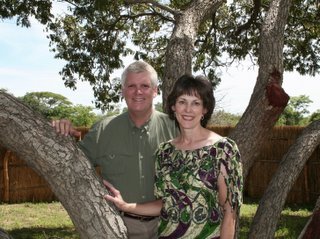

Namwianga is hosting its annual four-day lectureship right now. The first Monday and Tuesday of July are national holidays, so Namwianga has a Friday through Monday program of speakers and classes. The students all get a long break so that the people who attend the lectureship can stay in the dormitories. I think there are over 1,000 people on campus right now.
David spoke at one of the keynote sessions on Saturday morning and introduced the lectureship theme of Holiness. I was scheduled to speak to the ladies' class Saturday afternoon at 3:00. I went to the auditorium at 2:45 just in case the 2:00 class ended early. As it turns out, the 2:00 speaker was still going strong at 4:15, so my class didn't begin until 4:30 or so. I was glad that I was able to be in the earlier session, though, because I got to hear Jacob Sianungu preach in English as Aaron Brittell interpreted in Tonga. These men have an interesting life story. They were raised in an orphanage at Sinde Mission by the Brittell family. Augusta and Jesse Brittell moved to Africa with their two adult daughters, Gladys and Elaine, in 1946 to start the orphanage. Their son Orville was already working at Sinde Mission. The Brittell women did all of the day-to-day care of the babies and spoke to them only in English. Jacob and Aaron sound exactly like Americans as they speak even today.
I have read a book about Augusta Brittell entitled "Mother of Eighty." She was a woman of great faith and evangelistic zeal for the lost. She died in 1964, but her legacy lives on in the men like Jacob and Aaron who were raised by her family. Jacob is a preacher in Livingstone and also runs an orphanage. Aaron lives in Kalomo and is a church leader. We have been on several outreaches with him and his gospel singing group.
The story of the Brittells is fascinating. After Augusta died, her daughter Elaine continued caring for some of the orphans. She moved into Livingstone and became known for her works of kindness and her involvement in the community. One Zambian told me that Elaine would go to the hospital and find a patient who needed care--someone who was a stranger to her. Elaine would bring a mat and sleep on the floor next to the patient's bed for as long as necessary. Some people called her the "Mother Theresa of Zambia."
She lived in a room behind the Central Church of Christ building in Livingstone. In the early 80s, she was murdered as she slept. The killer was never found. I have heard stories about her funeral. Those who were there say that the entire town lined the streets as her coffin was carried in the procession. The line of mourners was so long that when the first people in the procession reached the cemetery a mile outside town, the end of the line of mourners was just leaving the downtown area of the city. Today there is an area of Livingstone named Elaine Brittell Township.
I would love to know more about Elaine and the Brittells. If anyone reading this happens to have information or knows any of the family, please let me know.
Sunday, July 01, 2007


Friday, June 29, 2007
News and Notes - June 29
We have been limited in our internet usage this week. We managed to use up almost all of our monthly bandwidth by the 18th, so we've had to be very careful these last few days. Tonight I'm using Ellie Hamby's wireless connection. If you've e-mailed and not heard back from us, just wait until July 1 when we get our new monthly allotment.
On Tuesday and Wednesday we were in Lusaka. Sara had never been there and wanted to see the capital city. We also needed to buy formula for The Haven and wanted to get a luggage rack put on our vehicle. Sara got to see Lusaka, but in true Zambian style we didn't get the other errands accomplished. The warehouse was out of formula, and the place that was making the luggage rack had a power outage and couldn't finish the job. We did get to do some shopping and enjoyed being with some of the Americans who flew in to Lusaka for early work on the medical mission.
Sara has been bringing home a toddler or two at lunch time and occasionally has one spend the night. I have fallen in love with every one of them, and both Sara and I missed the babies when we were in Lusaka.
The annual lectureship starts at Namwianga tonight and Christians from all over southern Zambia will be gathering for fellowship and teaching. David is speaking at tomorrow's morning session and I'll be speaking to the women tomorrow afternoon.
On Tuesday and Wednesday we were in Lusaka. Sara had never been there and wanted to see the capital city. We also needed to buy formula for The Haven and wanted to get a luggage rack put on our vehicle. Sara got to see Lusaka, but in true Zambian style we didn't get the other errands accomplished. The warehouse was out of formula, and the place that was making the luggage rack had a power outage and couldn't finish the job. We did get to do some shopping and enjoyed being with some of the Americans who flew in to Lusaka for early work on the medical mission.
Sara has been bringing home a toddler or two at lunch time and occasionally has one spend the night. I have fallen in love with every one of them, and both Sara and I missed the babies when we were in Lusaka.
The annual lectureship starts at Namwianga tonight and Christians from all over southern Zambia will be gathering for fellowship and teaching. David is speaking at tomorrow's morning session and I'll be speaking to the women tomorrow afternoon.
Saturday, June 23, 2007
Sara's Kids

We have new excitement in our lives now that Sara is with us. She’s working at the toddler orphanage and brings home a different child each day at lunchtime. We’ve fallen in love with every one of them. The one pictured here is Adrian. He loves to be held and was quite content to sit in my lap while I graded papers.
We love to hear the stories Sara tells us about the kids' antics. She never has a dull moment keeping up with 12 toddlers!
Friday, June 22, 2007
News from the Coop

“You are a REAL chicken farmer,” my neighbor told me the other day. I was showing her the newest additions to our flock. The Red Hen sat on a nest of 12 eggs and had 11 chicks hatch on Sunday. That same day a man who works for us had seven chicks hatch, but then his hen was stolen. We found out about the theft on Monday morning and decided to try to merge his new chicks with ours. David drove into Kalomo to get the chicks and we put them in with Red Hen and her new flock. Alas, she did not turn out to be the nurturing kind and began to peck the little ones that were not hers. One died, and another was badly injured before we rescued him.
All those years of living on a farm in Missouri taught me a few things that linger in the recesses of my memory. I got a cardboard box, attached a lamp over it, and set up a mini-hatchery in the pantry. We worked to try to save the hurt chick. David rubbed antibiotic ointment on his wounds, and I figured out ways to get him to drink a few drops of water now and then. He perked up after the third day, giving us hope he might pull through. At that point we dubbed him T.C. for “tough chick.” He took a turn for the worse on Thursday, however, and died. We also lost four of Red Hen’s chicks the first night—probably from the cold. (It’s the middle of our winter here with temps in the 40s and 50s at night.) Now we have seven little fluff balls with Red Hen in the chicken pen and five little peepers in the cardboard box.
The Big White Hen is once again sitting on a nest, but this time it has six eggs in it. I have decided that she may not be the sharpest hen in the coop. She had been in the nest next to Red Hen for a week or so. After Red Hen and her chicks moved out of that nest, Big White Hen decided that’s where she wanted to be and settled in there. I guess she forgot about the eggs she left behind in her old nest. David saw the eggs in one nest and Big White Hen in the next one and put them together again. The saga continues!
Monday, June 18, 2007
Kalenga


The top photo shows where we worshipped with the newly-formed Kalenga congregation in 2005. We sat on logs under this shade tree. The middle photo shows the building they have now. It was filled completely on Sunday. The building also houses a Christian community school for grades one and two.
Photo Magnetism

Sara drew quite a crowd at Kalenga on Sunday with her camera. She began taking photos--or "snaps" as they call them here--and the children immediately ran from all over to be in the picture. They were amazed when she showed them the digital images on her camera. I'm sure some of them had never seen a photo of themselves before!
Visors


Two of the Bible class students at Saturday's Kalweza outreach are shown here. They are busily coloring visors lettered with "Jesu Ulandiyanda," which is Tonga for "Jesus Loves Me."
The little guy in the bottom photo was easy to keep up with. His shoes played the faint strains of "Twinkle, Twinkle," "Happy Birthday," "London Bridges," and "My Darling Clementine."
Jason and Sara

When Sara came home for lunch today, she brought Jason with her. He is adorable! Jason loved looking at our chickens and saying both the Tonga and English words for chicken. He is known for his very serious approach to eating--Sara says he tries to be the first one to the table at lunch time. At our house he was content to snack on a cracker and take a nap before heading back to be with his buddies at Eric's House.
Sunday, June 17, 2007
News and Notes - June 17
Our life has been a whirlwind of activity this week! The Northreach Medical Mission leaves tomorrow and the Merritt household has been busily preparing for that. Ellie Hamby and crew are getting things geared up for the Zambia Medical Mission in July. Sara started working at Eric's House orphanage with the toddlers and quickly fell in love with all of them. See her blog for some great pictures.
We did two outreaches this weekend. On Saturday afternoon Cindy Robinson, Sara, and I went with Rodgers and a group of college students to Kalweza. Cindy taught the women and the rest of us taught the children. It was a large group of 89 children of all ages. They were involved and enthusiastic, so we had a great time teaching them.
On Sunday we took a different group of college students and traveled to Kalenga, a two-hour trip that bumped and jolted us over some really bad roads. We had visited Kalenga in 2005 when the newly planted congregation had just begun meeting under a large shade tree. Today they filled their new church building with 139 people. After the church service the ladies served us the traditional Zambian meal of chicken, nshima, and greens. This was Sara's first experience with "village" chicken and eating with her hands, and she loved it.
I'll try to post pictures tomorrow.
We did two outreaches this weekend. On Saturday afternoon Cindy Robinson, Sara, and I went with Rodgers and a group of college students to Kalweza. Cindy taught the women and the rest of us taught the children. It was a large group of 89 children of all ages. They were involved and enthusiastic, so we had a great time teaching them.
On Sunday we took a different group of college students and traveled to Kalenga, a two-hour trip that bumped and jolted us over some really bad roads. We had visited Kalenga in 2005 when the newly planted congregation had just begun meeting under a large shade tree. Today they filled their new church building with 139 people. After the church service the ladies served us the traditional Zambian meal of chicken, nshima, and greens. This was Sara's first experience with "village" chicken and eating with her hands, and she loved it.
I'll try to post pictures tomorrow.
Wednesday, June 13, 2007
How Are We Getting There?

Cindy Robinson has been a wonderful blessing during her stay here at Namwianga. She has taken advantage of every opportunity to teach the Bible. Last week Rodgers Namuswa invited her to go with him to Kalomo Hospital and teach a class for family members of the patients. She hesitated just a little when she found out that her transportation into Kalomo would be on Rodgers's motorcycle, but her desire to teach overcame her trepidation about the vehicle and off she went.
Cindy taught a very appreciative group of women who are staying at the Family Shelter while their loved ones are in the hospital. The ride must not have been too bad--she's going again this week.
Dinner Guests

Last week we had an interesting dinner with several of our short-term workers on the mission. Rachelle, Alana, Olivia, and Amy are spending some time here at Namwianga before going on the Northreach medical mission. They were our guests for dinner, along with Cindy Robinson, who is doing some teaching here before she goes to Mumena for a medical mission, Meagan Hawley, and the Oldenburgs. Rachelle, Alana, and Olivia are shown in the picture holding Adrian, Brandon, and Lola, the toddlers they brought from Eric's House. In the back are Amy, Meagan, Cindy, and Don Oldenburg.
One of the greatest blessings of our work here is getting to meet so many wonderful Christians who share our love for the Lord and His people in Zambia.
Saturday, June 09, 2007
Sara in Africa
Our daughter Sara arrived on Friday after two LONG days of travel. She had arranged her flight months ago using her frequent flier miles. As it turned out, she ended up flying from Paris to Livingstone on the same flights as Ellie Hamby, who was also flying on frequest flier miles.
Sara went with us on the Saturday afternoon outreach. She plans to start working with the toddlers at Eric's House next week. Click the link on the left if you'd like to read her Africa blog.
As you can imagine, we are thrilled to have her with us in Africa again. Our son John arrives with the medical mission group in less than a month!
Sara went with us on the Saturday afternoon outreach. She plans to start working with the toddlers at Eric's House next week. Click the link on the left if you'd like to read her Africa blog.
As you can imagine, we are thrilled to have her with us in Africa again. Our son John arrives with the medical mission group in less than a month!
Outreaches


Last Saturday and this Saturday Rodgers Namuswa arranged afternoon outreaches. Cindy Robinson taught the ladies and I organized a children's Bible school class. Last Saturday I took three girls from the secondary school along to help me. One of the girls is Misozi Muyumbwa, shown in the top photo on the right and in the bottom photo on the left. Misozi is following in the footsteps of her mother who attended Namwianga in the eighties. Misozi's mother often served as a translator for Ellie Hamby on outreaches.
Last Sunday the Oldenburgs helped us transport a group of high school and college students (middle photo) on an outreach to Najinka. We jolted over rough roads for two hours to find this congregation. The members were delighted that we had come so far to visit them. We had quite a long day, though, with four hours traveling and almost three hours in the morning worship assembly!
Today Rodgers, Cindy, Misozi and I took some visiting American college students with us for an outreach to Kanyaya. Shown above are Rachelle Martindale and Alana Smith with Misozi.
Tuesday, June 05, 2007
Shared Shoes
Students at all high schools in Zambia are required to wear uniforms, including solid black shoes. Students who don’t have the correct uniform can be sent home. In my role as sponsorship coordinator I am often asked to help students get uniforms, especially shoes. Thankfully, there are generous friends in the US who occasionally send me money for things like this, and usually I can help the students who are truly needy.
Chester came on Saturday asking to do some extra work to earn money for school shoes. I had just received word that a dear friend had deposited money in our work fund to use for student needs, so I decided to get Chester the shoes.
Tuesday morning I dropped by his school and asked the head teacher if I could buy some shoes and leave them in the office for Chester. The head teacher said, “Why don’t you just take him with you to buy them so they will be sure to fit?” He sent another student to get Chester out of class.
Chester ambled over to where I was standing. As usual, he wore a beaming smile. I looked down at his feet and saw a nice pair of black dress shoes. “Chester, those shoes look fine. Are you sure you need new shoes?” I asked.
“These shoes are my young brother’s,” Chester replied.
“Doesn’t he need them?” I prodded.
Chester’s quick reply left me speechless. “Madam, his classes are in the afternoon.”
I swallowed the lump in my throat as we headed for the vehicle. Thirty minutes later Chester had his own pair of school shoes.
Chester came on Saturday asking to do some extra work to earn money for school shoes. I had just received word that a dear friend had deposited money in our work fund to use for student needs, so I decided to get Chester the shoes.
Tuesday morning I dropped by his school and asked the head teacher if I could buy some shoes and leave them in the office for Chester. The head teacher said, “Why don’t you just take him with you to buy them so they will be sure to fit?” He sent another student to get Chester out of class.
Chester ambled over to where I was standing. As usual, he wore a beaming smile. I looked down at his feet and saw a nice pair of black dress shoes. “Chester, those shoes look fine. Are you sure you need new shoes?” I asked.
“These shoes are my young brother’s,” Chester replied.
“Doesn’t he need them?” I prodded.
Chester’s quick reply left me speechless. “Madam, his classes are in the afternoon.”
I swallowed the lump in my throat as we headed for the vehicle. Thirty minutes later Chester had his own pair of school shoes.
Saturday, June 02, 2007
Have Bicycle, Will Teach

Liston is a sponsored student at George Benson Christian College. This term he is doing his student teaching practice and volunteered to be placed at Mukwela Basic School so that he could work with the nearby congregations at Mukaziwa and Sandy Hill. We provided him with a bike so that he can cycle the 12 kilometers from Mukwela to each location.
Liston joined the GBCC group for last week's outreach at Mukaziwa. He reports that his student teaching is going well and that he is also helping the Mukwela congregation mold bricks for their new building.
We are proud of students like Liston who are training to be self-supporting church planters. They will be making a difference in Zambia for many years to come.
Mukaziwa Outreach

Last weekend the Helping Hands Choir from the college conducted a weekend outreach at Mukaziwa Farm. These 22 energetic students slept on the cold concrete floors of school buildings and cooked their meals over open fires for the three-day meeting. They held teaching and preaching sessions on Friday and Saturday nights and spent the daytime hours on Saturday visiting nearby villages and inviting residents to come to the Saturday night meeting and the Sunday morning worship.
We drove out on Friday night to deliver some of the students and the gear that wouldn't fit in the bus. We found Mr. Dominic Moonga there with the young people. Mr. Moonga is in his mid-seventies and still is full of evangelistic zeal. He hates to miss any opportunity to share the gospel and won't let sleeping on the ground keep him from joining the efforts.
On Sunday morning there were 236 in attendance for worship. The college students led the worship, taught the children's class, and shared their singing talents. As always, we are blessed to witness their faith and enthusiasm.
World Bible School

Rodgers Namuswa stopped on his way to the post office to show us the newest set of correspondence courses received from World Bible School teachers in Austin. Rodgers recruits students from our area who want to complete a Bible corresondence course. The students give their lessons to Rodgers who then mails them in bulk to Austin. WBS teachers at Brentwood Oaks grade the completed lessons and send out new ones. The partnership seems to be working beautifully. We've already had one request for baptism as a result of the WBS course.
Wednesday, May 30, 2007
Still Running

Jack Bayles stands proudly by the Toyota pickup he bought in 1987 when he and his wife lived here at Namwianga. The current owner was proud to show Jack that it is still running after 20 years of rough riding in the bush.
Saturday, May 26, 2007
News from the Chicken House
Believe it or not, I actually have people who e-mail me about the chickens. For those who are interested, here's the latest coop news.
The White Hen finally gave up on her empty nest and rejoined the real world. Citronella, the hen who sat on eggs for five weeks but hatched no chicks, has redirected her mothering instincts toward Petronella's four chicks. One night I was outside checking on something and happened to shine my flashlight onto the chicken roost. There was Petronella sitting by herself. Next to her, Citronella had her wings spread over the four baby chicks, their yellow heads peeking out under Citronella's feathers.
I suppose that Petronella's newfound freedom was bound to change her behavior. She's become quite the escape artist, finding all sorts of ways to get out of the chicken pen and scratch around in the yard. She's even started laying eggs in one of the flower beds. Usually we manage to get her back into the pen at night, but a couple of times she eluded us and flew high up on the roof of the chicken pen to roost.
The chicken house population keeps growing. We've now been given two red hens as thank you gifts. Our Zambian friends keep telling us that we are REAL chicken farmers. The adventures in raising chickens continue. . .
The White Hen finally gave up on her empty nest and rejoined the real world. Citronella, the hen who sat on eggs for five weeks but hatched no chicks, has redirected her mothering instincts toward Petronella's four chicks. One night I was outside checking on something and happened to shine my flashlight onto the chicken roost. There was Petronella sitting by herself. Next to her, Citronella had her wings spread over the four baby chicks, their yellow heads peeking out under Citronella's feathers.
I suppose that Petronella's newfound freedom was bound to change her behavior. She's become quite the escape artist, finding all sorts of ways to get out of the chicken pen and scratch around in the yard. She's even started laying eggs in one of the flower beds. Usually we manage to get her back into the pen at night, but a couple of times she eluded us and flew high up on the roof of the chicken pen to roost.
The chicken house population keeps growing. We've now been given two red hens as thank you gifts. Our Zambian friends keep telling us that we are REAL chicken farmers. The adventures in raising chickens continue. . .
The Meagan-Mobile

Meagan Hawley works with the thirteen toddlers at Eric's House every morning. Each afternoon she brings two of the little ones home with her to give them some extra attention. She had been pushing a stroller for the mile-long trip, but now Jack Bayles has made this nifty bike trailer for her to use. Meagan reports that the bike is much easier to navigate through the deep sand. Best of all, the toddlers love the ride.
Wednesday, May 23, 2007
Bible School Outreach


The Saturday afternoon outreach to Sandy Hill Farm turned out great! Five college students had signed up to go with me, but eight were ready and waiting when I pulled up in front of the dorm. We filled the cab and crammed the rest into the back and took off.
Rodgers had suggested that I teach a ladies' class while the students did the Bible school, but we decided to just do the children's class and let the ladies come watch with their children. That worked out well, as we had 10 women and 50 children who came. It was hard to decide who showed more interest--the moms or the kids.
I hadn't been to Sandy Hill for several months, but some of the kids obviously remembered me. Five-year-old Lillian came running when she saw me and climbed up in my lap.
The college students did a fantastic job of teaching. I was amazed at how well they related to the children. The three guys who were with us didn't hesitate a bit to pick up the crying babies and settle them down. (These babies don't wear diapers, so there's some risk involved!) The college girls also jumped in and taught with enthusiasm.
As we packed up to leave, Jodrin (bottom photo on the right) said, "Madam, when we do these classes, we must always invite the parents so they will learn how to teach their children." Sounds like a great idea to me!
Saturday, May 19, 2007
News and Notes - May 19, 2007
The second term began this week, and we were glad to welcome the first year students back. After a month of a still and quiet campus, we enjoy having the activity and noise of the students again.
Our current houseguest is Jack Bayles from Stillwater, Oklahoma. Jack has a long history with Namwianga. He and his wife first came in 1987 when Joann served as the school nurse. They lived here for several months, and Jack has come back regularly since then to help with water issues. He is exploring various water purifying projects and is testing the water in wells around the campus, so we have experiments and test kits all over the place. He showed us buckets of murky lake water and then treated one with less than a teaspoon of alum. In that bucket the mud and dirt immediately settled to a small circle on the bottom of the bucket, leaving clear, clean water at the top. He is using a black light and marker tablets to test for contamination in certain wells and has culture kits growing to check for e coli in other wells. The good news is that our well water once again tests pure, and even the lake water tap that we use for watering plants is turning out pretty clean stuff.
Jack also builds trailers for bicycles and made one for Meagan to use when she takes toddlers back and forth from the Merritts’ orphanage. Meagan tries to bring one or two little ones home with her each afternoon so that she can give them some one-on-one attention. She had been pushing a double stroller for the long walk, but now she can put them in the trailer behind her bike and have a much shorter, easier trip.
Last weekend we spoke at a marriage seminar in Chilesha. The response from our audience was excellent. The Zambians have very different ways of dealing with issues in public. During our question and answer session, a woman asked what a wife should do if her husband attends a different church than she does. We gave our best advice, and as we finished, a man seated on the opposite side of the building from woman who asked the question raised his hand. “I am the husband,” he said. “I like what you have said here today. I am going to start going to church with my wife from now on.”
Today I am taking a group of college students to Sandy Hill. My plan was to do a children’s Bible school class. Communication, as always, was a problem. I asked Rodgers to go out yesterday on his motorbike and arrange a time for the class. He came back in the afternoon giving me a list of ladies who would gather the WOMEN for my class. “Rodgers, I was planning to teach the children, not the women,” I told him.
Rodgers thought for just a moment. “No problem, Ba Linda,” he said. You can teach the women, and the college girls can teach the children. You can do two things at once.” I guess that’s the story of my life over here!
I just got interrupted for at least the fifth time since I started writing this blog entry. I guess that tells me I need to wrap it up. As always, thank you to those who remember us in prayer as we labor on the edges of the kingdom.
Our current houseguest is Jack Bayles from Stillwater, Oklahoma. Jack has a long history with Namwianga. He and his wife first came in 1987 when Joann served as the school nurse. They lived here for several months, and Jack has come back regularly since then to help with water issues. He is exploring various water purifying projects and is testing the water in wells around the campus, so we have experiments and test kits all over the place. He showed us buckets of murky lake water and then treated one with less than a teaspoon of alum. In that bucket the mud and dirt immediately settled to a small circle on the bottom of the bucket, leaving clear, clean water at the top. He is using a black light and marker tablets to test for contamination in certain wells and has culture kits growing to check for e coli in other wells. The good news is that our well water once again tests pure, and even the lake water tap that we use for watering plants is turning out pretty clean stuff.
Jack also builds trailers for bicycles and made one for Meagan to use when she takes toddlers back and forth from the Merritts’ orphanage. Meagan tries to bring one or two little ones home with her each afternoon so that she can give them some one-on-one attention. She had been pushing a double stroller for the long walk, but now she can put them in the trailer behind her bike and have a much shorter, easier trip.
Last weekend we spoke at a marriage seminar in Chilesha. The response from our audience was excellent. The Zambians have very different ways of dealing with issues in public. During our question and answer session, a woman asked what a wife should do if her husband attends a different church than she does. We gave our best advice, and as we finished, a man seated on the opposite side of the building from woman who asked the question raised his hand. “I am the husband,” he said. “I like what you have said here today. I am going to start going to church with my wife from now on.”
Today I am taking a group of college students to Sandy Hill. My plan was to do a children’s Bible school class. Communication, as always, was a problem. I asked Rodgers to go out yesterday on his motorbike and arrange a time for the class. He came back in the afternoon giving me a list of ladies who would gather the WOMEN for my class. “Rodgers, I was planning to teach the children, not the women,” I told him.
Rodgers thought for just a moment. “No problem, Ba Linda,” he said. You can teach the women, and the college girls can teach the children. You can do two things at once.” I guess that’s the story of my life over here!
I just got interrupted for at least the fifth time since I started writing this blog entry. I guess that tells me I need to wrap it up. As always, thank you to those who remember us in prayer as we labor on the edges of the kingdom.
Monday, May 14, 2007
Thoughts on Mother's Day
Mother’s Day is sometimes a bittersweet day for me. I love the sentiments and gifts from my children and husband, but there is also sadness when I remember my first child and my mother who are no longer with us.
This Mother’s Day brought a different kind of sadness. We arrived for the Namwianga campus church’s Sunday morning services just as Kathi Merritt pulled up with a busload of toddlers and teenage boys from the Eric’s House orphanage. I held out my arms to the little ones. Phillip, a handsome and very sober two-year-old, ran to me and let me carry him into the auditorium. We sat down behind a row of boys. One was a secondary student who is in the sponsorship program. Three others were teenagers from Eric’s House, and two of them were holding toddler boys, also from the Eric’s House. In a few minutes Meagan Hawley and Louisa Duke joined us, with Meagan holding another of the toddlers.
It dawned on me that all of the boys and toddlers around me are orphans. Not one has a biological mother still alive. I looked down at precious Phillip on my lap and mourned for the mother who cannot trace his little fingers with her own, who cannot cuddle him on her shoulder, who cannot kiss him on his shiny forehead. I looked at the handsome young men in front of me and thought of what their mothers have missed in not getting to watch their boys grow up. And I looked around me at the auditorium full of young people and wondered how many of them have no mothers. My best guess is that at least one out of four or five is motherless.
I fought back tears, overwhelmed with the sadness of knowing that so many children have no mothers. May God help us at Namwianga as we seek to care for and educate these precious orphans. May he bless those of you who so generously give to make it possible. May we never take the blessings of motherhood for granted.
This Mother’s Day brought a different kind of sadness. We arrived for the Namwianga campus church’s Sunday morning services just as Kathi Merritt pulled up with a busload of toddlers and teenage boys from the Eric’s House orphanage. I held out my arms to the little ones. Phillip, a handsome and very sober two-year-old, ran to me and let me carry him into the auditorium. We sat down behind a row of boys. One was a secondary student who is in the sponsorship program. Three others were teenagers from Eric’s House, and two of them were holding toddler boys, also from the Eric’s House. In a few minutes Meagan Hawley and Louisa Duke joined us, with Meagan holding another of the toddlers.
It dawned on me that all of the boys and toddlers around me are orphans. Not one has a biological mother still alive. I looked down at precious Phillip on my lap and mourned for the mother who cannot trace his little fingers with her own, who cannot cuddle him on her shoulder, who cannot kiss him on his shiny forehead. I looked at the handsome young men in front of me and thought of what their mothers have missed in not getting to watch their boys grow up. And I looked around me at the auditorium full of young people and wondered how many of them have no mothers. My best guess is that at least one out of four or five is motherless.
I fought back tears, overwhelmed with the sadness of knowing that so many children have no mothers. May God help us at Namwianga as we seek to care for and educate these precious orphans. May he bless those of you who so generously give to make it possible. May we never take the blessings of motherhood for granted.
Saturday, May 12, 2007
Overcoming Evil
Witch doctors, curses, and witchcraft are very real in Zambia, especially in the rural areas. These traditional religious practices and beliefs are as much a part of the Zambian culture as independence and materialism are to our own American lifestyle. Even long-time Christians have a difficult time resisting the pressure to turn to witchcraft.
On Monday one of the high school sponsored students came to see me. Prize is a very intelligent young man and a hard worker. I had been surprised when his grades for the first term showed he was failing several courses. Now he looked at me with hollow eyes and said simply, “Madam, I cannot come back to school this term.”
“Are you sick?” I asked.
“Yes, Madam. I fall asleep in class and I can’t study. My sleep is disturbed at night.”
“Have you been to the clinic? Do you have medicine?”
“The clinic cannot help me, Madam.” I knew immediately what was coming next, and I dreaded to hear it.
“Prize, you don’t think you are cursed, do you?”
“Yes, Madam. At night I see a woman coming to me and holding me down by my arms. I am paralyzed.” He went on describing other ways he was being “witched.”
By this time David had joined us, and together we pulled out the Bible and read passages to Prize about the power of Jesus Christ to overcome the power of Satan. We tried our best to convince him that evil could not control him because he was a child of God. He just stared at us, his shoulders sagging. We were not getting through.
Prize has no parents and has had many difficulties in life, so my Western mind jumped to mental illness as a cause of his problems. I began to explain depression and ask him about feelings of overwhelming sadness. He steadfastly insisted that he was not depressed. He was convinced that he was under a curse and could not come back to school. He wanted to go live with his brother in Kalomo.
David and I looked at each other, wondering what to do next. “Wilson!” David said.
I grabbed my cell phone and called Wilson, the headmaster at a nearby school. He is known for his strong faith and his equally strong stand against the powers of witchcraft. I explained the situation to him, and even though it was the first day of the new term, Wilson welcomed us to bring the young man by to talk with him.
David was headed for Choma that morning anyway, so he dropped Prize off at Wilson’s office on the way. A couple of hours later David stopped back by on his way home, just as Wilson and the school’s Bible teacher were finishing their counseling session with Prize.
A greater transformation can hardly be imagined. Gone were the sagging shoulders and hollow eyes. Instead of going back to his brother’s home in Kalomo, Prize insisted on returning to Namwianga to get registered for Term 2. “I am standing firm in Christ,” he said. “You have done good work today.”
Later that week Wilson called to check on Prize, so I tracked him down after chapel. His bright eyes and broad smile told me what I needed to know even before he could get the words out. “I am fine, Madam. Thank you. You have done good for me.”
I don’t know what Wilson said to him, but I plan to find out. Until then I will rejoice in the words of I John 4:4. You, dear children, are from God and have overcome them, because the one who is in you is greater than the one who is in the world.
On Monday one of the high school sponsored students came to see me. Prize is a very intelligent young man and a hard worker. I had been surprised when his grades for the first term showed he was failing several courses. Now he looked at me with hollow eyes and said simply, “Madam, I cannot come back to school this term.”
“Are you sick?” I asked.
“Yes, Madam. I fall asleep in class and I can’t study. My sleep is disturbed at night.”
“Have you been to the clinic? Do you have medicine?”
“The clinic cannot help me, Madam.” I knew immediately what was coming next, and I dreaded to hear it.
“Prize, you don’t think you are cursed, do you?”
“Yes, Madam. At night I see a woman coming to me and holding me down by my arms. I am paralyzed.” He went on describing other ways he was being “witched.”
By this time David had joined us, and together we pulled out the Bible and read passages to Prize about the power of Jesus Christ to overcome the power of Satan. We tried our best to convince him that evil could not control him because he was a child of God. He just stared at us, his shoulders sagging. We were not getting through.
Prize has no parents and has had many difficulties in life, so my Western mind jumped to mental illness as a cause of his problems. I began to explain depression and ask him about feelings of overwhelming sadness. He steadfastly insisted that he was not depressed. He was convinced that he was under a curse and could not come back to school. He wanted to go live with his brother in Kalomo.
David and I looked at each other, wondering what to do next. “Wilson!” David said.
I grabbed my cell phone and called Wilson, the headmaster at a nearby school. He is known for his strong faith and his equally strong stand against the powers of witchcraft. I explained the situation to him, and even though it was the first day of the new term, Wilson welcomed us to bring the young man by to talk with him.
David was headed for Choma that morning anyway, so he dropped Prize off at Wilson’s office on the way. A couple of hours later David stopped back by on his way home, just as Wilson and the school’s Bible teacher were finishing their counseling session with Prize.
A greater transformation can hardly be imagined. Gone were the sagging shoulders and hollow eyes. Instead of going back to his brother’s home in Kalomo, Prize insisted on returning to Namwianga to get registered for Term 2. “I am standing firm in Christ,” he said. “You have done good work today.”
Later that week Wilson called to check on Prize, so I tracked him down after chapel. His bright eyes and broad smile told me what I needed to know even before he could get the words out. “I am fine, Madam. Thank you. You have done good for me.”
I don’t know what Wilson said to him, but I plan to find out. Until then I will rejoice in the words of I John 4:4. You, dear children, are from God and have overcome them, because the one who is in you is greater than the one who is in the world.
Wednesday, May 09, 2007
Another Chiili Trip
Communication and transportation are our constant challenges on the mission field. Seldom a day goes by when we don’t face a problem with one or the other. And then sometimes we end up in a huge snarl of communication and transportation problems that have to be sorted out. That’s exactly what happened last week when we were trying to get Brian Siakuba to his assigned school for student teaching practice.
Brian is one of our finest students. He smart, he’s spiritually minded, and he’s a hard worker. He came to us months ago and asked us to help him find a place to do his student teaching where he could also work with a local congregation. We immediately thought of Chiili, a remote village where David and Rodgers planted a congregation in May of 2006. We had promised the headmistress there that we would try to send her some student teachers this year. Brian, a math major, was willing to go, and he recruited another of our best students, Auditor, an English major, to go to Chiili with him.
In April as the two of them left for the break, we told them a little bit about Chiili. Until a few years ago, Chiili was part of the Kafue Game Park. It is a tiny village of a few houses, a school, and a handful of tiny shops. There are no motorized vehicles there, and the nearest public transportation—a flatbed truck—comes twice a week and stops at a village 10 kilometers away. To get to Chiili you have to walk the rest of the way. We told Brian and Auditor we would have to take them up there, along with bedding and all the food and supplies they would need for the three-month term. Since Brian and Auditor live in rural villages, we had no good way of communicating with them during the break. We went ahead and set May 3 as the date for making the four-hour trip from Namwianga to Chiili. We agreed that the two of them would meet us at Namwianga.
As the day drew near, I went shopping for the things they would need: two mattresses, four blankets, two kerosene lamps, 25 pounds of rice, a huge sack of dried fish, instant milk, 10 pounds of sugar, 5 gallons of cooking oil, 5 pounds of salt, coffee, and charcoal.
We found out on May 2 that there was no diesel for sale in Kalomo, so we postponed the trip until May 4 so we would have time to go to Choma for fuel. Brian called us, and we told him of the change in plans. He agreed to get in touch with Auditor. The next day was May 3, and we expected to see Auditor arrive. Brian continued to try to contact him with no success. Finally he asked around in Kalomo and found that Auditor’s father had died on May 1. Auditor would not be coming any time soon.
We left early on the morning of May 4 for the grueling trip to Chiili. Rodgers Namuswa served as our bio-GPS and navigated for us. It’s hard to describe how bad the roads are on the way to Chiili. Some sections are full of potholes. Some sections of the road have been washed away, and the vehicle must detour off on the side to get around. The last part of the journey was over pasture roads that sometimes had grass three-feet high in between the two tracks. After four hours of this torture we pulled into the school grounds of Chiili.
The surprises began. Jane, the headmistress we knew and loved, had been transferred to another school. The new headmaster was in Livingstone. The deputy headmastser was in Livingstone. Cliff, the young teacher we knew, was in Livingstone. We had arrived on Friday, and they were expected to return to Chiili on Sunday. No other teachers were around. Our greeters were three teachers’ wives and a dozen or so children.
The deputy headmaster’s wife produced a key to the living quarters where Brian would be staying. The tiny room was only about six feet wide and ten feet long and was stacked from floor to ceiling with metal beds and mattresses for the boarding students. The women and children pitched in with us and quickly helped move the beds and mattresses next door into the boarding room. As we talked with them, we found out that the congregation had scheduled a three-day meeting to begin that night, and they were expecting us to stay and be the featured speakers. We had not even informed anyone we were coming, so we aren’t sure how that rumor got started.
Then they began asking about the medical mission. It seems they thought that Chiili was one of the sites for a clinic in July. Each of the three times we have visited Chiili in the past we have explained to them that we do not choose sites for the clinics. We have also told them that their roads are too bad for the medical mission vehicles. We had even told them that the sites for 2007 had already been selected many months ago. They had obviously not gotten the message and were disappointed when we told them we were returning to Namwianga that day and that there would be no medical mission in Chiili this year.
We got Brian’s few possessions unloaded into his tiny room. I can only imagine the thoughts going through his head as we prepared to leave him alone in this remote village. We assured him that we would send Auditor to join him if we were able to contact him and that we would return at the end of the term to take him home. We gathered everyone for a prayer of blessing for Brian and his time in Chiili. And then we headed back to Namwianga, marveling once again at the challenges of transportation and communication in the African bush.
Brian is one of our finest students. He smart, he’s spiritually minded, and he’s a hard worker. He came to us months ago and asked us to help him find a place to do his student teaching where he could also work with a local congregation. We immediately thought of Chiili, a remote village where David and Rodgers planted a congregation in May of 2006. We had promised the headmistress there that we would try to send her some student teachers this year. Brian, a math major, was willing to go, and he recruited another of our best students, Auditor, an English major, to go to Chiili with him.
In April as the two of them left for the break, we told them a little bit about Chiili. Until a few years ago, Chiili was part of the Kafue Game Park. It is a tiny village of a few houses, a school, and a handful of tiny shops. There are no motorized vehicles there, and the nearest public transportation—a flatbed truck—comes twice a week and stops at a village 10 kilometers away. To get to Chiili you have to walk the rest of the way. We told Brian and Auditor we would have to take them up there, along with bedding and all the food and supplies they would need for the three-month term. Since Brian and Auditor live in rural villages, we had no good way of communicating with them during the break. We went ahead and set May 3 as the date for making the four-hour trip from Namwianga to Chiili. We agreed that the two of them would meet us at Namwianga.
As the day drew near, I went shopping for the things they would need: two mattresses, four blankets, two kerosene lamps, 25 pounds of rice, a huge sack of dried fish, instant milk, 10 pounds of sugar, 5 gallons of cooking oil, 5 pounds of salt, coffee, and charcoal.
We found out on May 2 that there was no diesel for sale in Kalomo, so we postponed the trip until May 4 so we would have time to go to Choma for fuel. Brian called us, and we told him of the change in plans. He agreed to get in touch with Auditor. The next day was May 3, and we expected to see Auditor arrive. Brian continued to try to contact him with no success. Finally he asked around in Kalomo and found that Auditor’s father had died on May 1. Auditor would not be coming any time soon.
We left early on the morning of May 4 for the grueling trip to Chiili. Rodgers Namuswa served as our bio-GPS and navigated for us. It’s hard to describe how bad the roads are on the way to Chiili. Some sections are full of potholes. Some sections of the road have been washed away, and the vehicle must detour off on the side to get around. The last part of the journey was over pasture roads that sometimes had grass three-feet high in between the two tracks. After four hours of this torture we pulled into the school grounds of Chiili.
The surprises began. Jane, the headmistress we knew and loved, had been transferred to another school. The new headmaster was in Livingstone. The deputy headmastser was in Livingstone. Cliff, the young teacher we knew, was in Livingstone. We had arrived on Friday, and they were expected to return to Chiili on Sunday. No other teachers were around. Our greeters were three teachers’ wives and a dozen or so children.
The deputy headmaster’s wife produced a key to the living quarters where Brian would be staying. The tiny room was only about six feet wide and ten feet long and was stacked from floor to ceiling with metal beds and mattresses for the boarding students. The women and children pitched in with us and quickly helped move the beds and mattresses next door into the boarding room. As we talked with them, we found out that the congregation had scheduled a three-day meeting to begin that night, and they were expecting us to stay and be the featured speakers. We had not even informed anyone we were coming, so we aren’t sure how that rumor got started.
Then they began asking about the medical mission. It seems they thought that Chiili was one of the sites for a clinic in July. Each of the three times we have visited Chiili in the past we have explained to them that we do not choose sites for the clinics. We have also told them that their roads are too bad for the medical mission vehicles. We had even told them that the sites for 2007 had already been selected many months ago. They had obviously not gotten the message and were disappointed when we told them we were returning to Namwianga that day and that there would be no medical mission in Chiili this year.
We got Brian’s few possessions unloaded into his tiny room. I can only imagine the thoughts going through his head as we prepared to leave him alone in this remote village. We assured him that we would send Auditor to join him if we were able to contact him and that we would return at the end of the term to take him home. We gathered everyone for a prayer of blessing for Brian and his time in Chiili. And then we headed back to Namwianga, marveling once again at the challenges of transportation and communication in the African bush.
Thursday, May 03, 2007
Yet Another Chicken House Story

Some readers tell me they like my chicken stories and even find them helpful. The rest of you will just have to bear with me as I give the next installment of news from the coop. After six weeks of faithfully sitting on a dozen guinea fowl eggs, Citronella still had no chicks to show for her work. Apparently the eggs were duds, and we had to discard them. She and I went through post-partum depression together and have now recovered. She seems happy to be back to the old routines of scratching in the dirt.
We had a tragedy last week when a stray dog ate one of the little chicks. The remaining four are growing quickly. Their yellow fluff is quickly turning to brown and black feathers. All of them can find their way back into the pen on their own now and can fly up to the roost. They still like to hide under Petronella's sheltering wings at times.
Our young (and huge) white hen (dubbed The White Hen) finally began laying eggs. Ten days later her God-given instincts told her it was time to nest, and she settled in next to Citronella and began sitting--on nothing! We had gathered her eggs daily so she had no eggs in the nest. Nevertheless, she refused to leave or even let any other hen sit there. Today one of the Zambians put bricks in the nest to keep her off of it. The White Hen just hopped over into the next nest (Citronella's old one) and settled in again. I admire her tenacity but question her judgment. Reminds me of some people I know who hang on to ideas and habits when sound judgment and clear thinking would say, "Let it go." I hope I'll remember The White Hen when I'm tempted to dig in on issues and situations that aren't really there--or at least those that are not worthy of my nesting on them.
Wednesday, May 02, 2007
Clean Birthing Kits
I usually don't use the blog to ask for things, but this particular need seems blog-worthy. Even those who are not interested in participating may enjoy hearing about this effort.
The doctors and nurses who work with Zambia Medical Mission plan to give birthing kits to expectant mothers who do not have access to a hospital or rural clinic for delivery. The kit will include the following items:
Bar of soap
Square meter of plastic sheeting
Razor blade (single edge)
String for umbilical cord
Pictorial instruction sheet for clean delivery
Sealed bag for packaging
Length of cotton cloth
Pair of latex examination gloves
This all seems so simple, but a woman who uses this kit is 13 times more likely to survive her labor. The average woman in Zambia delivers six children. Sadly, the infant mortality rate in Zambia is so high that only three of those children are likely to survive. Three out of four women never make it to the hospital, giving birth on the dusty ground or on the road, many using saw grass to cut their baby's umbilical cord.
We are encouraging those who are interested in this effort to give a donation for this project as a Mother’s Day gift. It costs just $10 to provide seven kits to expectant mothers. What better gift is there to give on Mother’s Day than one that will give an expectant mother in Zambia a better chance to survive delivery and have a healthy baby.
If you are interested in doing this, please make checks to Zambia Mission and send it to the following address: Zambia Mission, 658 E.N. 21st St., Abilene, TX 79601. Please also include your mother’s name and address, as a card will be sent to your mother informing her of your gift.
The doctors and nurses who work with Zambia Medical Mission plan to give birthing kits to expectant mothers who do not have access to a hospital or rural clinic for delivery. The kit will include the following items:
Bar of soap
Square meter of plastic sheeting
Razor blade (single edge)
String for umbilical cord
Pictorial instruction sheet for clean delivery
Sealed bag for packaging
Length of cotton cloth
Pair of latex examination gloves
This all seems so simple, but a woman who uses this kit is 13 times more likely to survive her labor. The average woman in Zambia delivers six children. Sadly, the infant mortality rate in Zambia is so high that only three of those children are likely to survive. Three out of four women never make it to the hospital, giving birth on the dusty ground or on the road, many using saw grass to cut their baby's umbilical cord.
We are encouraging those who are interested in this effort to give a donation for this project as a Mother’s Day gift. It costs just $10 to provide seven kits to expectant mothers. What better gift is there to give on Mother’s Day than one that will give an expectant mother in Zambia a better chance to survive delivery and have a healthy baby.
If you are interested in doing this, please make checks to Zambia Mission and send it to the following address: Zambia Mission, 658 E.N. 21st St., Abilene, TX 79601. Please also include your mother’s name and address, as a card will be sent to your mother informing her of your gift.
Saturday, April 28, 2007
Update - April 28
Our trip to Lusaka went well. We spread two days of errands over three days so we didn't have to rush like we usually do. As always, the traffic was harrowing. Although I try really, really hard, I cannot keep from a sharp intake of breath, sometimes accompanied by an audible gasp, when another vehicle is headed straight at my side of the vehicle. This frustrates David (who is driving) no end, since he seems to know exactly how far he can nose our vehicle out into the swirling mass of vehicles without a collision. I've decided the only way to avoid gasping is to close my eyes--which seems quite appropriate considering all the praying I do when we're driving around Lusaka.
We stayed a few miles outside of Lusaka at Mapepe Bible College. Our dear friends David and Lorie French direct this school. The goal of Mapepe is to train church leaders and evangelists who will be self-supporting. This philosophy is a great match for what we try to do at Namwianga, and this year Mapepe designed a set of courses to suit our secondary and GBCC graduates. We were able to visit with the dozen or so students from Namwianga who are enrolled in the January - September program. They all agreed that their time at Mapepe is giving them valuable knowledge and experience. We enjoyed touring the new buildings on campus and hearing about the classes and activities the students engage in.
Back at Namwianga, the campus is deserted. The students have all gone home for the break, including those who had stayed longer for special classes. Most of the women on campus are away attending the church's national women's meeting in Mazabuka. The quiet won't last too long, however. Tomorrow there will be 51 college students back for two days of intensive training before they head for northern Zambia. They are part of the Northreach evangelism effort which places teachers and student teachers in remote areas where there is no church or a newly planted church. In addition to their practice teaching duties, these students will be involved in evangelism and leadership development. The work goes on!
We stayed a few miles outside of Lusaka at Mapepe Bible College. Our dear friends David and Lorie French direct this school. The goal of Mapepe is to train church leaders and evangelists who will be self-supporting. This philosophy is a great match for what we try to do at Namwianga, and this year Mapepe designed a set of courses to suit our secondary and GBCC graduates. We were able to visit with the dozen or so students from Namwianga who are enrolled in the January - September program. They all agreed that their time at Mapepe is giving them valuable knowledge and experience. We enjoyed touring the new buildings on campus and hearing about the classes and activities the students engage in.
Back at Namwianga, the campus is deserted. The students have all gone home for the break, including those who had stayed longer for special classes. Most of the women on campus are away attending the church's national women's meeting in Mazabuka. The quiet won't last too long, however. Tomorrow there will be 51 college students back for two days of intensive training before they head for northern Zambia. They are part of the Northreach evangelism effort which places teachers and student teachers in remote areas where there is no church or a newly planted church. In addition to their practice teaching duties, these students will be involved in evangelism and leadership development. The work goes on!
Sunday, April 22, 2007
News and Notes - April 22
Once again we're having technical difficulties and can't load photos on the blog. Here's what's been happening in our world lately.
Three great guys from Arkansas have been here for the past two weeks. They are helping to build a new house for Louisa Duke and Meagan Hawley to live in. Brent Ruple, Lee Henson, and Ed Daughety joined the Zambian construction crew as they laid bricks. The team managed to get the walls up to window level during their time here. They also made some furniture to be used in the new house. The guys had many truly African experiences. Most of their luggage never made it here, so they had to buy, borrow and share clothes. They jumped into language learning and can spout several Tonga phrases now. Louisa arranged for them to preach in village churches on the two Sundays they were here, and they learned the joys of being crammed into the back of a pickup for a long, bumpy ride over our infamous potholed roads. We enjoyed having them over here for dinner and getting to know them. Besides getting some great work done on the construction project, the guys have learned to love this part of the world. We hope they'll be back again soon!
On Tuesday Richard Prather and Allen Neese from the American Zambia Mission Board arrived for a series of meetings and planning sessions with Namwianga leaders. They stayed with us and blessed us with great conversations and encouragement. We are thankful for their dedication and leadership. Their visist was a short one--we took them to Livingstone for their return flight today.
Tomorrow we are taking Brent, Lee, and Ed to Lusaka to catch their flight out. We'll have some routine maintenance work done on our vehicle and pick up our work visas as well. Another highlight of this three-day trip will be visiting our friends David and Lorie French at Mapepe Bible College. There are about ten former Namwianga students who are doing Bible training at Mapepe and we will be checking up on them.
Three great guys from Arkansas have been here for the past two weeks. They are helping to build a new house for Louisa Duke and Meagan Hawley to live in. Brent Ruple, Lee Henson, and Ed Daughety joined the Zambian construction crew as they laid bricks. The team managed to get the walls up to window level during their time here. They also made some furniture to be used in the new house. The guys had many truly African experiences. Most of their luggage never made it here, so they had to buy, borrow and share clothes. They jumped into language learning and can spout several Tonga phrases now. Louisa arranged for them to preach in village churches on the two Sundays they were here, and they learned the joys of being crammed into the back of a pickup for a long, bumpy ride over our infamous potholed roads. We enjoyed having them over here for dinner and getting to know them. Besides getting some great work done on the construction project, the guys have learned to love this part of the world. We hope they'll be back again soon!
On Tuesday Richard Prather and Allen Neese from the American Zambia Mission Board arrived for a series of meetings and planning sessions with Namwianga leaders. They stayed with us and blessed us with great conversations and encouragement. We are thankful for their dedication and leadership. Their visist was a short one--we took them to Livingstone for their return flight today.
Tomorrow we are taking Brent, Lee, and Ed to Lusaka to catch their flight out. We'll have some routine maintenance work done on our vehicle and pick up our work visas as well. Another highlight of this three-day trip will be visiting our friends David and Lorie French at Mapepe Bible College. There are about ten former Namwianga students who are doing Bible training at Mapepe and we will be checking up on them.
Thursday, April 19, 2007
Grieving
Harper Hawley, Meagan Hawley’s nine-month-old niece, died on April 7 after several months of illness. Meagan had just returned to Zambia on April 6 after spending two months with Harper and her parents (Meagan’s brother Zach and wife Haley) helping to care for her. Although Harper’s death was not unexpected, the timing made it impractical for Meagan to return to the US. Meagan was devastated to hear the news, as were all of us. Grieving is difficult enough, but grieving 10,000 miles away from family and close friends is hard to even imagine.
Harper’s funeral was scheduled for April 12 at 11:00 a.m. in Edmond, Okalahoma. At the same time (6:00 p.m. here), several of us gathered at the home of Sheri Sears to have our own memorial service to share our sadness at this loss and our support for Meagan. We sang some of the the songs that were being sung in Oklahoma, plus some that Meagan had sung to Harper when she was caring for her. We read scriptures of encouragement and prayed together. Meagan let us watch a slide show of photos of Harper so we could appreciate what a beautiful and special baby she was. Most of all, we just grieved with Meagan.
The days ahead will be hard for Meagan and for the family that she is away from. Please keep all of them in your prayers.
Harper’s funeral was scheduled for April 12 at 11:00 a.m. in Edmond, Okalahoma. At the same time (6:00 p.m. here), several of us gathered at the home of Sheri Sears to have our own memorial service to share our sadness at this loss and our support for Meagan. We sang some of the the songs that were being sung in Oklahoma, plus some that Meagan had sung to Harper when she was caring for her. We read scriptures of encouragement and prayed together. Meagan let us watch a slide show of photos of Harper so we could appreciate what a beautiful and special baby she was. Most of all, we just grieved with Meagan.
The days ahead will be hard for Meagan and for the family that she is away from. Please keep all of them in your prayers.
Wednesday, April 18, 2007
Citronella

Here is Citronella's beady-eyed stare that accompanies her growl when I visit her nest every day. She has now been sitting faithfully on the nest for almost month. I am amazed at her patience and steadfastness. She's sitting on guinea fowl eggs that we substituted for her own, and guinea fowl eggs have an incubation period of 27 days. Something should be happening soon, or both Citronella and I are going to be very disappointed!
Chicks on the Loose

The chicks are growing quickly and giving their mother Petronella all kinds of grief. A couple of the naughty ones can crawl under the chicken wire to get out of the coop, but they can’t seem to find their way back in. Poor Petronella paces the sides of the pen, watching them and fretting (at least I think that’s what she’s doing). About once a day I go out and grab the little runaways and stick them back inside the enclosure. You would think that Petronella would thank me for this act of kindness, but instead she fluffs her feathers, spreads her wings, and runs at me squawking with all her might. I’m safely separated by the chicken wire, though, so I just smile and chalk it up to the antics of an overwrought mother. My years of conferences with parents of second graders prepared me to deal with the Petronellas of this world. She just can’t understand that I’m really on her side.
I wonder, though, if I have some of Petronella in me when I talk to God. How often I have been the one squawking, running at God, feathers fluffed, complaining about something has happened or should have happened. I wonder if he smiles, knowing that I just can’t understand that he’s really on my side. Perhaps I am just as limited in my knowledge of my world as Petronella is of her chicken coop world. I guess that’s what Isaiah 55: 8 means: “For my thoughts are not your thoughts, neither are your ways my ways,” declares the Lord. I hope I’ll remember that when I’m tempted to squawk at God’s work in my world.
Tuesday, April 10, 2007
Easter Frimily


We gathered with our "frimily" (friends who become like family) for Easter. Pictured are Don and Laura Oldenburg in the back, with Meagan Hawley and Louisa Duke in front with the bunny cake.
Our egg decorating was quite a feat. All the eggs had brown shells, and we used neon food coloring for the dye, so our colors were quite interesting. Duct tape and candle wax helped make the designs.

Harper's Rainbow

Meagan Hawley, our wonderful fellow missionary, just returned on Friday from the US. She had been there since January helping to care for her critically ill baby niece, Harper Hawley. Harper’s condition had not changed in quite some time, so Meagan made the difficult and heart-wrenching decision to come back to her work here in Zambia.
Louisa Duke was with us as we picked Meagan up from the airport on Friday afternoon and spent the night in Livingstone. Saturday afternoon we were driving back to Namwianga when this amazing rainbow appeared. At first the colors were horizontal bands, and then gradually an arc formed. We could distinguish every color, and all of us agreed it was the most vivid rainbow we had ever seen. We were on a deserted country road, so we stopped and let Meagan take pictures.
A few hours later Meagan received word that Harper had passed away Saturday morning. Meagan was devastated, not only at the terrible loss of Harper, but at the seemingly cruel timing. As we prayed together that night, Louisa thanked God for the rainbow and its reminder of His eternal promises. Then we realized that because of the time difference, Saturday morning in America was Saturday afternoon here. We were watching that beautiful rainbow just at the time Harper was finding her new home in the loving arms of the Lord.
Nothing can remove the terrible pain of this loss, but God once again reminds us that He keeps his promises, and the promise of a new home—a place without tears and suffering—is a promise to hold onto.
Monday, April 09, 2007
Power Issues
Friday we took Louisa Duke with us and drove to Livingstone to pick up Meagan Hawley. Meagan had returned to the US in January when she learned that her baby niece had a terminal illness. She stayed in Oklahoma City with her brother and sister-in-law and helped with the care of baby Harper until this week. She was due to arrive on Friday afternoon. We had decided that we would spend Friday night in Livingstone to help her ease back into African life (and give ourselves a little break, too). I had managed to find a lodge with rooms available, even though we were booking at the last minute on a holiday weekend, so we thought we were set.
We drove into town around noon and found the lodge, thinking we would check in before we went to the airport. Then the first of many surprises hit us. The lodge had no record of our reservations, and they did not have rooms for us. We explained that we had our reservations confirmed on Wednesday, but there were no rooms and we had to give up. Our first thought was that since it was a holiday weekend we would not be able to find any other place and we would just have to return to Namwianga that afternoon. I suggested that we try one place—one that I had not been able to find an e-mail address for and had not checked earlier.
At that lodge, I explained our plight to one of the two desk clerks while the other one talked on the phone. The first clerk said flatly that they had no rooms, so I turned to leave. Just then the other clerk hung up her phone and called for me to come back. It seems that someone who had reserved two rooms for the night had had car trouble and wouldn’t be coming. We could have the rooms—at a price slightly less than we were to have paid at the first lodge.
Now that we had lodging arranged, we headed for the airport to get Meagan. Her flight was due in at 12:50 but finally arrived an hour later. Just as she came through the terminal, the electricity went off. The electricity stayed off in most of the city for the next eight hours. We did some grocery shopping at the new grocery store in town that managed to stay open with generators for power. We found a restaurant with power on for dinner and then returned to our darkened lodge and sat by candlelight as we got caught up on Meagan’s news and activities. As we got ready to go to bed at 10:30 the electricity came on again!
On Saturday we had made appointments for haircuts at 11:00. We showed up at 11:00—just as the power went off again. The hairdresser said the salon was too dark and she couldn’t help us. We headed for another grocery store to try to get the items we couldn’t find in the other one, and arrived to find it closed due to the power outage. By now we were ready to get some lunch and head back to Namwianga. Subway was the only place open and they were only serving salads since they couldn’t bake their bread. We got our salads, choosing cheese instead of risking meat that had spent several hours without adequate refrigeration.
We made it back to Namwianga and were thrilled to find the electricity on. However, we had received an e-mail from the American ambassador’s office that the entire country of Zambia should prepare for power outages from 8:00 a.m. to 4:00 p.m. on Sunday while the main power station at Kariba Dam was being inspected. I stayed up late Saturday night and got up early on Sunday to make sure I had Easter dinner prepared so that we could eat without electricity. As I write this on Sunday evening, we have had power all day. We never know what will happen next over here. It keeps our life interesting.
We drove into town around noon and found the lodge, thinking we would check in before we went to the airport. Then the first of many surprises hit us. The lodge had no record of our reservations, and they did not have rooms for us. We explained that we had our reservations confirmed on Wednesday, but there were no rooms and we had to give up. Our first thought was that since it was a holiday weekend we would not be able to find any other place and we would just have to return to Namwianga that afternoon. I suggested that we try one place—one that I had not been able to find an e-mail address for and had not checked earlier.
At that lodge, I explained our plight to one of the two desk clerks while the other one talked on the phone. The first clerk said flatly that they had no rooms, so I turned to leave. Just then the other clerk hung up her phone and called for me to come back. It seems that someone who had reserved two rooms for the night had had car trouble and wouldn’t be coming. We could have the rooms—at a price slightly less than we were to have paid at the first lodge.
Now that we had lodging arranged, we headed for the airport to get Meagan. Her flight was due in at 12:50 but finally arrived an hour later. Just as she came through the terminal, the electricity went off. The electricity stayed off in most of the city for the next eight hours. We did some grocery shopping at the new grocery store in town that managed to stay open with generators for power. We found a restaurant with power on for dinner and then returned to our darkened lodge and sat by candlelight as we got caught up on Meagan’s news and activities. As we got ready to go to bed at 10:30 the electricity came on again!
On Saturday we had made appointments for haircuts at 11:00. We showed up at 11:00—just as the power went off again. The hairdresser said the salon was too dark and she couldn’t help us. We headed for another grocery store to try to get the items we couldn’t find in the other one, and arrived to find it closed due to the power outage. By now we were ready to get some lunch and head back to Namwianga. Subway was the only place open and they were only serving salads since they couldn’t bake their bread. We got our salads, choosing cheese instead of risking meat that had spent several hours without adequate refrigeration.
We made it back to Namwianga and were thrilled to find the electricity on. However, we had received an e-mail from the American ambassador’s office that the entire country of Zambia should prepare for power outages from 8:00 a.m. to 4:00 p.m. on Sunday while the main power station at Kariba Dam was being inspected. I stayed up late Saturday night and got up early on Sunday to make sure I had Easter dinner prepared so that we could eat without electricity. As I write this on Sunday evening, we have had power all day. We never know what will happen next over here. It keeps our life interesting.
Thursday, April 05, 2007
Bicycle Ministry

These four men received their new bicycles last week as part of the bicycle evangelism ministry. They are already leaders in their local congegations and have been traveling on foot to "preaching points" in the bush to plant churches. They work individually, visiting a total of 20 congregations, including six newly planted churches. Imagine what they can do now with their new wheels!
Chicks!

Petronella's eggs hatched this week! We now have five fluffy yellow chicks peeping and scratching their way around the chicken coop. Petronella is fiercely protective of her little charges and is quick to gather them under her wings at the first sign of danger.
Citronella is still faithfully sitting on her eggs. One of our Zambian friends had an explanation for why she was spending time on Petronella's nest last weekend. He explained that some of the eggs in Petronella's nest were Citronella's, and she wanted to make sure they were taken care of. I guess that makes sense.
I didn't know that chickens could growl, but Citronella definitely growls at me any time I come near her nest. She puffs up her feathers and gives me a fierce, beady-eyed stare along with a growl that says quite clearly, "Leave me and my eggs alone or you'll be sorry!" She's sitting on a combination of chicken eggs and guinea fowl eggs that we put in her nest. Won't it be fun when all of them hatch!
Saturday, March 31, 2007
Henhouse Update
Petronella, our first hen, has now been sitting on her eggs for two weeks. Citronella, another hen, took over the adjacent nest and has been faithfully sitting on eggs as well. Both have been faithful to their task and seldom leave their nests. Petronella, though, apparently needed a break and spent most of Saturday running around the yard with the rooster and two other younger hens. Citronella for some reason moved from her own nest and sat on Petronella's eggs all day, leaving her own to grow cold. Petronella decided to come back late in the afternoon. I'm not sure what happened, but for some time Citronella refused to move and the two hens were sitting in the same nest. By evening Citronella had returned to her own nest and the two hens were back in their rightful places. I'd love to know the chicken psychology of what's happening with these two. Any experienced chicken farmers who are out there, please enlighten us!
Everyday Hero

One of the everyday heroes here at Namwianga is Sheri Sears. Sheri has been teaching at Namwianga since 1979. Currently she is the head of the English department at George Benson Christian College, so she and I work closely together. Sheri has two adopted Zambian daughters, now ages 18 and 21. Highly regarded by her students as an excellent teacher, Sheri is devoted to her work with the Zambians. Recently Sheri was asked to reflect upon the blessings she receives by being at Namwianga. This is the article she wrote.
For me, being at Namwianga has meant living in the warmth of my Zambian brothers and sisters. It has meant watching Mrs. Syanzalu, a Proverbs 31 woman, toiling in her garden at daybreak. It has meant hearing her son, Jacob, say, “Madam, I want to be a preacher when I finish secondary school” and then watching him become a preacher as well as one the best teachers G.B.C.C. has produced. It has meant that I have been the one taught by such people as Martha Moomba or Thomas Siafwiyo or by the inner strength of Precious Hakoma, one of my third year students.
Being at Namwianga has meant being able to love, name, and cuddle babies when their mothers were no longer alive to do so. It has meant watching my daughters, Sarah and Lois, grow up among their own people so that they could learn from them how to speak Tonga, how to respect their elders, how to sing, and, even how to grieve.
Being here has often meant the heartbreak of watching babies, young children, and adults die when they probably would have lived had they been in America. It has meant living daily with the reality of H.I.V./A.I.D.S. and the horrible stigma against those who have it. It has meant searching the Bible, praying, beseeching God with my “Whys?” - wanting desperately to better know him and gradually learning to do so.
It has meant having to learn how to encourage my college students to have more integrity and a greater trust of God when their families are still immersed in animism and belief in witchcraft or when they no longer have relatives who will support them physically, emotionally, or spiritually.
Therefore, being at Namwianga has meant opportunities – opportunities to teach, to love, and to grow.
By Sheri Sears, March, 2007
Thursday, March 29, 2007
Saturday Storm
Saturday afternoon a thunderstorm pounded Namwianga with gale force winds and torrential rains. From our window I watched the smaller trees bend over so far that their top leaves touched the ground. The rain came in horizontal sheets, turning footpaths and roads into streams and rivers. The deluge was too much for our metal roof—the ridge cap along the peak came loose and let the water in. We set out a row of bowls down the hallway to catch the drips. The power went off soon after the storm began, so I cooked dinner on the propane burner.
The storm finally cleared after two hours. The winds blew down about a third of the grass fence that encloses our yard. Two trees lost large limbs, and the rain and wind flattened some of the flowerbeds. The maize fields of our neighbors had some damage as well. The three inches of rain filled up our rainwater cisterns quickly, though, and that proved to be a blessing because . . .
On Monday night we ran out of water in the house. I turned the tap and nothing happened. Tuesday morning brought more bad news. The main pump that sends the water to the entire mission had been struck by lightning and burned up. The entire mission had no well water and wouldn’t have any until a new pump could be purchased and installed. Rainwater to the rescue! Our cisterns supplied us with rainwater for the next two days, and we were able to share with our neighbors and many of the students.
All is back to normal now. The new pump is working. We have water flowing in our pipes and only the water stains on the hallway ceiling to remind us of Saturday’s storm.
The storm finally cleared after two hours. The winds blew down about a third of the grass fence that encloses our yard. Two trees lost large limbs, and the rain and wind flattened some of the flowerbeds. The maize fields of our neighbors had some damage as well. The three inches of rain filled up our rainwater cisterns quickly, though, and that proved to be a blessing because . . .
On Monday night we ran out of water in the house. I turned the tap and nothing happened. Tuesday morning brought more bad news. The main pump that sends the water to the entire mission had been struck by lightning and burned up. The entire mission had no well water and wouldn’t have any until a new pump could be purchased and installed. Rainwater to the rescue! Our cisterns supplied us with rainwater for the next two days, and we were able to share with our neighbors and many of the students.
All is back to normal now. The new pump is working. We have water flowing in our pipes and only the water stains on the hallway ceiling to remind us of Saturday’s storm.
Thursday, March 22, 2007
Madam, I have nothing
The boy arrived at mid-morning, just as the rains were ending. Webby had been here just a few days ago seeking sponsorship for grade nine at a village school about 10 miles away. He didn't qualify for the US Sponsorship program since we begin with tenth graders, but he found someone else on the Mission who agreed to provide the funds he would need.
Now he was back. He had walked in the rain with no jacket or umbrella, and the envelope he pulled out of his pocket was soaked on the edges. Inside I found the money and the letter I had sent to the village school last week.
He dropped his head down and said quietly, "There were no more openings at the school, Madam. Could you see if I can go to Namwianga Basic?"
I asked, "Did you walk all the way from your village today?" He nodded. "In the rain?" He nodded again. I decided anyone who would walk that far in the rain to get a chance to go to school deserved a chance. I phoned the sponsor and asked if she was willing to pay a little more since he would have to be in boarding at Namwianga. She agreed to the extra funds. I wrote out a request to the headmaster at Namwianga Basic and sent Webby to walk another mile to deliver the letter and wait for a reply.
An hour or so later he was back. Good-hearted Mr. Simoongwe at the Basic was willing to let him in. I told Webby the good news. Then I asked him, "Do you have a uniform? You can't start classes without a uniform."
"Madam, I have nothing." He was very matter-of-fact as he spoke. No emotion. No tears. Just the truth. I looked at him in his wet, ragged clothing and fought back my own tears.
"Let me see what I can do," I told him. I went inside and scrounged through a box of donated clothing from last year's container shipment. I found some outdated navy polyester pants that were too big and an oversized blue shirt. He had a belt, so he could cinch up the trousers, and he could roll up the sleeves of the shirt. At least he could get started going to class for now, and I would find him something more suitable later. I grabbed some pens and notebooks from another closet and stuck them in a bag. And then I him off to start school--with nothing but some donated castoff clothing and a burning desire to learn. I hope it's enough.
Now he was back. He had walked in the rain with no jacket or umbrella, and the envelope he pulled out of his pocket was soaked on the edges. Inside I found the money and the letter I had sent to the village school last week.
He dropped his head down and said quietly, "There were no more openings at the school, Madam. Could you see if I can go to Namwianga Basic?"
I asked, "Did you walk all the way from your village today?" He nodded. "In the rain?" He nodded again. I decided anyone who would walk that far in the rain to get a chance to go to school deserved a chance. I phoned the sponsor and asked if she was willing to pay a little more since he would have to be in boarding at Namwianga. She agreed to the extra funds. I wrote out a request to the headmaster at Namwianga Basic and sent Webby to walk another mile to deliver the letter and wait for a reply.
An hour or so later he was back. Good-hearted Mr. Simoongwe at the Basic was willing to let him in. I told Webby the good news. Then I asked him, "Do you have a uniform? You can't start classes without a uniform."
"Madam, I have nothing." He was very matter-of-fact as he spoke. No emotion. No tears. Just the truth. I looked at him in his wet, ragged clothing and fought back my own tears.
"Let me see what I can do," I told him. I went inside and scrounged through a box of donated clothing from last year's container shipment. I found some outdated navy polyester pants that were too big and an oversized blue shirt. He had a belt, so he could cinch up the trousers, and he could roll up the sleeves of the shirt. At least he could get started going to class for now, and I would find him something more suitable later. I grabbed some pens and notebooks from another closet and stuck them in a bag. And then I him off to start school--with nothing but some donated castoff clothing and a burning desire to learn. I hope it's enough.
Beginner's Bibles
We've had the opportunity to go out to three village churches recently. In all three we found women of the congregation teaching Sunday School classes using the Beginner's Bibles that were given out last October and November. It is exciting to see the enthusiasm in both teachers and children. I would provide a photo, but I still can't get the blog site to load pictures!
Friday, March 16, 2007
Passengers
They were waiting for me as I headed out of town. The old lady and her young companion waved wildly beside the mound of belongings on the side of the road.
"We need a ride to Namwianga," the woman explained. "I'm bringing my granddaughter to start school at the Basic."
We stashed the box, suitcase, plastic bags, and mealie meal in the back and the two of them climbed in the cab with me. The woman then began a delightful tale (in excellent English) of her long connection to Namwianga Mission. She was one of the first students of Myrtle Roe in the 40s and 50s. She remembered the Shorts, the Shewmakers, and the Hobbys, and named other missionaries I'd never heard of. She told of the excellent education she received, of the caring teachers, of the wonderful Christian influence the Mission had on her. Now, she explained, she was bringing her orphaned granddaughter to the same school that had meant so much to her.
As we arrived at the school, she pointed to the buildings where her teachers had lived long ago. She shook her head in wonder at all the new structures in the complex.
I left them to get the girl settled in the dorm. I smiled all the way home, hoping that some day in the far off future one of my students will bring a granddaughter to school and tell glowing tales of her days at Namwianga Mission.
"We need a ride to Namwianga," the woman explained. "I'm bringing my granddaughter to start school at the Basic."
We stashed the box, suitcase, plastic bags, and mealie meal in the back and the two of them climbed in the cab with me. The woman then began a delightful tale (in excellent English) of her long connection to Namwianga Mission. She was one of the first students of Myrtle Roe in the 40s and 50s. She remembered the Shorts, the Shewmakers, and the Hobbys, and named other missionaries I'd never heard of. She told of the excellent education she received, of the caring teachers, of the wonderful Christian influence the Mission had on her. Now, she explained, she was bringing her orphaned granddaughter to the same school that had meant so much to her.
As we arrived at the school, she pointed to the buildings where her teachers had lived long ago. She shook her head in wonder at all the new structures in the complex.
I left them to get the girl settled in the dorm. I smiled all the way home, hoping that some day in the far off future one of my students will bring a granddaughter to school and tell glowing tales of her days at Namwianga Mission.
Work Projects

The Nazilongo congregation is constructing a new building and asked for some manpower to help them with the foundation. I put out the word that we needed ten guys for a Saturday work project. As usual, I had more than enough volunteers. These guys worked extra hard and got the job done two hours early.
Other student workers have spent several weekends this term preparing and pouring foundations for new houses at Simakakata, the village for the blind. The government threatened to take away the village's land unless permanent housing structures were built in a specified period of time. Again, George Benson Christian College students got the job done with time to spare.
Henhouse News
You may remember Petronella, our hen of thatch-skiing fame. She started us in the chicken farming adventure, and now we have added three other hens and a rooster. We have a small chicken house in the back yard where Petronella literally rules the roost. I have a new understanding of the term "pecking order" after watching her in action.
The chicken house has five nesting boxes, but all the hens were laying their eggs in just one particular nest. Our Zambian friends explained that we must leave a couple of eggs in that nest each day to encourage the hens to keep laying, and we were following those instructions--until last week. That's when Petronella decided that she was going to sit on the eggs and hatch them. She steadfastly took over that nest. The other hens managed to continue laying their eggs when she got off to feed, but we knew something had to give when we found Petronella and one of the other hens both sitting in the nest, and neither one was happy.
We got Petronella off long enough to take four of the ten eggs and place them in the next nesting box. We're hoping that the other hens will get the message and move to that box to lay their eggs so Petronella can continue her nesting vigil. We'll keep you posted.
The chicken house has five nesting boxes, but all the hens were laying their eggs in just one particular nest. Our Zambian friends explained that we must leave a couple of eggs in that nest each day to encourage the hens to keep laying, and we were following those instructions--until last week. That's when Petronella decided that she was going to sit on the eggs and hatch them. She steadfastly took over that nest. The other hens managed to continue laying their eggs when she got off to feed, but we knew something had to give when we found Petronella and one of the other hens both sitting in the nest, and neither one was happy.
We got Petronella off long enough to take four of the ten eggs and place them in the next nesting box. We're hoping that the other hens will get the message and move to that box to lay their eggs so Petronella can continue her nesting vigil. We'll keep you posted.
Saturday, March 10, 2007
News and Notes - March 10
If you missed seeing photos lately, it's because we couldn't get any to load on the blog site. David finally found a way to post them yesterday. We'll include some from our trip to Cape Town in the future.
Our house is strangely quiet. We have had three nights this week with no one extra staying here. We think that it was way back in June when we last had empty guest bedrooms.
Last Sunday David and I took Don and Laura Oldenburg with us to visit the Kalomo High School church. This is the congregation that is made up entirely of high school students who board at Kalomo High. They welcomed us and invited David to preach and do the Lord's Supper. After the service concluded, they had planned a time for singing groups. The young man in charge announced the groups that were to sing and then added that the "visitors" would "give us two songs." We had a moment of panic, but rose to the occasion and did a surprisingly good job of "We Will Glorify" and "Thank You, Lord," much to the delight of the young crowd. As always, they begged us to come back. (Two of our sponsored GBCC students plan to do their student teaching at Kalomo High during the second term and will work with this congregation)
On Wednesday in chapel the assistant principal announced that there would be no classes on Thursday because an official in the government had just that morning declared a national holiday in celebration of International Women's Day. We thought that was very strange, especially since next Monday is a national holiday called Youth Day and we will be missing classes for that as well. But we enjoyed having an unexpected day off, and the students kept busy with intramural sporting games all day. Later we found out that the same government official clarified his announcement later on Wednesday saying that Women's Day would become a national holiday NEXT YEAR. By then, of course, it was too late, and most of Zambia took the day off from work and school.
Bart and Staci Bruington and their children arrived back at Namwianga on Wednesday. They have spent the last six months in the US and will be here for just a few days before heading northwest to join the Davises and Boyds in the work at Mumena.
Two female college students came by on Wednesday afternoon and asked to be baptized. We studied with them and then celebrated with them after their new births into Christ.
Yesterday's chapel program featured songs presented by the business/computer class. Their singing was so beautiful that I had to hold back the tears. Later they asked if we could take them for an outreach, and we agreed. We'll be taking nine of them to Zyangale on Sunday.
Our house is strangely quiet. We have had three nights this week with no one extra staying here. We think that it was way back in June when we last had empty guest bedrooms.
Last Sunday David and I took Don and Laura Oldenburg with us to visit the Kalomo High School church. This is the congregation that is made up entirely of high school students who board at Kalomo High. They welcomed us and invited David to preach and do the Lord's Supper. After the service concluded, they had planned a time for singing groups. The young man in charge announced the groups that were to sing and then added that the "visitors" would "give us two songs." We had a moment of panic, but rose to the occasion and did a surprisingly good job of "We Will Glorify" and "Thank You, Lord," much to the delight of the young crowd. As always, they begged us to come back. (Two of our sponsored GBCC students plan to do their student teaching at Kalomo High during the second term and will work with this congregation)
On Wednesday in chapel the assistant principal announced that there would be no classes on Thursday because an official in the government had just that morning declared a national holiday in celebration of International Women's Day. We thought that was very strange, especially since next Monday is a national holiday called Youth Day and we will be missing classes for that as well. But we enjoyed having an unexpected day off, and the students kept busy with intramural sporting games all day. Later we found out that the same government official clarified his announcement later on Wednesday saying that Women's Day would become a national holiday NEXT YEAR. By then, of course, it was too late, and most of Zambia took the day off from work and school.
Bart and Staci Bruington and their children arrived back at Namwianga on Wednesday. They have spent the last six months in the US and will be here for just a few days before heading northwest to join the Davises and Boyds in the work at Mumena.
Two female college students came by on Wednesday afternoon and asked to be baptized. We studied with them and then celebrated with them after their new births into Christ.
Yesterday's chapel program featured songs presented by the business/computer class. Their singing was so beautiful that I had to hold back the tears. Later they asked if we could take them for an outreach, and we agreed. We'll be taking nine of them to Zyangale on Sunday.
Thursday, March 08, 2007
Signs of Africa

"Be Aware of Dog," "No Solicition," "Slow, Children Playing," "Warning! High Voltage," or "Deer Crossing" are the warning signs we are accustomed to reading in the USA. The warning signs of Africa are much different than those in the USA. We have come across some interesting signs in our African travels. "Beware of Elephants," "Watch for Hippos," and "No Swimming. Crocodiles" are some we see from time to time. The one pictured at left posted on a door at a tourist attraction in Cape Town is one you are not likely to see in America.
Wednesday, February 28, 2007
Back to School
Many of you know that one of my roles here at Namwianga is coordinating the US Sponsorship Program. I match sponsors in the US with needy Zambian high school and college students.
I am slowly learning the ins and outs of the Zambian education system. Students (called pupils in Zambia) take an official government exam at the end of their ninth grade year (late October-early November). Then they go home and wait for their "results." All the other grades start the school year in January, but those who just finished grade nine must wait to see if they got high enough marks to qualify for high school. Once the results are published, the pupil must go to the school and pick up a copy of his results. Those who scored above the government cutoff point are guaranteed a spot in a high school and are assigned by the government to a school. They will have to pay whatever tuition is charged at their assigned school, plus boarding and other expenses. Those who scored below the cutoff but still passed the test receive a certificate. They have to hunt for a school that will accept them. The pupils who failed the test either end their schooling or repeat grade nine and try again.
The results usually come out in late January or early February. This year there were delays, and the marks were not available until February 14. The pupils have two weeks to pick up their results and either get to the assigned school (if they scored above the cutoff point) or find a school to accept them (if they scored below the cutoff). At our house, we have had a steady stream of hopeful scholars. Typically the student timidly reaches into a pocket and pulls out a folded piece of paper, the paper that lists the exam results and promises a future--if there is money to pay the fees for tuition and other expenses. As I unfold the paper, I hear, "Madam, I have a problem. I qualified for grade 10, but my family cannot afford to pay my fees. Can you help me get a sponsorship?"
So many dreams, so many hopes, so many students who desperately want an education. I waver between satisfaction in knowing that the sponsorship program is helping many needy students go to school and the despair of not being able to help all of them.
And I think about the many American students who take the blessing of free education for granted, who chafe at doing homework and following rules and who wish for freedom from the confines of school. For some of the Zambian young people who cross my path, "freedom" means sitting at home in the village wishing for a chance to get an education.
I am slowly learning the ins and outs of the Zambian education system. Students (called pupils in Zambia) take an official government exam at the end of their ninth grade year (late October-early November). Then they go home and wait for their "results." All the other grades start the school year in January, but those who just finished grade nine must wait to see if they got high enough marks to qualify for high school. Once the results are published, the pupil must go to the school and pick up a copy of his results. Those who scored above the government cutoff point are guaranteed a spot in a high school and are assigned by the government to a school. They will have to pay whatever tuition is charged at their assigned school, plus boarding and other expenses. Those who scored below the cutoff but still passed the test receive a certificate. They have to hunt for a school that will accept them. The pupils who failed the test either end their schooling or repeat grade nine and try again.
The results usually come out in late January or early February. This year there were delays, and the marks were not available until February 14. The pupils have two weeks to pick up their results and either get to the assigned school (if they scored above the cutoff point) or find a school to accept them (if they scored below the cutoff). At our house, we have had a steady stream of hopeful scholars. Typically the student timidly reaches into a pocket and pulls out a folded piece of paper, the paper that lists the exam results and promises a future--if there is money to pay the fees for tuition and other expenses. As I unfold the paper, I hear, "Madam, I have a problem. I qualified for grade 10, but my family cannot afford to pay my fees. Can you help me get a sponsorship?"
So many dreams, so many hopes, so many students who desperately want an education. I waver between satisfaction in knowing that the sponsorship program is helping many needy students go to school and the despair of not being able to help all of them.
And I think about the many American students who take the blessing of free education for granted, who chafe at doing homework and following rules and who wish for freedom from the confines of school. For some of the Zambian young people who cross my path, "freedom" means sitting at home in the village wishing for a chance to get an education.
Sunday, February 25, 2007
Cape Town, Part 2
Flexibility. We often remind ourselves that flexibility is one of the most important traits one must develop to minister in Africa. Our Tuesday night Bible studies in Cape Town provided us with opportunities to tune up our flexibility.
We headed off in different directions after dinner. Don Boyd took David to do a Bible study for a combined group of congregations while Sondra Davis took me to the Westlake neighborhood for a women’s Bible class. Westlake is made up of new but tiny duplexes. The Westlake church meets in a “windy house” behind a duplex belonging to Congolese refugees Honore and Bizou. A windy house is a term for any kind of prefabricated structure built behind another dwelling. Some are used as living quarters, some for storage, and this one houses the thirty to forty members of an inner city congregation. This windy house was made of metal sheets on sides and top. The floor of the 8 x 12 room was a layer of sand, and about 12 plastic chairs were arranged in a circle. We arrived and sat with one or two others as the rest of the women trickled in. As the daylight faded, one of Bizou’s daughters announced that someone had gone to buy electricity. It seems that in these low-income housing areas, electricity is a pre-paid item. You pay your money and are given a code to activate the meter.
The women began singing, alternating songs in English, Langila (a Congolese dialect), and Xhosa, the language of distinctive clicks. A few minutes later Bizou arrived and tried switching on the lights in the windy house. Nothing. She adjusted the light bulb and inspected it to see if it was burned out, but it seemed to be fine. Still no light. I mentally began going through my notes in case I had to teach in the dark, but Bizou decided we should all come inside her house since the electricity was working there.
We picked up a few of the chairs and trekked into the tiny cubicle that serves as kitchen and living room. Sondra whispered to me, “There are seven people living in this one-bedroom house.” We found places at the narrow end of the 6 x 8 foot living area while more women filled in the rest of that space and then the slightly larger kitchen area. Bizou graciously welcomed all of us and worked to free up every inch of available space for chairs and women.
The Bible study went well, and I was pleased to see many of the ladies diligently looking up every scripture as we went along. We were all so close together that it was easy to maintain eye contact with every one of the twelve or so women. Afterward two of the women arranged for individual studies. We said our goodbyes and headed back to Sondra’s house to meet up with David and Don.
When we got to Sondra’s, we were told that David and Don were now at the Riverview church building and we should meet them there. It seems that they had set off for the community center normally used by one of the congregations, but found it empty. After driving around for several minutes, they found a church member who said the meeting was at a different community center in Lavender Hill. They drove there, only to find their Bible study group standing outside the locked doors. No one had gotten the key during the daytime, and now there was no way to get in. Someone had access to the church building at Riverview. Don had his Toyota pickup, and two or three others also had vehicles, so the decision was made to load everyone up and go to Riverview. The Bible study that was set to begin at 7:00 finally got started after 8:00 and was just winding up when we arrived shortly after 9:00. No one seemed to mind, and all of us enjoyed refreshments and fellowship after the study. The vehicles were loaded once again, with people sitting on laps and filling every inch of the truck beds for the trip back to their homes.
The evening was declared a success in spite of all the moves and changes. It’s all about flexibility!
We headed off in different directions after dinner. Don Boyd took David to do a Bible study for a combined group of congregations while Sondra Davis took me to the Westlake neighborhood for a women’s Bible class. Westlake is made up of new but tiny duplexes. The Westlake church meets in a “windy house” behind a duplex belonging to Congolese refugees Honore and Bizou. A windy house is a term for any kind of prefabricated structure built behind another dwelling. Some are used as living quarters, some for storage, and this one houses the thirty to forty members of an inner city congregation. This windy house was made of metal sheets on sides and top. The floor of the 8 x 12 room was a layer of sand, and about 12 plastic chairs were arranged in a circle. We arrived and sat with one or two others as the rest of the women trickled in. As the daylight faded, one of Bizou’s daughters announced that someone had gone to buy electricity. It seems that in these low-income housing areas, electricity is a pre-paid item. You pay your money and are given a code to activate the meter.
The women began singing, alternating songs in English, Langila (a Congolese dialect), and Xhosa, the language of distinctive clicks. A few minutes later Bizou arrived and tried switching on the lights in the windy house. Nothing. She adjusted the light bulb and inspected it to see if it was burned out, but it seemed to be fine. Still no light. I mentally began going through my notes in case I had to teach in the dark, but Bizou decided we should all come inside her house since the electricity was working there.
We picked up a few of the chairs and trekked into the tiny cubicle that serves as kitchen and living room. Sondra whispered to me, “There are seven people living in this one-bedroom house.” We found places at the narrow end of the 6 x 8 foot living area while more women filled in the rest of that space and then the slightly larger kitchen area. Bizou graciously welcomed all of us and worked to free up every inch of available space for chairs and women.
The Bible study went well, and I was pleased to see many of the ladies diligently looking up every scripture as we went along. We were all so close together that it was easy to maintain eye contact with every one of the twelve or so women. Afterward two of the women arranged for individual studies. We said our goodbyes and headed back to Sondra’s house to meet up with David and Don.
When we got to Sondra’s, we were told that David and Don were now at the Riverview church building and we should meet them there. It seems that they had set off for the community center normally used by one of the congregations, but found it empty. After driving around for several minutes, they found a church member who said the meeting was at a different community center in Lavender Hill. They drove there, only to find their Bible study group standing outside the locked doors. No one had gotten the key during the daytime, and now there was no way to get in. Someone had access to the church building at Riverview. Don had his Toyota pickup, and two or three others also had vehicles, so the decision was made to load everyone up and go to Riverview. The Bible study that was set to begin at 7:00 finally got started after 8:00 and was just winding up when we arrived shortly after 9:00. No one seemed to mind, and all of us enjoyed refreshments and fellowship after the study. The vehicles were loaded once again, with people sitting on laps and filling every inch of the truck beds for the trip back to their homes.
The evening was declared a success in spite of all the moves and changes. It’s all about flexibility!
Tuesday, February 20, 2007
Cape Town

“Cape Town is beautiful.” We had heard that comment from several people when they found out we were headed here. They were inaccurate. “Beautiful” is much too weak an adjective to describe the magnificence of this city. “Gorgeous” and “breath-taking” even seem a little too tame. The rugged mountains that jut up from the beaches and the turquoise ocean waters that lap at the white sands have us in wide-eyed wonder. The architecture, reminiscent of quaint European cities, is another delight to the eyes.
We are staying in a suburb of Cape Town called Muizenburg. This area was at one time a resort area for the rich and famous. Cecil Rhodes (think “Rhodesia”) had a cottage here for his vacations. In latter years the downtown had deteriorated into a low-income area populated by poor refugees. Recently, however, the buildings have been bought up and renovated as high-end housing developments. We have a room at Kosie’s Place, a Christian guesthouse just a five-minute walk from the beach. Kosie’s is run by a father and his two daughters and their families. They are gradually fixing up the 95-year-old building which houses a downstairs restaurant, their living quarters, and the guest rooms. It has been a delight to get to know this wonderful family and bask in their generous hospitality.
Brian and Sondra Davis and their two boys, Noah and Bryson, have an apartment just a ten-minute walk from our guesthouse. Sondra’s parents, Don and Rita Boyd, are also here. All of them spent ten years or so working here in Cape Town and establishing churches in the inner city areas. They especially targeted Congolese refugees. The Davises and the Boyds now work in northern Zambia, but they have returned for the month of February to follow up on the congregations they established and continue evangelistic efforts. A group of five members from a Cape Girardeau, Missouri, congregation flew in on Saturday and will be here for the next two weeks to assist in the work.
Our worship on Sunday was an experience I will never forget. Six congregations had a joint service as part of the evangelistic work. We have attended many assemblies where several congregations gathered together, but this one was unique. Our gathering included Americans, Afrikaans (white South Africans of European descent), Congolese refugees, black South Africans, and Coloureds. The latter comprise the majority (55%) of the Cape Town population. They are of mixed racial heritage but consider themselves a separate racial group and call themselves Coloured (NOT a derogatory term as we consider it in the US). We sang songs in English, Afrikaans, Lingala, and Xhosa. Xhosa has several clicks in the language, so this added a new dimension to the singing. David preached a very appropriate sermon on unity from Ephesians 4, and the concept had an entirely new meaning and importance when I thought about the huge differences in the cultures, races, skin tones, backgrounds, and economics of the people gathered in that room. One member remarked that we were probably much like the group described in Acts chapter 2 when Peter preached the sermon on Pentecost. Everyone on Sunday participated with joy and enthusiasm, and I hope the Lord was pleased with our sacrifice of praise.
On Monday we went up Table Mountain, one of Cape Town’s most famous tourist destinations. We rode in cable cars to the top of the mountain and hiked around to take in the incredible panoramic views of the bay and Cape Town. On the drive home Brian took us around more of the Cape Point to see other vistas of the bay and the resort communities that line the foothills of the mountains.
Monday night we met with a congregation of Congolese refugees for a night of singing. What an encouraging experience that was as we alternated singing songs in English and in French or one of their native languages. Tonight (Tuesday) I will be speaking to a women's meeting in an inner-city area and David will be teaching at another congregation.
Saturday, February 17, 2007
Update - February 17, 2007
As of today we have six teams of student teachers preparing to work with local congregations while they do their teaching practice May - July. More have come and asked to be assigned, and we are working to find them places. It is exciting to see their enthusiasm and willingness to go wherever they are needed. We are placing a team in each of the high schools that has a student congregation, and we are hoping that will be a big encouragement to those young groups. Please pray for this effort.
The rains have stopped for a few days. The mud is now deep sand. On my trip into town yesterday I had a little excitement when the vehicle fishtailed in one of the sandy spots.
We are leaving today for Cape Town, South Africa. Our missionary friends Brian and Sondra Davis, have asked us to join them for a special evangelism effort there. The Davises worked in Cape Town for ten years before coming to Zambia, so they know the congregations and the needs there. We are looking forward to this opportunity to be with them (they have those adorable little guys Noah and Bryson) and to be part of this work. David will be preaching and teaching and I will teach a ladies' class. We're also going to see some of the sights of Cape Town. We'll be back next Friday.
The rains have stopped for a few days. The mud is now deep sand. On my trip into town yesterday I had a little excitement when the vehicle fishtailed in one of the sandy spots.
We are leaving today for Cape Town, South Africa. Our missionary friends Brian and Sondra Davis, have asked us to join them for a special evangelism effort there. The Davises worked in Cape Town for ten years before coming to Zambia, so they know the congregations and the needs there. We are looking forward to this opportunity to be with them (they have those adorable little guys Noah and Bryson) and to be part of this work. David will be preaching and teaching and I will teach a ladies' class. We're also going to see some of the sights of Cape Town. We'll be back next Friday.
Monday, February 12, 2007
Stylin'

Shown here is Michael, a member of the Namwianga Christian Secondary School basketball team. He's modeling the new Cobras uniform his team wears this season. The Harding Academy basketball team from Searcy, Arkansas, adopted the Namwianga team and raised the funds to purchase these great uniforms. The Cobra mascot was chosen by the NCSS players who have heard the tales of an earlier Namwianga team that called itself the Cobras. That team, coached by Roy Merritt, won the Zambian national championship in the 80s and went on to compete in South Africa. These younger Cobras have their sights set on the same goal. They are well on their way after winning a recent tournament.
Subscribe to:
Posts (Atom)