
 It's snack time for Billy, and she insists on having her two bottles of WARM milk every day. (Billy won't drink cold milk.) Sheila Siddle is happy to oblige; after all, she's been taking care of Billy since the baby hippo was just five days old. Hunters shot Billy's mother. Some wildlife rangers found Billy all alone and brought her to Sheila at the Chimfunshi Wildlife Refuge. Sheila bottle fed Billy, and the hippo decided that Sheila would do just fine as her mother. Billy soon became good friends with the dogs on the farm and began following them into the house at night where she liked sleeping on the leather sofa and chewing the cushions if she got hungry. Eventually Billy grew too big to be in the house, and now she lives on her own out in the wild. But she still comes back every day for her two bottles of milk and a big tub of fruits and vegetables. During our visit Billy also jumped in the pool and enjoyed a a long soak.
Friday, April 28, 2006
Tons of Fun
It's snack time for Billy, and she insists on having her two bottles of WARM milk every day. (Billy won't drink cold milk.) Sheila Siddle is happy to oblige; after all, she's been taking care of Billy since the baby hippo was just five days old. Hunters shot Billy's mother. Some wildlife rangers found Billy all alone and brought her to Sheila at the Chimfunshi Wildlife Refuge. Sheila bottle fed Billy, and the hippo decided that Sheila would do just fine as her mother. Billy soon became good friends with the dogs on the farm and began following them into the house at night where she liked sleeping on the leather sofa and chewing the cushions if she got hungry. Eventually Billy grew too big to be in the house, and now she lives on her own out in the wild. But she still comes back every day for her two bottles of milk and a big tub of fruits and vegetables. During our visit Billy also jumped in the pool and enjoyed a a long soak.


Chimfunshi Wildlife Orphanage
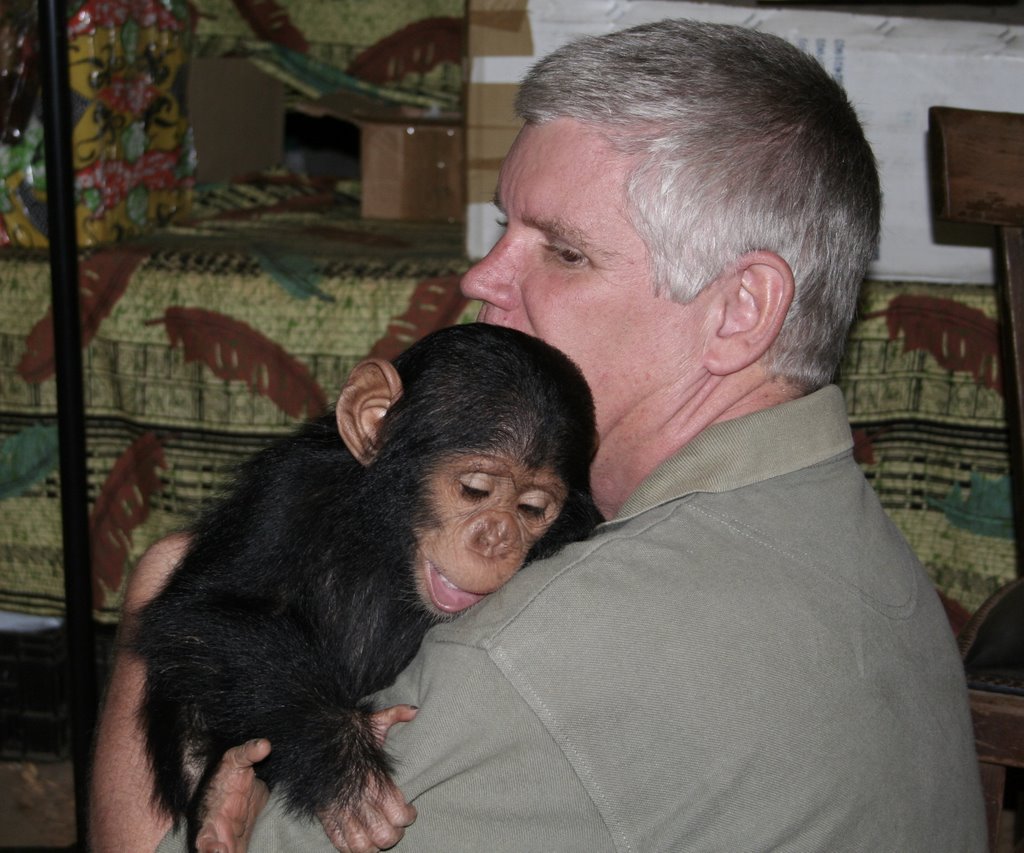
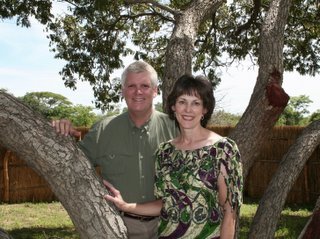
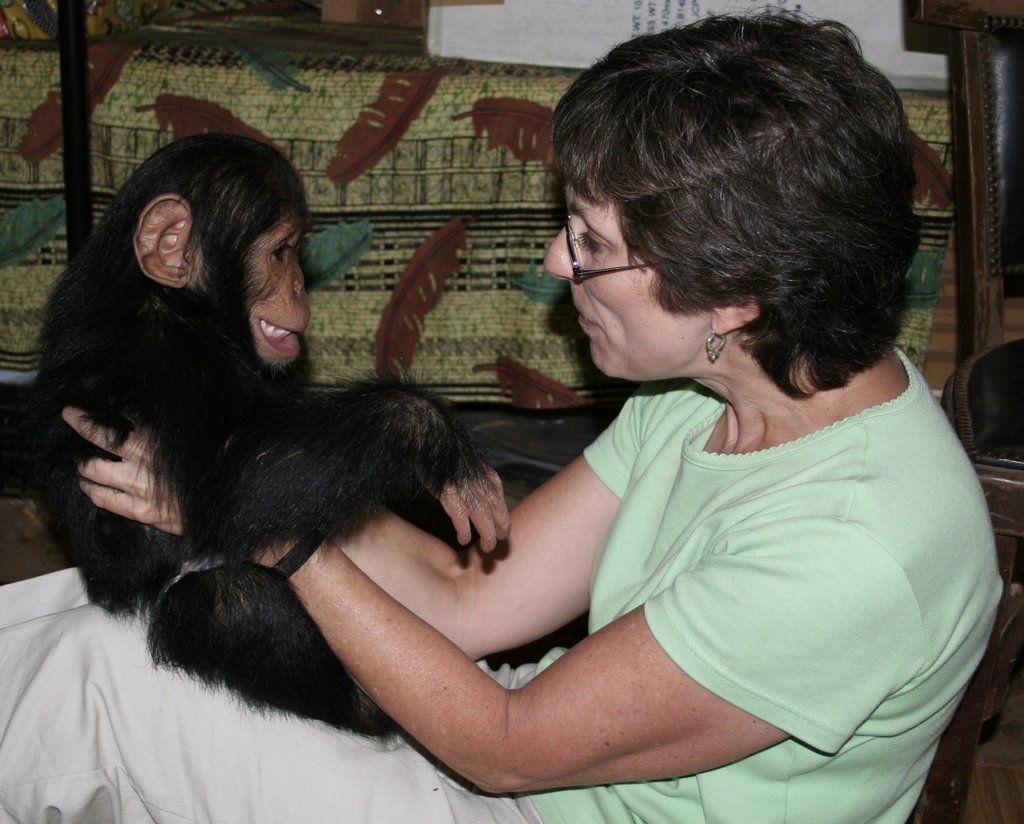 DeeDee is an adorable nine-month-old chimp who played with us during our visit to Chimfunshi Wildlife Orphanage. Like the other 110 chimpanzees at Chimfunshi, DeeDee was rescued by Sheila and David Siddle, the owners of a farm that has become a refuge for animals that are sick or lost. DeeDee lives with the Siddle's daughter and is treated very much like a human baby. She drinks from a bottle, wears diapers, and sleeps in the same bed with her human caregiver! As you can see, DeeDee makes friends easily and seemed to enjoy showing off for us by swinging from my hands or cuddling on David's shoulder.
DeeDee needed to be rescued because the alpha male in her group rejected her. Many of the other rescued chimps have sadder stories. Two chimps were deserted in a zoo that closed. They were found locked in their cage, wading around in two feet of filth. Another large male, Toto, was part of a Chilean circus. He wore an earring and had been taught to smoke and drink beer as part of a sideshow. The Siddles have a world-renowned facility that provides loving and appropriate care for these fascinating creatures.
On the day we stopped at Chimfunshi, we were the only visitors, so we were treated to a very personalized tour that included playing with DeeDee, watching the afternoon "milk break" at the chimp enclosure, and having our lunch in the Siddles' backyard.
Thursday, April 27, 2006
Our Zambia Missionaries
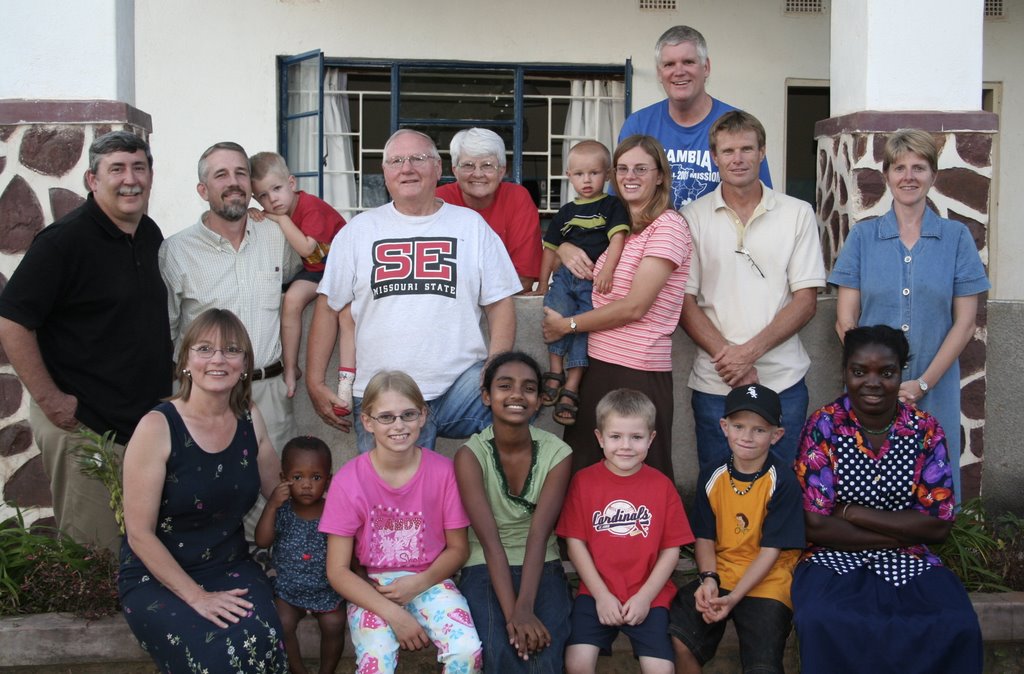
These are the missionary families who met in Solwezi last week.
Front row: Lorie French, Vicki (foster child of the Bruingtons), Savanna Bruington, Natasha French, Noah Davis, Lane Bruington, and Ruth Siachobe. Back row: David French, Brian Davis, Bryson Davis, Don Boyd, Rita Boyd, True Bruington, Stacy Bruington, David Gregersen, Bart Bruington, and Sondra Davis.
Now here is a little about each family.
David and Lorie French have been in Zambia since October of 2004. They have opened Mapepe Bible College in Lusaka, a school that trains Zambian church leaders. The school operates only a few months a year during the dry season so that the students can continue their farming activities the rest of the year. Mapepe's aim is to prepare the men to be effective church leaders and church planters who do not have to rely on American financial support. David and Lorie have four children. Natasha was with them on this trip while Karen stayed in Lusaka. Their grown sons are in the US.
Brian and Sondra Davis have been missionaries in Africa for over ten years. Sondra was already working in Benin when they married, and Brian joined her there. Next they worked in Cape Town, South Africa, for several years before deciding to begin the new work at Mumena near Solwezi. Their two sons are Noah, age 6, and Bryson, age 3. All of us except the Bruingtons stayed in the Davis home for four days. They were gracious hosts who made us all feel welcome. Brian and Sondra are supported by Hillcrest in Abilene.
Don and Rita Boyd are Sondra's parents. Don retired from the military, and then they came to Africa in the early 90's. Their first stint was here at Namwianga where Don taught at the secondary and also served as education secretary. Next they went to Cape Town and worked with Brian and Sondra there. Two years ago they returned to the states and built a new house in their home town of Cape Girardeau, Missouri. But when the opportunity to help Brian and Sondra (and be with their adorable grandsons) came up, Don and Rita came back to Africa. Their sponsoring congregation is Cedar Hill.
Bart and Stacy Bruington have been working with us at Namwianga while they considered moving to Mumena and the new project there. We hoped they would stay at Namwianga, but we know they are needed in Solwezi as well. Bart and Stacy have been preparing to be self-suppporting missionaries for several years. They arrived in August with their three children. Stacy is a nurse and Bart is one of those MacGuyver types who can fix anything. We will miss them! Ruth Siachobe began working for them at Namwianga and is now helping them in Solwezi as well.
Others who are part of the team but could not be with us are Roy and Kathi Merritt and Sheri Sears.
Saturday, April 22, 2006
Solwezi Gathering
We are in Solwezi, a boomtown in the Northwestern Province of Zambia near the borders of Angola and the Congo. Brian and Sondra Davis are hosting our missionary gathering/retreat here. They are beginning a new work at Mumena, about 45 minutes from Solwezi, and are living in town until their house at Mumena is ready.
Also here are Sondra's parents, Don and Rita Boyd, who are working with them here, Bart and Stacy Bruington from Namwianga, and David and Lorie French who work with Mapepe Bible School in Lusaka. We are enjoying long talks, devotionals, planning and analyzing our work here, and just hanging out with other missionaries.
I really thought I had seen the worst roads Zambia had to offer, but Solwezi wins the prize. The unpaved streets leading to the Davis home would provide inspiration for a Six Flags ride! They even have to use four-wheel drive during the rainy season.
Thursday we drove out to Mumena and looked at the construction going on there. The new work is very exciting. I took lots of pictures and will do a blog on it when we get home.
Today we visited Chimfunshi Animal Orphanage where a family has devoted their farm to rescuing chimpanzees. We spent a fascinating two hours learning about these creatures and the work being done with them.
We will be heading for Lusaka on Monday and on home to Namwianga on Tuesday.
Also here are Sondra's parents, Don and Rita Boyd, who are working with them here, Bart and Stacy Bruington from Namwianga, and David and Lorie French who work with Mapepe Bible School in Lusaka. We are enjoying long talks, devotionals, planning and analyzing our work here, and just hanging out with other missionaries.
I really thought I had seen the worst roads Zambia had to offer, but Solwezi wins the prize. The unpaved streets leading to the Davis home would provide inspiration for a Six Flags ride! They even have to use four-wheel drive during the rainy season.
Thursday we drove out to Mumena and looked at the construction going on there. The new work is very exciting. I took lots of pictures and will do a blog on it when we get home.
Today we visited Chimfunshi Animal Orphanage where a family has devoted their farm to rescuing chimpanzees. We spent a fascinating two hours learning about these creatures and the work being done with them.
We will be heading for Lusaka on Monday and on home to Namwianga on Tuesday.
Sunday, April 16, 2006
Oh Baby!
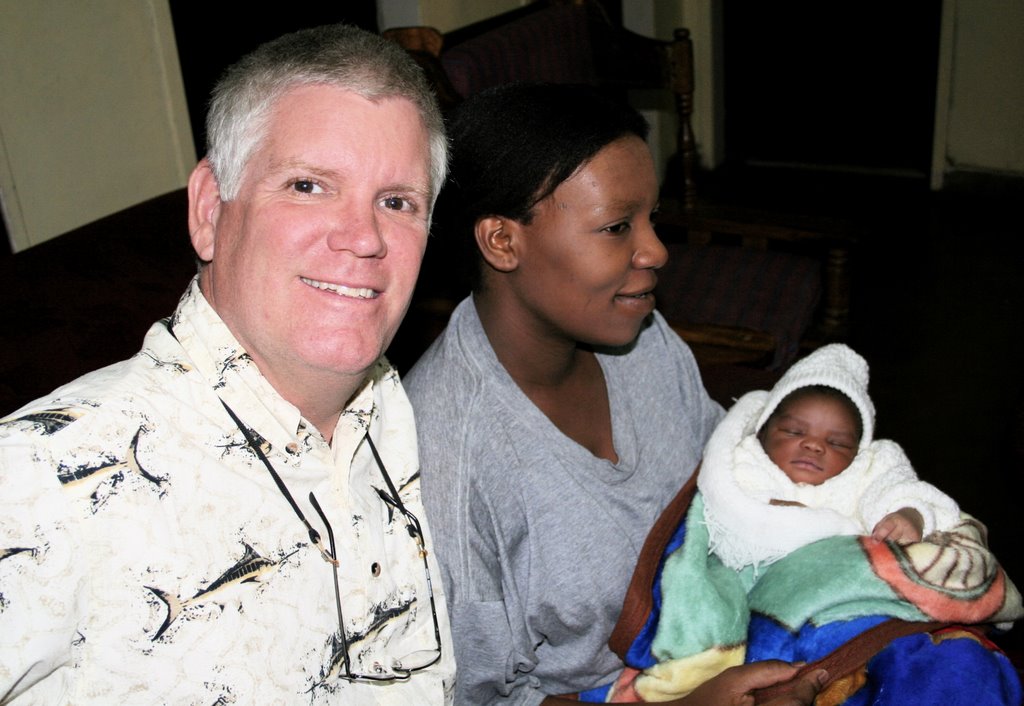
John Simuuba is the assistant principal at the secondary school here. He and I have been working on the CD project together. Thursday night at 6:10 I was in the middle of cooking dinner for our weekly meal with Dr. Tate when John dropped off the demo CDs at our house. We chatted a few minutes about which songs should be included on the final work. Then he casually said, "I'm also asking for transport for my wife."
"Oh, where would she like to go?" I asked.
"To the clinic," he replied. I let this sink in a minute and then it hit me.
"She's having the baby?" I asked. He nodded, and I yelled down the hall, "David, go get the truck. Mr. Simuuba's wife is having her baby!" Mr. Simuuba rode home on his bike as David headed out the door to go to their house. The time was 6:15.
Dr. Tate arrived for dinner 6:30 and I explained David's trip to the clinic. He assured me that David Kalimanshila, the clinic officer, was on call. He and I sat down to wait for David to get back so we could have dinner.
Meanwhile, David and the Simuubas had gone first to find Fortune Masiya, the midwife that usually delivers babies at the clinic. Fortune wasn't home, so they stopped at David Kalimanshila's house and asked for him. David, we found out later, was still taking nurses home after a day of bush clinics. Dr. Tate was a long shot, but they tried his house anyway. He, of course, was now at our house. At this point, David pulled out his cell phone and looked for phone numbers to call. He found John Kambulu's number and called him to see if his wife, Tebbia, a nurse at the clinic, could help. John assured him that Tebbia could come, and David, with a sigh of relief, pulled the vehicle up to the front of the clinic.
By this time, Ruth was obviously in hard labor. David remembered those Lemaze classes from many years ago and gave her some coaching on her breathing. When Tebbia didn't arrive right away, David left the truck and started walking around the clinic trying to find somebody who might be available to at least open the doors. He finally found Tebbia, and the two of them went back to the vehicle. There they found that Ruth had moved from the front seat to the back seat, had her back up against the side door and was in position to deliver! David began to panic at this point, but Tebbia assured them that Ruth could walk to the delivery room, and that's what happened.
It was 6:45 when David handed his cell phone over to John Simuuba and headed back to our house. He had just walked in the door at 6:50 and started to tell Dr. Tate and me about his adventure when the phone rang. It was John reporting that Ruth had just delivered a baby girl. We all sighed with relief.
At 8:15 John called again and asked us to come pick them up at the clinic. We did, marveling at the gorgeous new baby in Tebbia's arms.
At church this morning it was announced that the new baby's name is Hope. David thinks that her name is quite appropriate because he was certainly hoping that she would not be born in the back seat of our vehicle!
Wednesday, April 12, 2006
Bringing in the Sheaves
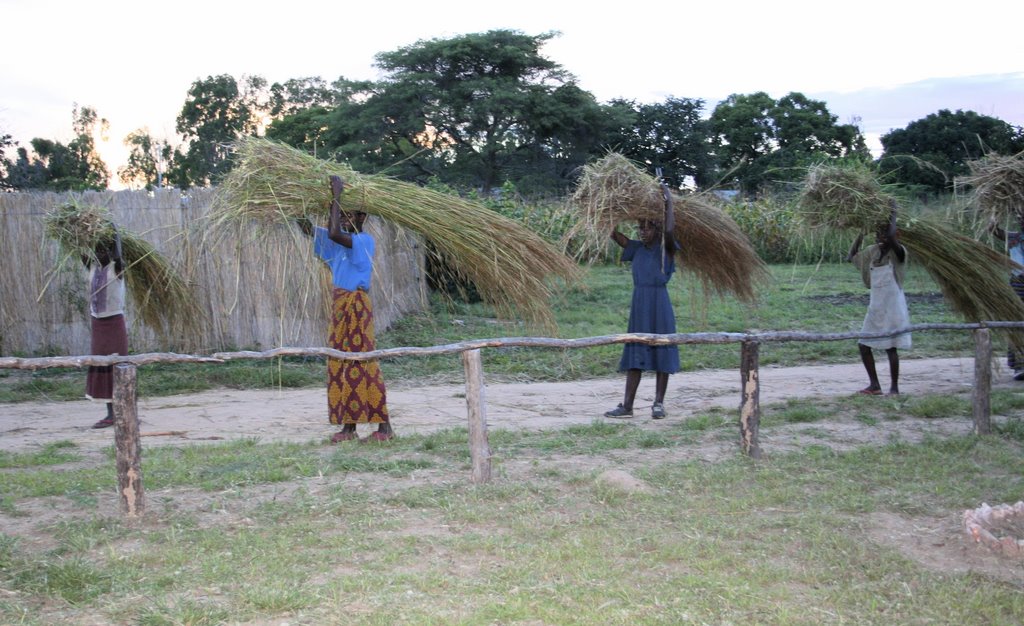
I thought of the old song title above when I saw these ladies pass in front of our house one evening. They are carrying grass that will be used for thatching roofs or building fences.
Memories of Zambia
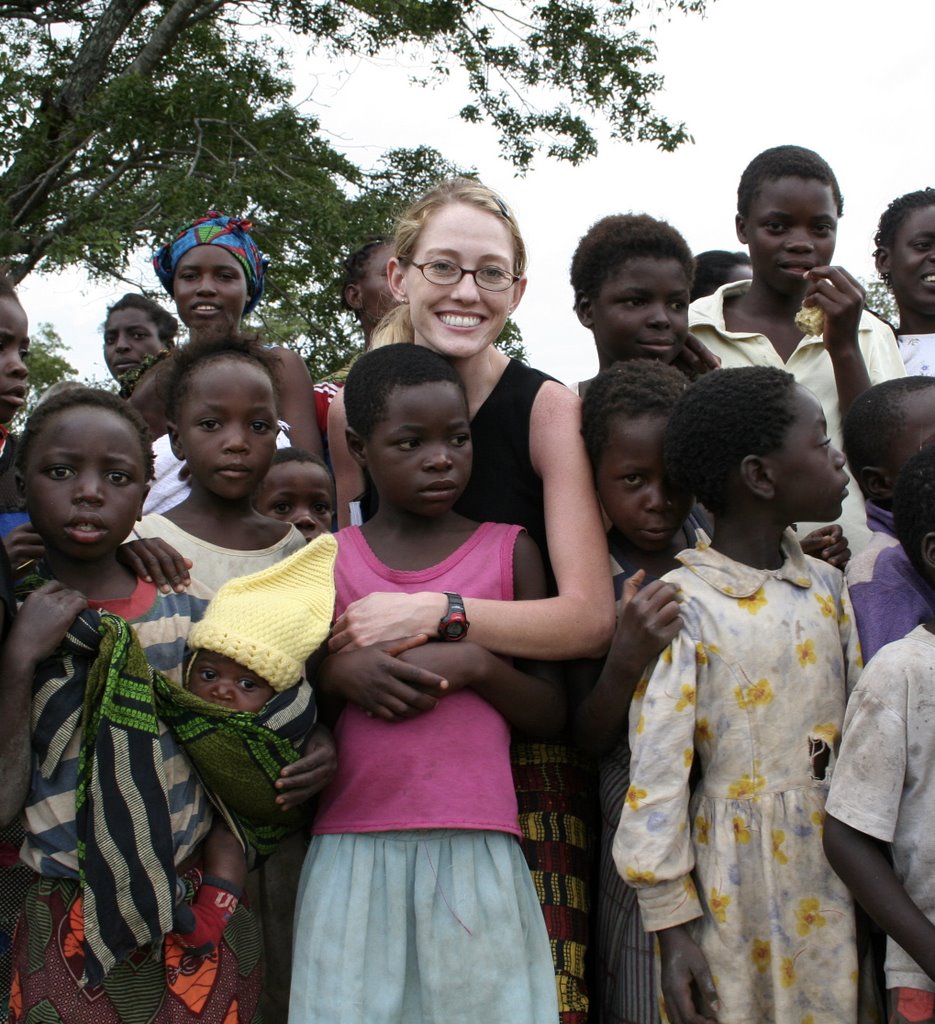
Meg Jack is one of the Vanderbilt University doctors who stayed with us in March while doing a rotation at the Namwianga Clinic. She reflected on her experiences in a recent e-mail and agreed to let me share her thoughts on the blog. Meg writes:
Our trip was an emotional roller coaster, challenging our views of what is important in life, how we view money, our roles as physicians, and much more. I am most struck by how gracious the Zambians are and the true beauty that emanates from their faces in the midst of poverty and death. Though I will never be able to walk in their shoes and fully know how they feel, it boggles my mind that they seem much happier and content with their daily lives than many American--despite their daily struggles of facing illness, a lack of food and sanitation, and death. They don't complain, few tears are shed, and they continue to smile, put their best foot forward, and praise God for all that they have. How can that be? Maybe it is because they don't know any better, maybe it's due to the fact that they live each day to its fullest because they truly don't know if it's going to be their last, maybe it's because God knows their situation and gives them the gift of unconditional love and happiness. Whatever the reason, I will always be in awe with a permanent place in my heart for the Zambian people. I will continue to strive for that type of peace in my heart and a daily appreciation for being so incredibly fortunate.
Monday, April 10, 2006
Sandy Hill Farm

A blog entry from David this time.
Sunday afternoon I returned to the Sandy Hill Commercial Farm for a visit with the young church established only six weeks ago. With me were six young men and two young women, all students at the college or secondary. We arrived around three p.m. after slowly driving the truck through the maze of mud and thatch huts belonging to the five hundred workers and their families. We were welcomed by smiles and waves. When we arrived at the far end of the village where a clearing has been made for the church gatherings, 50 children were singing the Chitonga song "He Will Lead Us," a beautiful melody that Linda and I have come to love. No adult had arrived yet, but the children were there and waiting. They were "wearing" the crafts that Linda and her helpers had done with them on previous visits: "Jesus Loves Me" visors and fish necklaces. The children wore them proudly and it is a given that they will take care of them. It touched my heart that they were waiting for us and singing as we arrived. Jesus' command, "Let the little children come to me," pierced my heart at that moment, and I said to Him, "They're here, Lord."
A combination of village men and students led the worship. I was asked to preach and encouraged them from Paul's prayer in Ephesians 1:18-21.
The church had organized a singing group, their first one, and they wanted to sing to the Lord and the church after the service. They came to the front of the clearing and with the sun setting behind them made a joyful noise to the Lord.
Before the church dispersed for the day, it was announced that two sisters were sick and could not join us for worship. One of the leaders said, "We are going to walk to their huts and pray for them." Singing as we went, we found the women and prayed for their healing.
As the congregation escorted us back to the truck, I gazed on the many huts in this village and longed for all our friends and supporters to see what I was seeing. And then I thanked the Father above and our Savior for all those who partner with us as we minister at the "edges of the kingdom."
Friday, April 07, 2006
How Many Zambians?
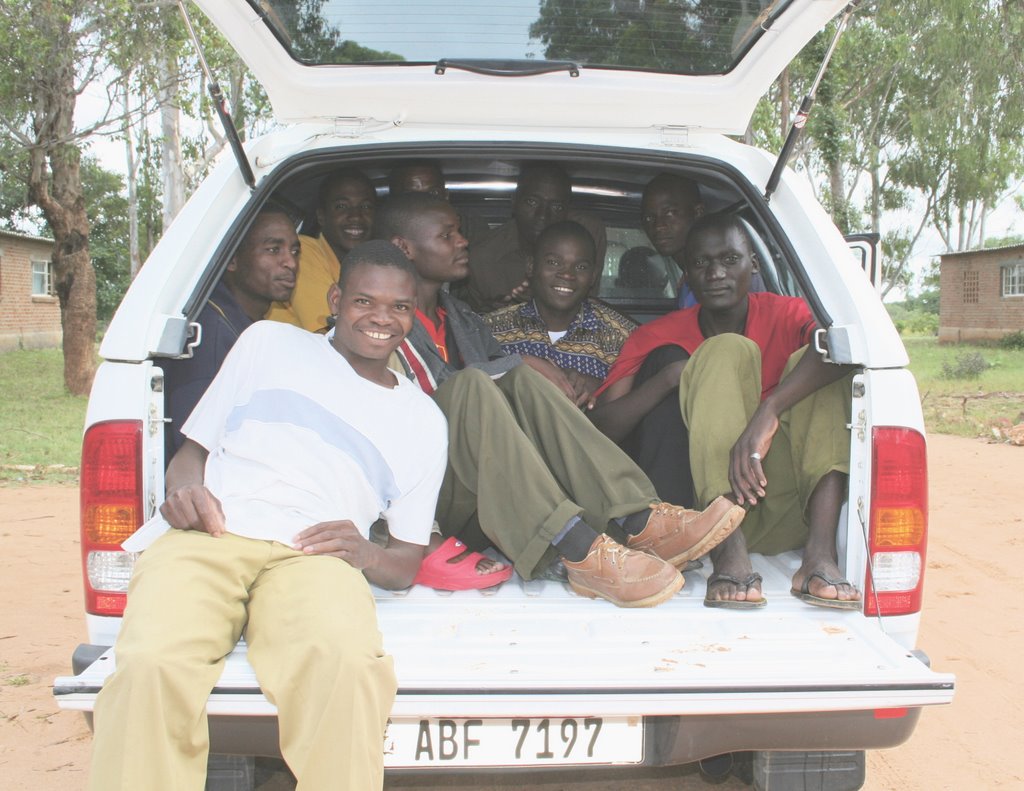
This was the group of guys who rode with me to Siabalumbi. There were four in the cab with me and these TEN in the back. I thought that we were completely full, but when we arrived back at Namwianga in the afternoon and unloaded, I found that another lady had also come along as a passenger for the return trip. This led me to do an anecdotal study to answer the burning question: How many Zambians can fit into one vehicle?
You guessed it! ONE MORE!
Siabalumbi Outreach

Last Saturday Ruhtt Mbomwae and I took this group of college guys with us to do an outreach at Siabalumbi. I've seen many beautiful places in Zambia, but none more beautiful than Siabalumbi. The school and church are set on a ridge overlooking a lush green valley that resembles a scene from a National Geographic documentary. (Even after nine months here, I still have to pinch myself sometimes to believe that I'm actually in AFRICA seeing places like this!)
The church and school building are brand new and were built with donated funds and community labor. Ruhtt is the administrator for this school as well as five other community schools in the area around Namwianga.
As usual when I go out with Ruhtt, the day was packed with activities. I did teacher training and then taught two ladies' classes back to back. The college guys taught adult and youth classes. Later in the day they organized some games and activities for the young people. After the final sermon, we trekked a mile down into the valley to the river for four baptisms. Ruhtt closed the day by distributing clothing to the community. I estimated the attendance at around 500.
Wednesday, March 29, 2006
Heavenly Echoes

Heavenly Echoes is certainly an appropriate name for the George Benson College Choir. As with the secondary choir, this one is student-led.
Secondary Choir

This is the group of eleventh and twelfth grade students from the secondary school who recorded on Saturday. They are directed by twelfth grader Prince, the young man in the middle who is not wearing a blue shirt. It is amazing to watch him in action. He does all of the arrangements of the music and directs the choir better than many professionally trained adults I have seen. The other students follow his instructions without question. As if that weren't enough, Prince has the most gorgeous voice you can imagine!
Fast Food

On Saturday our singing groups ate peanut butter and honey sandwiches served from the tailgate for lunch. We mixed orange drink in a big bucket to serve as our beverage. No one complained!
Road Trip


The big yellow bus attracts lots of attention in Zambia. David and I were following in our vehicle and enjoyed watching the reaction of people as they saw the bus. Americans were especially impressed and would wave and shout as the bus went by. This bus was shipped over from the US several years ago. It is put to good use all year round by the school and is indispensable on the medical mission.
The inside shot shows our group ready to take off on the CD adventure.
The CD Adventure
David and I often look at each other and say, “It’s another adventure!” We had plenty of opportunities for that remark this weekend as we took Namwianga singing groups to Lusaka to record CDs.
Our total entourage included three singing groups: the secondary choir composed of twenty eleventh and twelfth grade students; the Heavenly Echoes choir composed of nineteen college students and one faculty member; and the Timothy Brothers, a small group of four college students and two faculty members. The singing groups and their luggage traveled on the big yellow Namwianga Mission bus, while David and I followed in our vehicle with sleeping mats, food, water, and other supplies.
We left Namwianga on Friday at 2:00 and pulled into Lusaka just at dusk. We were met by Austin Siabeenzu, the man who coordinated most of our weekend events. Austin has many ties to Namwianga through serving on the medical mission and working with various faculty members in his role as a church leader. He is also a well-known radio personality in Lusaka where he is a cast member of a drama show.
After a quick stop for some extra diesel, Austin directed us off the main streets and we entered the huge Mutendere compound where we were to meet with the local congregation and spend the night. The streets were one-lane, unpaved, and full of huge potholes, so we had to move slowly. Vendors lined both sides, their makeshift booths lit with candles or small lanterns. Pedestrians streamed by within inches of the vehicle on both the right and left. The yellow bus drew lots of attention as people stared, pointed, and yelled. Soon some young boys decided to join our procession and walked along pounding on the truck and shouting. We navigated like this through the area for over 30 minutes before we finally reached the Mutendere building and were welcomed in the traditional Zambian way by a delegation of women singing and clapping.
Cooking fires glowed just outside the building where these same women had prepared a delicious nshima and chicken meal for us. At 9:00 the evening program began. The Mutendere group had invited the Lusaka Central congregation to join us for an evening assembly. After some spirited congregational singing and a talk by David, various singing groups presented their programs. In addition to our three choirs, the Mutendere and Lusaka congregations also had singing groups. I think the best term to describe this part of the evening might be “rocking.” I checked the rafters a few times to make sure the roof was still intact. These people love to sing and they sang with all their hearts.
Our students were exhausted after a long day, so at midnight our group was dismissed to get some sleep. The students went to a nearby school where they slept on the floor. David and I spent the night with Austin’s family. Austin dropped us off at his house and then went back to the church building. The Mutendere and Lusaka congregations stayed up ALL NIGHT LONG singing, preaching, and fellowshipping.
At 7:00 the next morning we headed for the recording studio. By daylight we could see even more of the potholes in the compound’s streets. One corner had a pothole that was over two feet deep. The bus had had a terrible time the night before at this corner, so this time the driver and Austin got out and studied the situation carefully before making the turn. The vendors on all sides of the corner had to move their wares off the street and slide their booths back to make enough room for the bus to pass. Even then the bus had to inch its way around and through the area. The entire process took over thirty nerve-wracking minutes. Since the street had only one lane, traffic was stopped from going in or out during this entire time. All of us began to have second thoughts about taking the bus back into the compound again on Saturday night.
The taping at the studio went pretty well. It was my first time to have anything to do with this type of project, so I learned a great deal, as did our students. For the most part, the groups were well rehearsed and we were able to tape one song after another. The sound engineer who worked with us was pleased and assured me that when he completed his work we would have a finished product that we could be proud of.
Since the taping went quickly and we hesitated to return to Mutendere compound because of the streets, we made the call to head back to Namwianga on Saturday rather than spend another night. We left Lusaka at 4:30 and pulled into Namwianga around 10:00 Saturday night.
David and I have taken many youth groups on trips in the US. This was a very different experience. This time we took 44 high school and college kids on a two-day outing. The students ate whatever was served them. They slept on mats on a concrete floor in a building with no electricity, no running water, and no indoor toilets. They waited for hours while other groups were taping. Number of complaints we heard: zero. Number of times we had to listen to whining: zero. Number of times any adult had to get on to any student for any reason: zero.
On Monday a group of the secondary students visited one of the administrators and asked him to convey to us their gratitude for the wonderful time they had in Lusaka. It’s no wonder we love these kids! And they can sing, too!
I’ll keep you posted on the progress of the CD. Thanks for your prayers this weekend.
Our total entourage included three singing groups: the secondary choir composed of twenty eleventh and twelfth grade students; the Heavenly Echoes choir composed of nineteen college students and one faculty member; and the Timothy Brothers, a small group of four college students and two faculty members. The singing groups and their luggage traveled on the big yellow Namwianga Mission bus, while David and I followed in our vehicle with sleeping mats, food, water, and other supplies.
We left Namwianga on Friday at 2:00 and pulled into Lusaka just at dusk. We were met by Austin Siabeenzu, the man who coordinated most of our weekend events. Austin has many ties to Namwianga through serving on the medical mission and working with various faculty members in his role as a church leader. He is also a well-known radio personality in Lusaka where he is a cast member of a drama show.
After a quick stop for some extra diesel, Austin directed us off the main streets and we entered the huge Mutendere compound where we were to meet with the local congregation and spend the night. The streets were one-lane, unpaved, and full of huge potholes, so we had to move slowly. Vendors lined both sides, their makeshift booths lit with candles or small lanterns. Pedestrians streamed by within inches of the vehicle on both the right and left. The yellow bus drew lots of attention as people stared, pointed, and yelled. Soon some young boys decided to join our procession and walked along pounding on the truck and shouting. We navigated like this through the area for over 30 minutes before we finally reached the Mutendere building and were welcomed in the traditional Zambian way by a delegation of women singing and clapping.
Cooking fires glowed just outside the building where these same women had prepared a delicious nshima and chicken meal for us. At 9:00 the evening program began. The Mutendere group had invited the Lusaka Central congregation to join us for an evening assembly. After some spirited congregational singing and a talk by David, various singing groups presented their programs. In addition to our three choirs, the Mutendere and Lusaka congregations also had singing groups. I think the best term to describe this part of the evening might be “rocking.” I checked the rafters a few times to make sure the roof was still intact. These people love to sing and they sang with all their hearts.
Our students were exhausted after a long day, so at midnight our group was dismissed to get some sleep. The students went to a nearby school where they slept on the floor. David and I spent the night with Austin’s family. Austin dropped us off at his house and then went back to the church building. The Mutendere and Lusaka congregations stayed up ALL NIGHT LONG singing, preaching, and fellowshipping.
At 7:00 the next morning we headed for the recording studio. By daylight we could see even more of the potholes in the compound’s streets. One corner had a pothole that was over two feet deep. The bus had had a terrible time the night before at this corner, so this time the driver and Austin got out and studied the situation carefully before making the turn. The vendors on all sides of the corner had to move their wares off the street and slide their booths back to make enough room for the bus to pass. Even then the bus had to inch its way around and through the area. The entire process took over thirty nerve-wracking minutes. Since the street had only one lane, traffic was stopped from going in or out during this entire time. All of us began to have second thoughts about taking the bus back into the compound again on Saturday night.
The taping at the studio went pretty well. It was my first time to have anything to do with this type of project, so I learned a great deal, as did our students. For the most part, the groups were well rehearsed and we were able to tape one song after another. The sound engineer who worked with us was pleased and assured me that when he completed his work we would have a finished product that we could be proud of.
Since the taping went quickly and we hesitated to return to Mutendere compound because of the streets, we made the call to head back to Namwianga on Saturday rather than spend another night. We left Lusaka at 4:30 and pulled into Namwianga around 10:00 Saturday night.
David and I have taken many youth groups on trips in the US. This was a very different experience. This time we took 44 high school and college kids on a two-day outing. The students ate whatever was served them. They slept on mats on a concrete floor in a building with no electricity, no running water, and no indoor toilets. They waited for hours while other groups were taping. Number of complaints we heard: zero. Number of times we had to listen to whining: zero. Number of times any adult had to get on to any student for any reason: zero.
On Monday a group of the secondary students visited one of the administrators and asked him to convey to us their gratitude for the wonderful time they had in Lusaka. It’s no wonder we love these kids! And they can sing, too!
I’ll keep you posted on the progress of the CD. Thanks for your prayers this weekend.
Friday, March 24, 2006
It's Too Quiet!
On Wednesday we drove to Lusaka to take the visiting doctors, Meg and Christy, to the airport. They flew to South Luangua Game Park for a well-deserved rest after spending three weeks with us. Then they'll spend a couple of days in Cape Town before flying back to Vanderbilt in Nashville.
We came home to a house that seems too quiet. Meg and Christy blessed us with their visit, and we miss their laughter, their stories about their work, and our shared discussions about Zambia and its people. We hope that they will be back some day and bring others with them!
Today (Friday) we are off to Lusaka with the students who are taping a CD. I guess I should say CDs, because the project has grown. We are now planning to have one CD of the high school and college choirs and a separate one of the Timothy Brothers singing group. We will tape all day on Saturday, spend Saturday night in Lusaka, and return on Sunday afternoon. Please keep us in your prayers this weekend.
I've already begun receiving requests for copies of the CD when it comes out. What a joy it will be to share the songs of Namwianga with friends, family, and supporters in the US!
We came home to a house that seems too quiet. Meg and Christy blessed us with their visit, and we miss their laughter, their stories about their work, and our shared discussions about Zambia and its people. We hope that they will be back some day and bring others with them!
Today (Friday) we are off to Lusaka with the students who are taping a CD. I guess I should say CDs, because the project has grown. We are now planning to have one CD of the high school and college choirs and a separate one of the Timothy Brothers singing group. We will tape all day on Saturday, spend Saturday night in Lusaka, and return on Sunday afternoon. Please keep us in your prayers this weekend.
I've already begun receiving requests for copies of the CD when it comes out. What a joy it will be to share the songs of Namwianga with friends, family, and supporters in the US!
Wednesday, March 22, 2006
What a Saturday!
Outreaches come in all shapes and sizes. When Ruhtt Mbomwae plans one, you can count on something big! Ruhtt asked me to come with her last Saturday to do teacher training at Katundu where she supervises a community school. She also requested that I put together a team of sponsored students to do a children’s Bible class while I was teaching. I found four girls who were willing to go on the outreach, and we were all set.
When Ruhtt pulled up in front of our house in a 24-passenger bus, I knew there must be some even bigger plans in the works. I climbed in and joined a full crew of sponsored students from the college, most of them guys. We picked up a few more along the way and then headed up the Kabanga Road to Katundu.
We pulled off the main road and wove through the path to the village. As we broke through the last of the tall grass into the clearing around the school, we saw a huge crowd of children already gathered and waiting for us.
Ruhtt began by showing me around the school. There are currently two classroom buildings with another under construction. I asked her where the money came from to build the structures. She told me that the people in the community worked together to make the bricks and put up the walls. She got the money for the roof and doorframes by requiring each family with a child in the school to bring one chicken. She took the chickens into Kalomo and sold them to generate enough cash to finish the building project!
Ruhtt busily organized the morning’s activities. She set me up in a classroom with 10 teachers from two different community schools for a training session. She divided the huge group of children into two age groups and appointed two teaching teams. I knew she had some plans for adult Bible teaching as well, but the adults were slow in arriving. Later, when I finished my two-hour training session, I found that there were groups of 30 to 50 adults under every shade tree. Each group had a college student conducting a Bible lesson.
“Since you’re finished with teacher training, how about doing a ladies’ class next?” Ruhtt asked. Next thing I knew there were 75 ladies in front of me and I had a translator helping me teach a lesson on Jonah.
At 1:00 all the adults were gathered in one spot for a final sermon. A fiery preacher from a nearby congregation kept their attention. Several responded for baptism, so we all formed a line as we walked through the tall grass down to the river.
When we returned after the baptisms, it was after 2:00 and I was sure Ruhtt must be ready to load up and head home, so I went over to stand in the shade near the bus. Soon I noticed the crowd forming lines and saw four college guys coming off of the bus carrying huge sacks. Ruhtt finished the day with a food distribution project—each family got a plastic bag full of beans.
We finally loaded the bus and started for home. As we bumped and rattled down the road, I marveled at all Ruhtt had managed to pack into one day! I estimated that there were at least 1,000 people there, with about equal numbers of adults and children. Ruhtt made sure they were trained, taught, and fed in a single outreach effort.
When Ruhtt pulled up in front of our house in a 24-passenger bus, I knew there must be some even bigger plans in the works. I climbed in and joined a full crew of sponsored students from the college, most of them guys. We picked up a few more along the way and then headed up the Kabanga Road to Katundu.
We pulled off the main road and wove through the path to the village. As we broke through the last of the tall grass into the clearing around the school, we saw a huge crowd of children already gathered and waiting for us.
Ruhtt began by showing me around the school. There are currently two classroom buildings with another under construction. I asked her where the money came from to build the structures. She told me that the people in the community worked together to make the bricks and put up the walls. She got the money for the roof and doorframes by requiring each family with a child in the school to bring one chicken. She took the chickens into Kalomo and sold them to generate enough cash to finish the building project!
Ruhtt busily organized the morning’s activities. She set me up in a classroom with 10 teachers from two different community schools for a training session. She divided the huge group of children into two age groups and appointed two teaching teams. I knew she had some plans for adult Bible teaching as well, but the adults were slow in arriving. Later, when I finished my two-hour training session, I found that there were groups of 30 to 50 adults under every shade tree. Each group had a college student conducting a Bible lesson.
“Since you’re finished with teacher training, how about doing a ladies’ class next?” Ruhtt asked. Next thing I knew there were 75 ladies in front of me and I had a translator helping me teach a lesson on Jonah.
At 1:00 all the adults were gathered in one spot for a final sermon. A fiery preacher from a nearby congregation kept their attention. Several responded for baptism, so we all formed a line as we walked through the tall grass down to the river.
When we returned after the baptisms, it was after 2:00 and I was sure Ruhtt must be ready to load up and head home, so I went over to stand in the shade near the bus. Soon I noticed the crowd forming lines and saw four college guys coming off of the bus carrying huge sacks. Ruhtt finished the day with a food distribution project—each family got a plastic bag full of beans.
We finally loaded the bus and started for home. As we bumped and rattled down the road, I marveled at all Ruhtt had managed to pack into one day! I estimated that there were at least 1,000 people there, with about equal numbers of adults and children. Ruhtt made sure they were trained, taught, and fed in a single outreach effort.
Tuesday, March 21, 2006
Exciting Plans
Regular readers know how much I love the Zambian singing, especially the sounds of the choruses from the secondary school and college. For months now I have dreamed of getting a CD made of their music.
Lord willing, that dream is becoming a reality. This weekend the secondary choir, the college choir, and the Timothy Brothers singing group will travel to Lusaka to record a CD. Each group has been rehearsing nightly to prepare five to seven songs--some in English and some in Tonga--that will be included on the final product.
The schedule calls for the 48 singers to leave Namwianga in one of the big yellow buses at 1:00 on Friday afternoon to make the five hour trip. David and I will follow along in our vehicle with luggage and other supplies. On Friday evening we will be hosted by a congregation in Lusaka and will do a program of preaching and singing for them. The guys will spend the night in the church building, and the ladies will be staying in a member’s home. We have a studio reserved for Saturday for the recording. The rest of the weekend’s schedule depends on how quickly the recording goes. If we finish by early afternoon, we will head back to Namwianga. If we don’t finish in time to be home before dark, we will spend another night with the church in Lusaka and come home Sunday after church services.
Getting 50 people transported, fed, and housed has been quite a logistical challenge. As wet set out on this adventure, we ask for your prayers that we will be kept safe and that our efforts will produce a recording that will glorify God and share the message of Namwianga with many others.
Lord willing, that dream is becoming a reality. This weekend the secondary choir, the college choir, and the Timothy Brothers singing group will travel to Lusaka to record a CD. Each group has been rehearsing nightly to prepare five to seven songs--some in English and some in Tonga--that will be included on the final product.
The schedule calls for the 48 singers to leave Namwianga in one of the big yellow buses at 1:00 on Friday afternoon to make the five hour trip. David and I will follow along in our vehicle with luggage and other supplies. On Friday evening we will be hosted by a congregation in Lusaka and will do a program of preaching and singing for them. The guys will spend the night in the church building, and the ladies will be staying in a member’s home. We have a studio reserved for Saturday for the recording. The rest of the weekend’s schedule depends on how quickly the recording goes. If we finish by early afternoon, we will head back to Namwianga. If we don’t finish in time to be home before dark, we will spend another night with the church in Lusaka and come home Sunday after church services.
Getting 50 people transported, fed, and housed has been quite a logistical challenge. As wet set out on this adventure, we ask for your prayers that we will be kept safe and that our efforts will produce a recording that will glorify God and share the message of Namwianga with many others.
Saturday, March 18, 2006
Dish Drainer
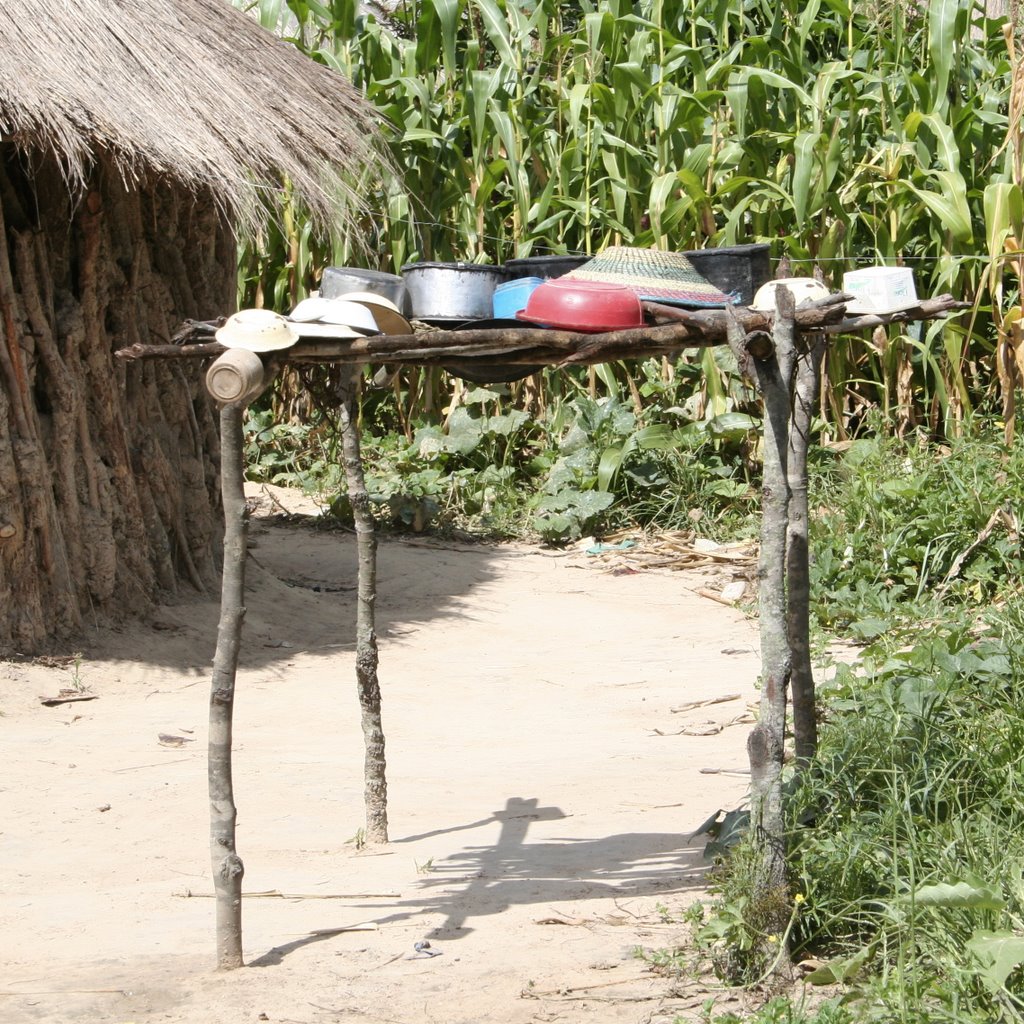
Near most huts or kitchens will be a dish drainer like the one shown. The drainer is made of poles lashed together to make a platform that provides a place for dishes to be dried and stored.
You can also notice the corn field in the background. Corn or maize is the staple of the Zambian diet, and every suitable plot of ground is utilized to grow it. Most houses have corn planted right up to the walls.
Kitchen
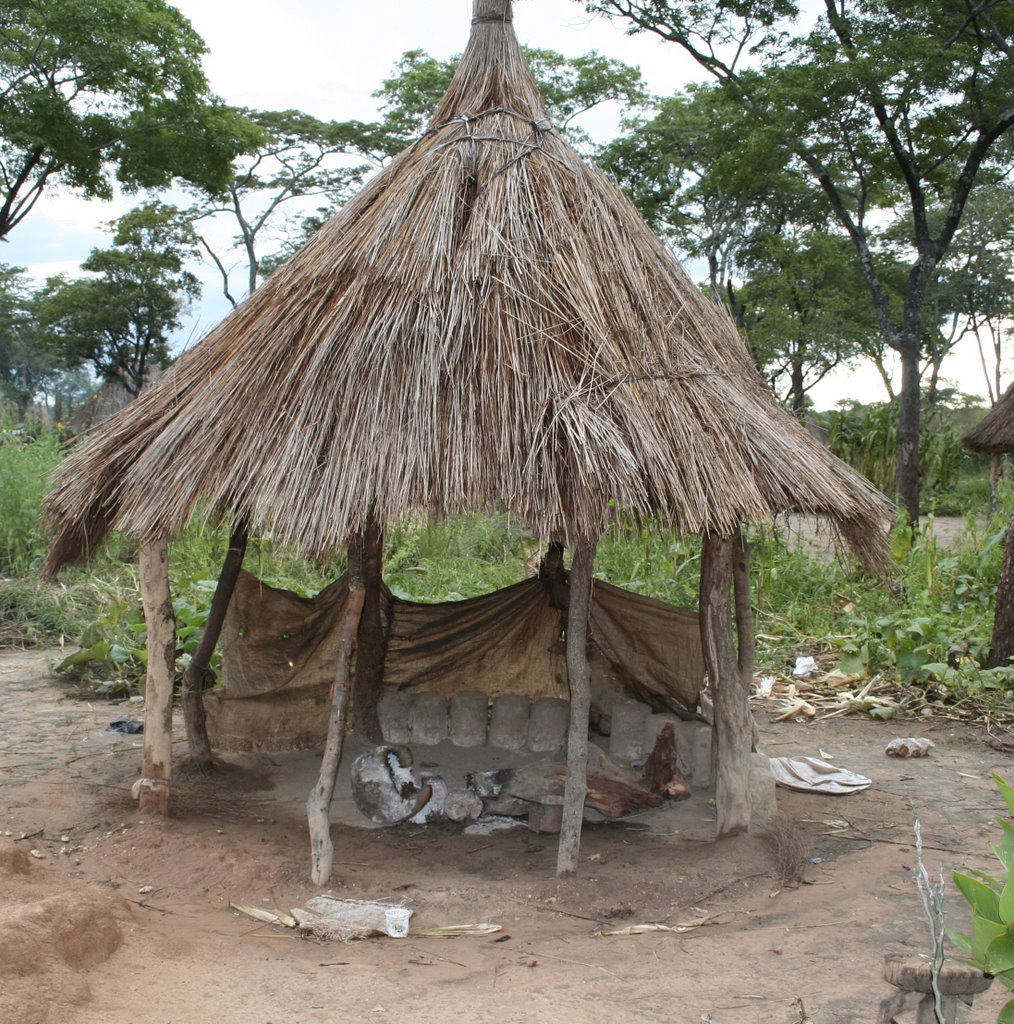
In the villages, cooking is done outdoors in kitchen enclosures like the one pictured. A fire is built in the center. The thatched roof keeps out the rain. Notice that grain sacks are fastened to the poles along the back and sides to provide protection from the wind.
Subscribe to:
Posts (Atom)